

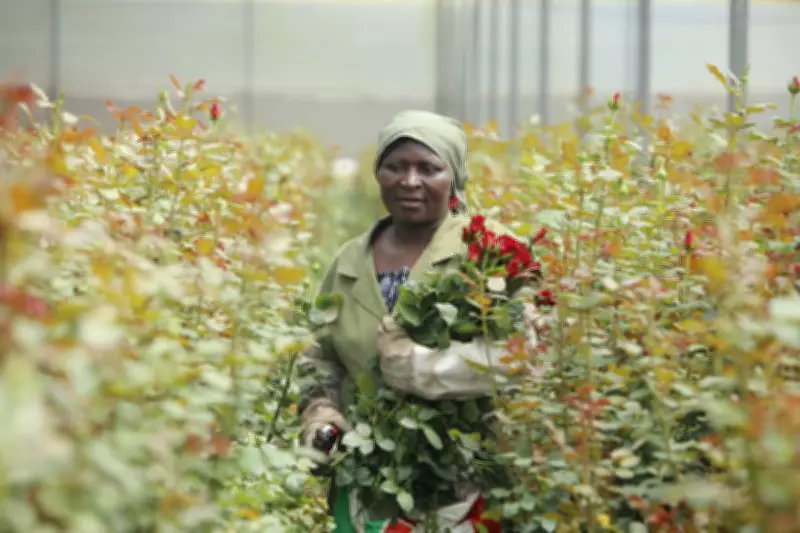
UK Mother's Day Flowers Tied to Harsh Conditions on Kenyan Farms
More than 20 million flowers are set to be sold across the United Kingdom this week as consumers rush to purchase bouquets for Mother's Day. This event marks one of the most significant days for a vast global industry, valued at an estimated $30 billion worldwide. A substantial portion of the UK's floral imports, including 60 percent of roses, originates from Kenya. However, a recent poll by Kantar and the Fairtrade Foundation reveals that 96 percent of UK adults were unaware that most Mother's Day flowers are sourced from East Africa.
Dire Working Conditions in the Kenyan Flower Industry
The Kenyan flower sector is plagued by severe labour issues, with many employees enduring long hours and potential exposure to harmful chemicals, all while earning an average of less than £2 per day. Rebecca Amoth, a mother-of-four working at Shalimar Flower Farm in Naivasha, described the situation to The Independent. "On most flower farms, people are suffering and they have no way to speak out or complain. It's like a dictatorship," she stated. Naivasha, located in the Great Rift Valley, serves as the epicentre of Kenya's flower production.
Workers typically labour for 12 hours or more daily, six days a week, according to Amoth. A critical concern involves the spraying of chemical insecticides on crops, which can lead to health problems. "When they don't tell us the time that they put sprays and chemicals on the flowers, we are not able to assess whether we should be working or not," she explained. "People develop rashes and itches on the body. Some have to go to hospital."

Broader Impacts on Health and Wellbeing
The exhausting schedules often preclude lunch breaks, contributing to illness and mental health issues. "You are so tired, so you become sick, and you then cannot take care of your children," Amoth noted. "Many develop mental health problems, or turn to alcohol." Maternity leave on many farms is limited to just a few days, and housing conditions are frequently inadequate; Amoth's family of four once occupied a single room. These factors led her to initially avoid having children.
With approximately 70 percent of workers on Kenyan farms being women, sexual harassment is a widely reported problem. Additionally, a large number of children in the area are not attending school, exacerbating social challenges.
Campaigners Push for UK Supply Chain Legislation
The poor conditions faced by thousands of flower industry workers highlight weak supply chain oversight in the UK. Campaigners argue for the introduction of a new law mandating due diligence across global supply chains. The government is currently reviewing whether to implement a mandatory Human Rights and Due Diligence law as part of its trade strategy. This legislation would require companies to report and address environmental and human rights risks in their supply chains.
Marie Rumsby, director of advocacy at the Fairtrade Foundation, emphasised the urgency. "We are urging businesses to invest in the people behind our favourite products: through fairer pay, long-term partnerships, and meaningful support to adapt in the face of problems, including the accelerating impacts of climate change," she told The Independent.
Fairtrade Certification Shows Potential for Improvement
Evidence of positive change can be seen on Fairtrade-certified farms like Shalimar Flower Farm, which has been certified since 2010. Amoth reported transformative improvements: "Life here used to be terrible. But now, people are very happy. It is the best place to work, and the women are proud to work here." The farm now provides advance notice of chemical spraying, offers up to seven months of maternity support, subsidised childcare, and ensures nearly all workers' children attend school.
Amoth has also accessed training programmes in IT and tailoring to supplement her income, allowing her to finish work by 3pm and pursue sewing at home. "I always used to think that I would do this for just a few years before moving on," she said. "But now I think that it is only if I retire, that I will leave."

Call for Transparency and Legal Reform
Despite these advancements, many workers on non-Fairtrade farms continue to endure dire conditions. Rumsby advocates for a mandatory HREDD law as a key solution. "We should all know or be able to find out where the products we buy come from and who has made or grown them," she asserted. "Transparency in supply chains is the foundation for a fair and sustainable global economy." This push for reform aims to ensure that UK companies better manage their supply chains, mitigating climate risks and enhancing benefits for workers in developing countries.





