

Celebrity Chef José Andrés Issues Stark Warning on Impending Global Famine
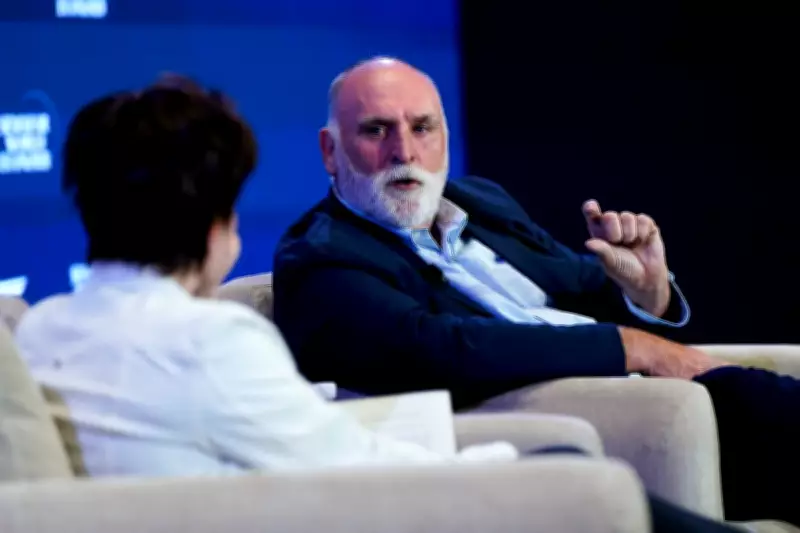
The celebrity chef and humanitarian José Andrés has delivered a sobering message to policymakers in Washington and worldwide: shift focus from oil markets to agricultural soil, as the world edges toward a catastrophic, multi-year famine. Speaking at the Semafor World Economy conference in Washington, the World Central Kitchen (WCK) founder argued that the conflict with Iran is quietly crippling the global fertilizer trade, setting the stage for widespread hunger by 2026-2027.
Fertilizer Supply Chains at Risk from Hormuz Disruptions
Andrés highlighted the strategic Strait of Hormuz, a key shipping chokepoint in ceasefire talks between the US and Iran, as a critical vulnerability. "It is not only oil that leaves through the strait of Hormuz," he told the Guardian. "It is also heavy, heavy fertilizers." He explained that nitrogen fertilizer supply chains have tightened, driving up costs for farmers and threatening global food production.
The danger lies in the delayed impact: when fertilizers miss crucial planting windows, yields plummet in subsequent harvest cycles. Such trade disruptions ripple into higher prices and reduced output, disproportionately affecting the poorest nations. "In America, you can have a 2% or 3% increase and people will manage," Andrés noted. "But in places like Haiti, they don't serve you a kilo of rice, they serve you one ounce at a time. Those people are going to be suffering the consequences."

Proposing a 3% 'Peace Tax' to Combat Hunger
Andrés advocates for a straightforward solution: a 3% "peace tax" based on each country's total GDP, diverted from military spending to address hunger. "The amount of money we are now increasing in the defense of every single country – if we would only put 3% on the side, there would be plenty of food to make sure we wouldn't have hunger on planet Earth," he argued.
Global military expenditure reached a record $2.7 trillion in 2024, the highest since the Cold War, according to Sipri. A 3% diversion would generate approximately $81 billion annually. Oxfam supports this approach, estimating in a 2022 report that donor governments need to invest around $37 billion yearly until 2030 to tackle extreme and chronic hunger. In contrast, a Donald Trump defense proposal for 2027 would boost spending to $1.5 trillion, a $445 billion increase from 2026 levels.
World Central Kitchen Faces Operational Challenges
The reality of rising costs is impacting WCK, a non-profit that relies on donations and has served millions of meals in conflict zones like Gaza and Ukraine. Andrés revealed that the organization may need to scale back operations due to financial constraints. "We don't want to scale back, but we have the cash in hand we have," he said. "The increase in the cost is going to make us make certain decisions … I shouldn't be in the moment of deciding who eats. Everybody should be fed."
Hunger as the Ultimate Border-Crosser
As the US and Europe implement stricter migration policies, such as Trump's One Big Beautiful Bill Act and the EU's new pact on migration and asylum, Andrés warned that hunger transcends physical barriers. "We can build all the walls we want, but if there are hungry mothers that need to feed their children, there is no wall thick or big enough that is going to stop them," he stated.
He criticized the current political focus on militarization over humanitarian needs, adding, "It seems that we are led by people who like to be warriors." Instead of choosing "mayhem," Andrés urged global leaders to prioritize food security to avert a looming famine crisis.






