

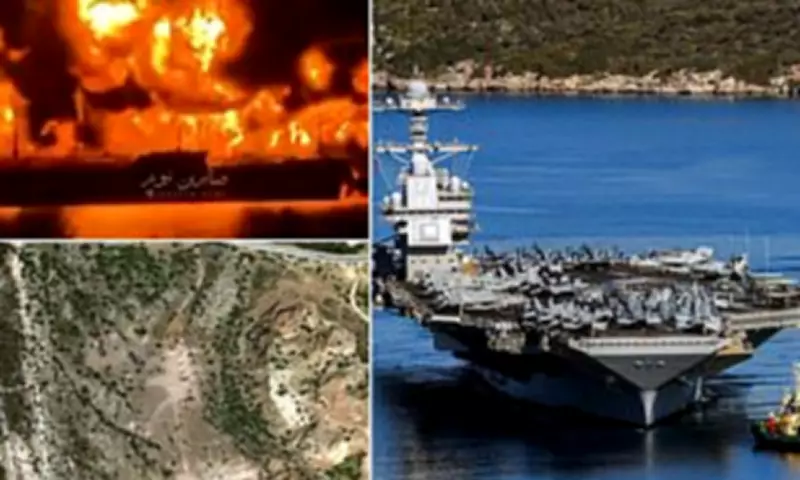
Iran's Strategic Blockade of the Strait of Hormuz Plunges Global Energy Markets into Chaos
In a dramatic escalation of regional hostilities, Iran has retaliated against joint US-Israeli military operations by effectively shutting down the Strait of Hormuz, one of the world's most critical maritime passages. This strategic waterway, connecting the Persian Gulf with the Gulf of Oman, serves as the primary conduit for approximately twenty percent of global oil and gas shipments, alongside vital chemical products for pharmaceuticals and essential agricultural commodities like fertiliser.
A Maritime Battleground Emerges
The once-busy shipping lane has transformed into a dangerous military theatre, with drones, cruise missiles, and fighter jets now constituting a common sight for stranded sailors aboard oil tankers and freight vessels. Tehran has issued explicit threats to open fire on any ships attempting to traverse this crucial artery, creating a de facto closure that has catastrophically disrupted international energy flows and trade networks. This blockade has triggered what analysts describe as the largest oil supply shock in recorded history, sending global crude prices skyrocketing and threatening economic stability worldwide.
Trump's Coalition Building Meets International Resistance
Former US President Donald Trump has vowed to reopen the vital shipping lane, declaring that nations dependent on Gulf oil have a responsibility to protect the waterway. "I'm demanding that these countries come in and protect their own territory, because it is their territory," Trump asserted during a recent statement. "It's the place from which they get their energy."

The White House plans to unveil a coalition of nations willing to deploy naval assets to secure the strait, having publicly urged specific allies including France, Japan, South Korea, the United Kingdom, and even China to participate in what Trump termed a "team effort." However, this diplomatic push has encountered significant resistance, with France, Japan, and Australia explicitly refusing to commit vessels to the operation as international concern mounts that the conflict may become indefinitely prolonged.
Complex Military Options Present Grave Risks
American military officials have issued sobering warnings that the Strait of Hormuz could transform into a deadly "kill box" for US Navy vessels if warships are deployed to the troubled waters. The United Kingdom is reportedly considering sending mine-hunting drones but remains reluctant to commit manned vessels, while South Korea has stated it is "closely monitoring the situation" and consulting with allies.
Reopening the strait presents extraordinary challenges, with the White House evaluating multiple high-risk options:
Naval Escort OperationsOne proposed solution involves US warships, potentially alongside allied navies, escorting tanker convoys through the strait to clear mines and defend against Iranian aerial attacks. Such operations would also aim to neutralize Tehran's "mosquito fleet" of small, fast-attack boats that threaten container ships. Military experts estimate this would require approximately two escort vessels per tanker, or a dozen ships to protect convoys of five to ten tankers. However, the short distances involved complicate missile defense systems, and deploying vessels as escorts would remove them from offensive operations, potentially increasing vulnerability to Iranian attacks.
Ground Invasion ConsiderationsA more aggressive option would involve seizing control of sections of southern Iran to prevent regime forces from targeting ships. This would likely require thousands of troops and a commitment to months of operations, with US soldiers exposed to attacks while attempting to destroy missile and drone stockpiles at their source. The recent deployment of up to 5,000 US Marines and sailors, along with the amphibious assault ship USS Tripoli to the Middle East, signals this possibility remains under serious consideration.

Another strategic option involves targeting Iran's Kharg Island, the central hub of the country's oil industry responsible for approximately ninety percent of its crude exports. While Trump has ordered limited military strikes on the island, he has refrained from targeting its oil infrastructure, warning that such action would be reconsidered if Iran continues blocking the strait. "For reasons of decency, I have chosen NOT to wipe out the Oil Infrastructure on the Island," Trump stated on social media. "However, should Iran, or anyone else, do anything to interfere with the Free and Safe Passage of Ships through the strait of Hormuz, I will immediately reconsider this decision."
Iran's Persistent Military Capabilities
Despite two weeks of US and Israeli bombardment that has significantly degraded Iran's conventional naval and military capabilities, the regime retains formidable asymmetric warfare assets. Tehran continues to deploy mobile anti-ship missile launchers that have struck approximately twenty container ships since hostilities began on February 28. Additionally, Iran maintains a substantial arsenal of inexpensive Shahed drones, costing as little as $35,000 each, which can be deployed for hit-and-run attacks.
"We have already destroyed 100 percent of Iran's Military capability, but it's easy for them to send a drone or two, drop a mine, or deliver a close range missile somewhere along, or in, this Waterway, no matter how badly defeated they are," Trump acknowledged in a recent statement.
International Reluctance and Regional Escalation Risks
The proposed international coalition faces substantial obstacles, with key allies expressing reservations about military involvement. Japan's Prime Minister Sanae Takaichi explicitly stated she has "no plans to send her nation's maritime self-defence forces to support tanker traffic in the strait," while French Defense Minister Catherine Vautrin emphasized France's "purely defensive position" and declared "there is no question of sending any vessels to the strait of Hormuz" at this time.
Complicating matters further, Iran has issued stark warnings that any attack on Kharg Island would trigger retaliatory strikes against the energy infrastructure of neighboring Arab states. The Islamic Revolutionary Guard Corps has declared that US allies' oil and energy facilities "will be immediately destroyed and reduced to ashes" if Tehran's energy assets are targeted.
As the standoff continues, global energy markets remain in turmoil, with the blockade of the Strait of Hormuz creating unprecedented challenges for international trade, energy security, and geopolitical stability. The situation represents one of the most complex military and diplomatic crises in recent memory, with no clear resolution in sight as competing powers navigate a dangerous landscape of escalating tensions and profound economic consequences.





