
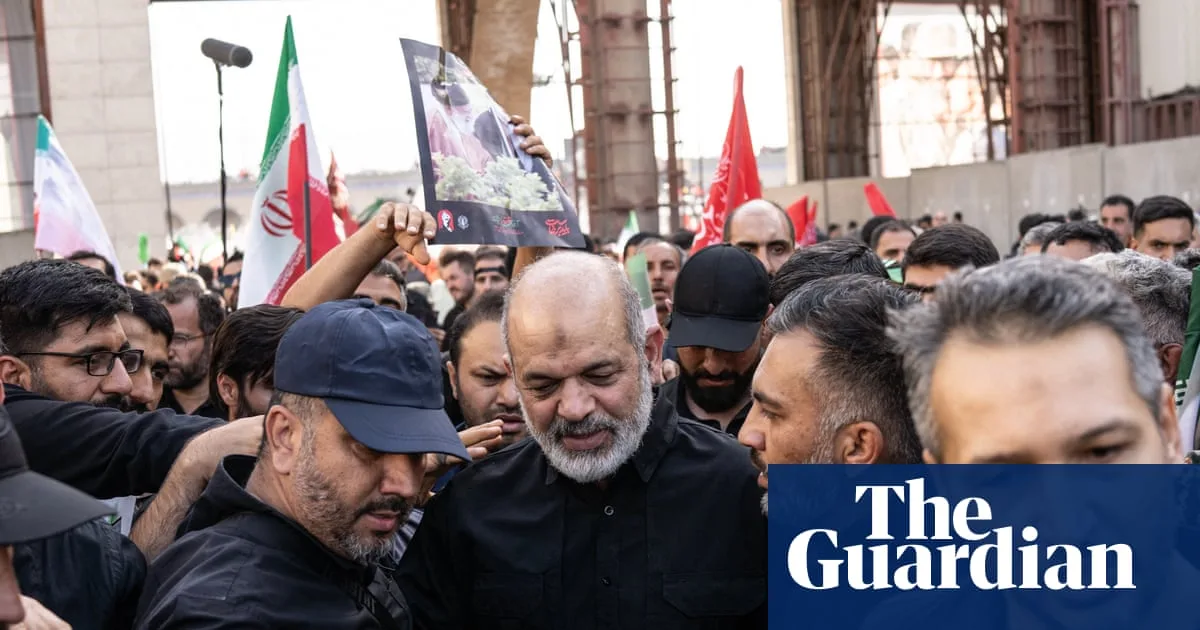
The Islamic Revolutionary Guard Corps (IRGC) has intensified its control over the Strait of Hormuz, warning ships to turn back as Iran mourns the death of Supreme Leader Ali Khamenei. Over the past 48 hours, the IRGC appears to have closed a gap in its monopoly over the waterway, with at least eight ships turning around after direct warnings on Saturday. The flow of ships dropped further on Sunday, according to shipping monitors.
The move comes after a US-backed southern route near Oman had allowed some vessels to bypass Iranian-controlled northern waters. France and the UK announced plans to send a mine-clearing naval force to clear the southern route, a move Iran rejected as unwarranted interference. The UK Maritime Trade Operations also reported a distress signal from a vessel attacked by unknown assailants off Yemen's coast.
Shipping data from Marine Traffic shows a 10% decline in crossings through the strait on 2 July compared to the previous day, with Iranian-flagged activity rising sharply. Oil prices have fallen to around $75 a barrel, down from a high of $125, reflecting increased global supply and reduced inflationary impact on Western economies.
A memorandum of understanding signed by the US and Iran on 17 June requires Tehran to restore traffic to pre-blockade levels and refrain from imposing tolls for 60 days. However, the agreement is seen as a loose guideline rather than enforceable rules. Oman has held talks with Iran, France, and the UK on future governance, proposing optional navigational fees similar to those in the Strait of Malacca.
At Khamenei's funeral, Iran sent a subtle message to Gulf delegations by reciting Qur'anic passages referencing the Battle of Badr when the Saudi delegation arrived. Meanwhile, both sides are using the ceasefire to strengthen military positions, with the US reportedly building forces in Jordan. An Iranian army spokesperson confirmed they are enhancing combat capabilities during the ceasefire.




