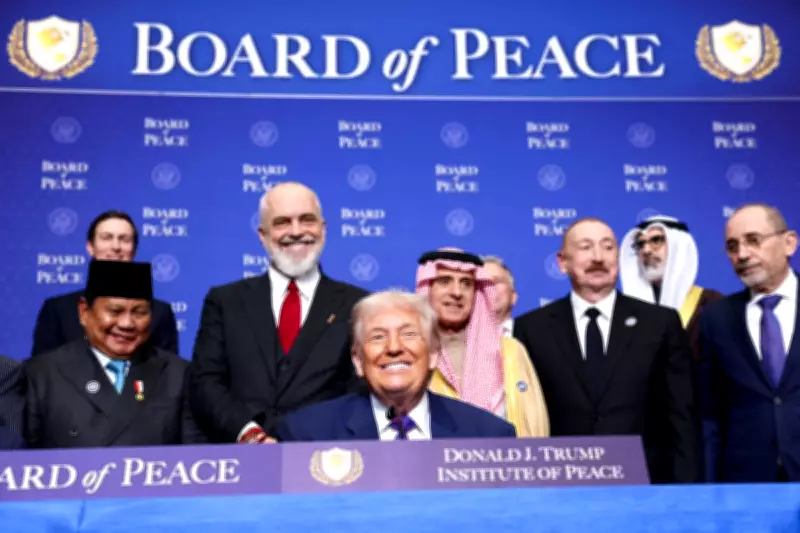
Indonesia has finalised a substantial trade agreement with the United States, significantly lowering tariffs on American goods, while simultaneously pledging a major military contribution to an international stabilisation force in Gaza. The deal was struck during President Prabowo Subianto's visit to Washington, where he attended the inaugural meeting of President Donald Trump's Board of Peace.
Trade Agreement Details
The White House announced the reciprocal trade pact on Thursday, describing it as a "great deal" that will enhance economic security and growth for both nations. Under the terms, Indonesia, Southeast Asia's largest economy, will eliminate tariffs for 99% of American imports. In return, the US will maintain tariffs on most Indonesian goods at 19%, aligning with rates previously set for Cambodia and Malaysia—a reduction from the previous 32%.
Additionally, Indonesia has agreed to address non-tariff barriers hindering US exports and will remove restrictions on shipments of critical minerals and other industrial commodities to the United States. This move is seen as a strategic effort by the Trump administration to safeguard US manufacturers from supply-chain vulnerabilities, particularly countering China's dominance in critical mineral markets essential for defence and technology sectors.

Economic Partnerships and Deals
Alongside the tariff adjustments, Indonesian and US companies sealed 11 agreements this week valued at $38.4 billion. These include substantial purchases of US agricultural products such as soybeans, corn, cotton, and wheat, with commitments to buy up to 5 million tons of wheat by 2030. The partnerships also extend to cooperation in critical minerals, oil field recovery projects, and joint ventures in computer chip manufacturing.
President Prabowo emphasised the intensive negotiations leading to these understandings, stating at a US Chamber of Commerce event that the agreements represent solid progress on multiple fronts. The deal was formally signed by representatives from Indonesia and US Trade Representative Jamieson Greer, marking a milestone in bilateral relations.
Gaza Troop Commitment
In a parallel development, President Prabowo reiterated Indonesia's pledge to contribute 8,000 troops—or more if necessary—to an international stabilisation force in Gaza. As the leader of the world's most populous Muslim nation, his commitment positions Indonesia among the first to support a key element of Trump's postwar Gaza reconstruction plan.
At the Board of Peace meeting, Trump expressed gratitude, acknowledging Indonesia's significance and praising its role. Prabowo reciprocated with optimism about achieving peace under Trump's leadership, despite anticipated challenges. The Board, initially conceived to oversee Gaza ceasefire efforts, now aims to broker resolutions in other global conflicts, with Cambodia and Vietnam also participating as Southeast Asian members.
Regional Dynamics and Strategic Positioning
The trade and security announcements coincide with notable shifts in regional diplomacy. Vietnam's leader, To Lam, made his first US visit since reelection, diverging from traditional protocols that prioritise China as an initial stop. This change underscores Hanoi's balanced foreign policy amid ongoing US-Vietnam trade negotiations, where Trump has imposed 20% tariffs on Vietnamese exports.
Analysts highlight the strategic implications of these moves, with Indonesia positioning itself as a "bridge" and "honest broker" in US-China competitions. The trade deal's focus on critical minerals and agricultural exports further solidifies Indonesia's role in global supply chains, while its troop pledge reinforces its involvement in international peacekeeping efforts.
The agreements reflect broader economic and geopolitical strategies, fostering stronger US-Indonesia ties and contributing to stability in conflict zones like Gaza. As these initiatives unfold, they are poised to influence trade patterns, regional alliances, and global security frameworks in the coming years.