
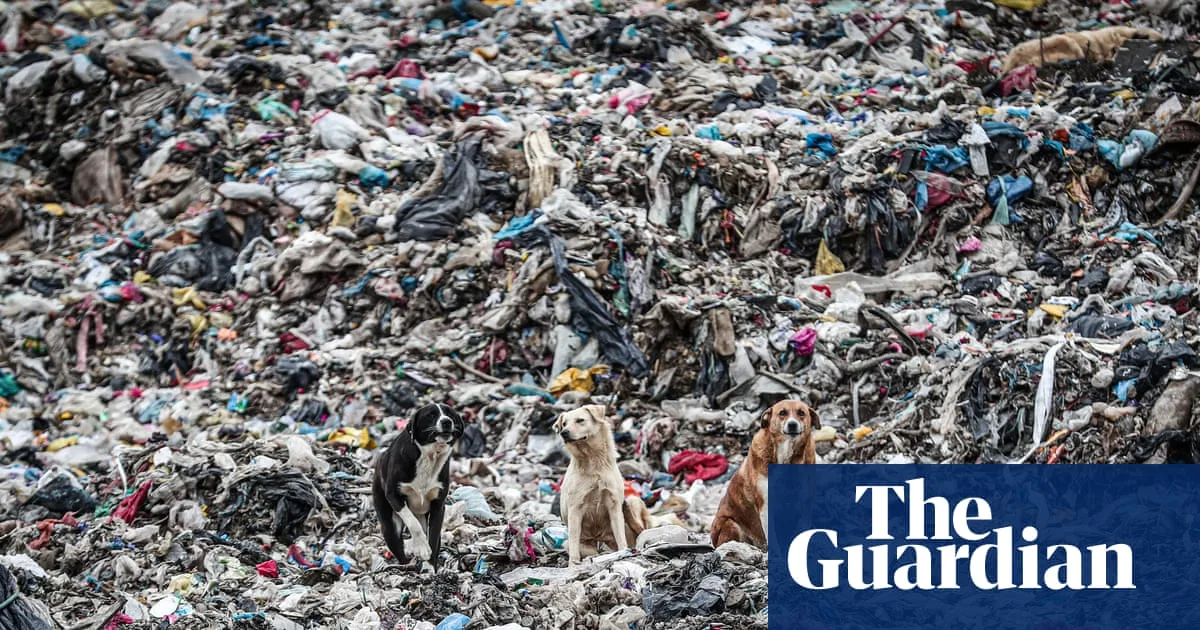
Germany was the world's largest exporter of plastic waste in 2025, sending more than 810,000 tonnes abroad, according to an analysis of trade data by Watershed Investigations and the Basel Action Network for the Guardian. The UK followed closely, exporting over 675,000 tonnes—its highest level in eight years, equivalent to about 127,000 shipping containers.
Much of the waste was sent to Turkey, followed by Malaysia and Indonesia. Investigations have repeatedly linked the plastic recycling industry in these countries to environmental damage, illegal dumping, burning, and labour abuses. Sedat Gündoğdu, a Turkish marine biologist, said: “The Turkish Mediterranean coast is the most polluted coast in the whole Mediterranean because of the plastic waste from the recycling factories. There’s huge amounts of microplastics – sometimes people can’t even get into the sea because of all the waste.”
Larger countries such as the US and China export less plastic waste partly because more is handled domestically through landfill, incineration, or recycling, and they are not subject to the same recycling target pressures as Europe and the UK, where exports can count towards official recycling rates. The US exported 385,000 tonnes in 2025, making it the fifth biggest exporter, while China was 18th in 2024.
The EU has agreed to ban exports of plastic waste to non-OECD countries by November 2026, yet half is still sent to those destinations. Much of the remainder goes to Turkey, now the largest recipient of European plastic waste. With the ban approaching, there are concerns that all exports could be redirected to developing OECD countries such as Turkey, as well as parts of eastern Europe, which lack capacity to manage higher volumes. In Turkey, waste infrastructure is already overwhelmed: the country generates 3.3 million tonnes of plastic waste domestically, more than double its recycling capacity.
Sara Matthieu, a Green MEP, described the imminent export ban as a “watershed moment”, but said that “due to attacks on green policies by conservatives and the far right” the EU’s capacity to recycle domestically had reduced by 1 million tonnes in recent years. She added: “The major problem is that freshly produced plastics are still much cheaper than reused and recycled materials. We have known about this market failure for years, but the EU Commission has mostly been asleep at the wheel.” An EU Commission spokesperson said rules on plastic waste exports were strengthened in the new waste shipment regulation, including a prohibition on exports to non-OECD countries from November 2026, affecting about half a million tonnes of waste. They also highlighted a December 2025 package of measures to boost the circular economy and plastic recycling.
The UK has made a similar commitment on plastic exports to non-OECD countries under the Environment Act 2021, but it remains subject to consultation. In 2025, about a fifth of Britain’s plastic waste exports still went to non-OECD countries, with shipments to Malaysia—now the UK’s third-largest destination—rising by almost 60% since 2024. Pua Lay Peng, a Malaysian activist, called this “waste colonialism”. The UK is tightening rules on waste exports and recycling, with reforms to improve transparency and crack down on illegal shipments. Exporters and reprocessors must now register and provide evidence of how waste is handled, while a digital tracking system due this year will require operators to record waste movements.




