

China Breaks Silence on Iran Conflict as Economic Pressures Mount
China has issued its first direct appeal to Iran regarding the strategic Strait of Hormuz blockade, expressing growing concern that the prolonged Middle Eastern conflict could severely impact Beijing's economic interests and global export markets. The diplomatic intervention comes as experts warn that a protracted war threatens to undermine international growth and reduce nations' capacity to absorb Chinese goods.
Diplomatic Pressure Over Critical Shipping Lane
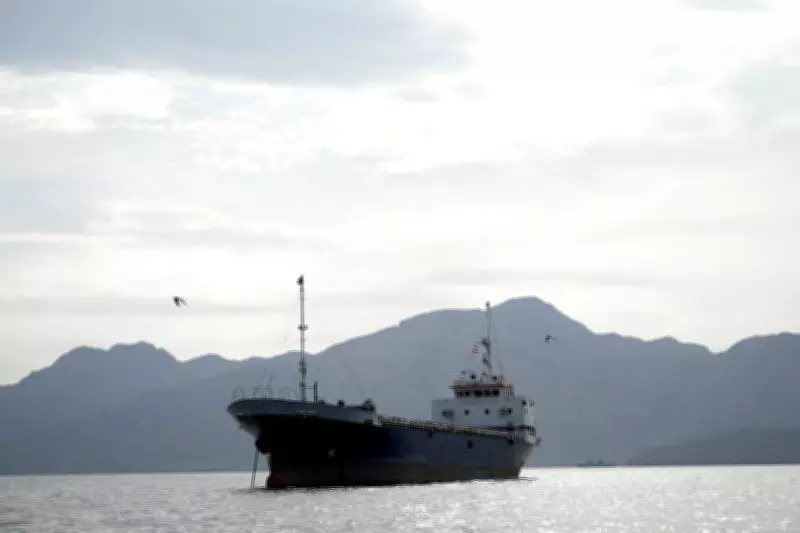
Chinese Foreign Minister Wang Yi held urgent discussions with Iranian counterpart Abbas Araqchi, explicitly urging Tehran to restore normal navigation through the vital Strait of Hormuz. The Chinese foreign ministry confirmed the conversation, marking Beijing's first formal request since Iran tightened control over the waterway that facilitates approximately 20% of global oil trade.
"While Iran's sovereignty and security in the strait should be respected and safeguarded, freedom and safety of navigation must also be guaranteed," Wang stated during the exchange. He emphasized that "the situation is at a critical stage of transformation" and suggested "a window for peace is opening."

The Chinese diplomat framed the issue as an international imperative, declaring that "working to resume normal passage of the strait is a unanimous call from the international community." Wang further expressed China's support for maintaining ceasefire agreements and continuing negotiations, arguing these measures would benefit Iran, the broader region, and the global community.
Economic Resilience Meets Growing Vulnerability
Despite the geopolitical tensions, China's economy demonstrated surprising resilience in the first quarter of 2026, expanding by 5% year-on-year according to government data released Thursday. This growth exceeded economist expectations and improved upon the 4.5% expansion recorded in the final quarter of 2025. On a quarterly basis, the economy accelerated by 1.3% from the previous three-month period, representing the fastest pace in twelve months.
These figures cover the initial period of the Iran conflict, which commenced on February 28, suggesting China has thus far managed to withstand immediate economic disruptions. The positive data follows Beijing's recent decision to lower its annual growth target to 4.5-5%, the most conservative expansion goal set by Chinese authorities since 1991.
Industrial production showed particular strength, rising 5.7% year-on-year in March as global demand remained robust for Chinese electronic equipment, automobiles, semiconductors, and robotics. However, retail sales presented a contrasting picture, increasing just 1.7% annually—below estimates and slower than the 2.8% growth recorded in January and February—highlighting persistent weaknesses in domestic consumption.
Export Dependency Creates Long-Term Risks
Economists caution that China's apparent short-term resilience masks significant vulnerabilities, particularly its heavy reliance on export markets that could deteriorate as the Iran conflict persists. The war has already driven energy prices higher, exacerbated global inflation, and threatened worldwide economic expansion.
"The lack of a speedy resolution to the Iran war is likely to dent global growth, which will negatively impact other economies' ability to absorb Chinese exports," explained Eswar Prasad, professor of economics and trade policy at Cornell University. "At a time when all countries are trying to protect their firms, households and economies from the fallout of the Iran war, the appetite for Chinese imports is clearly shrinking."
This warning carries particular weight given existing trade challenges, including the 10% tariffs imposed on Chinese goods by US President Donald Trump. China's export sector powered the nation to achieve its "around 5%" growth target in 2025, generating a record trade surplus approaching $1.2 trillion despite American trade barriers.
Structural Challenges Compound External Pressures
President Xi Jinping's administration continues grappling with multiple domestic structural issues that could amplify external economic shocks:

- Persistently weak domestic consumption patterns
- Demographic decline and aging population
- Prolonged property sector crisis affecting consumer and investor confidence
- Increasing reliance on export-driven growth amid shrinking global demand
The Strait of Hormuz blockade represents more than a regional security concern for Beijing—it threatens the energy supplies and trade routes underpinning China's economic model. With the US naval blockade further complicating the situation, Chinese authorities face mounting pressure to protect both immediate economic interests and long-term strategic positioning in an increasingly volatile global landscape.





