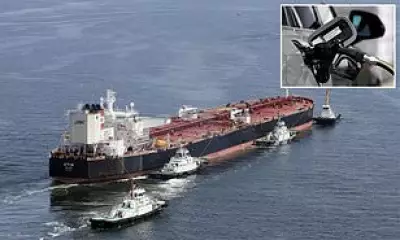
China Demands Vessel Protection in Strait of Hormuz as Shipping Costs Surge
The Chinese government has issued a strong appeal for the protection of vessels navigating the Strait of Hormuz, a critical maritime chokepoint, as escalating tensions in the Iran conflict drive shipping freight rates to unprecedented levels. Beijing's foreign ministry has urged all involved parties to immediately halt military operations, de-escalate tensions, and ensure the safety of navigation through this vital waterway.
Global Trade Artery Disrupted by Military Actions
Maritime traffic through the Strait of Hormuz, a narrow channel linking the Persian Gulf with the Gulf of Oman, has been effectively shut down since the weekend. This closure followed missile attacks by the US and Israel on Iran, which prompted retaliatory measures from Tehran. The strait, located on Iran's southern border, is one of the world's most crucial trade routes, typically handling approximately 20% of global seaborne crude oil, 20% of seaborne gas tankers, and one-third of widely used fertiliser shipments.
As of Tuesday, the strait remained devoid of ships for a fourth consecutive day, choking off energy exports from major producers such as Saudi Arabia, the United Arab Emirates, Iraq, Kuwait, and Iran itself. This disruption has triggered immediate energy shortages and sent prices soaring, with significant implications for global markets.

Economic Fallout and Rising Costs
The effective closure of the Strait of Hormuz has led to a dramatic surge in shipping costs. The spot rate to charter a very large crude oil carrier (VLCC) from the Middle East to China has skyrocketed to over $424,000 per day, a fourfold increase from the recent average of $100,000 per day. This spike is compounded by the cancellation of war risk insurance cover for vessels operating in the Gulf by leading maritime insurers, further exacerbating the financial strain on shipping companies.
China, as the world's largest importer of oil and fossil gas and a major buyer of Iranian oil, is particularly vulnerable to these disruptions. Other Asian nations, including India, Korea, Thailand, and the Philippines, are also heavily impacted due to their reliance on Middle Eastern energy imports. Industry analysts warn that these countries face heightened risks from rising oil prices and supply chain interruptions.
Incidents and Regional Shutdowns
Recent attacks have intensified the crisis. Iranian forces claimed to have struck the Honduras-flagged fuel tanker Athe Nova with two drones on Monday, setting it ablaze. This followed incidents on Sunday off the coast of Oman where two other tankers were hit, resulting in the death of one crew member. In response, at least 150 tankers carrying crude oil, liquefied natural gas (LNG), and oil products have anchored in the Gulf, representing 4% of the global fleet by tonnage.
Energy-producing nations have few viable alternatives for exports. While some oil pipelines exist, such as Saudi Arabia's east-west pipeline and others in the UAE and Kurdistan, their capacity pales in comparison to sea transport. Concurrently, key facilities have been shut down: Qatar has closed its LNG sites (accounting for 20% of global LNG exports), Saudi Arabia halted production at its largest refinery, and operations have been suspended in parts of Israel and Iraq's Kurdistan region.
Broader Shipping Industry Impacts
The disruption extends beyond oil and gas. Container ships, which transport a wide range of goods from furniture to food, are also affected. Major shipping companies, including Denmark's Maersk and Germany's Hapag-Lloyd, have rerouted vessels around the Cape of Good Hope in Africa after threats from Iran-backed Houthi rebels in Yemen to resume attacks. This detour adds significant time and cost to global sailings.
In a precautionary move, France's CMA CGM has suspended all bookings for ports in Bahrain, Kuwait, Qatar, most UAE ports (except Fujairah and Khor Fakkan), and key ports in Saudi Arabia and Iraq. A spokesperson for the International Chamber of Shipping noted that shipowners are reluctant to endanger crews amid the conflict, and if traffic through the strait remains 80% below normal, pressure on global supply chains will intensify daily.

Long-Term Implications
Historically, the Strait of Hormuz has not experienced prolonged disruptions, even during conflicts. If the current closure persists, it is expected to trigger further surges in energy prices and exacerbate global economic instability. The situation underscores the fragility of key maritime routes and the far-reaching consequences of regional conflicts on international trade and security.