
The answer is simple – as his advisers will have told Donald Trump before he attacked Iran, it is almost impossible to clear a passage through a minefield when the shoreline is held by the enemy, without being prepared to take significant casualties. And this, it seems, the US is not prepared to do.
It is one thing to bomb a less technologically sophisticated enemy from the air, but quite another to get involved in a real fight at sea level with an opponent who has been planning this form of asymmetric warfare for a very long time.
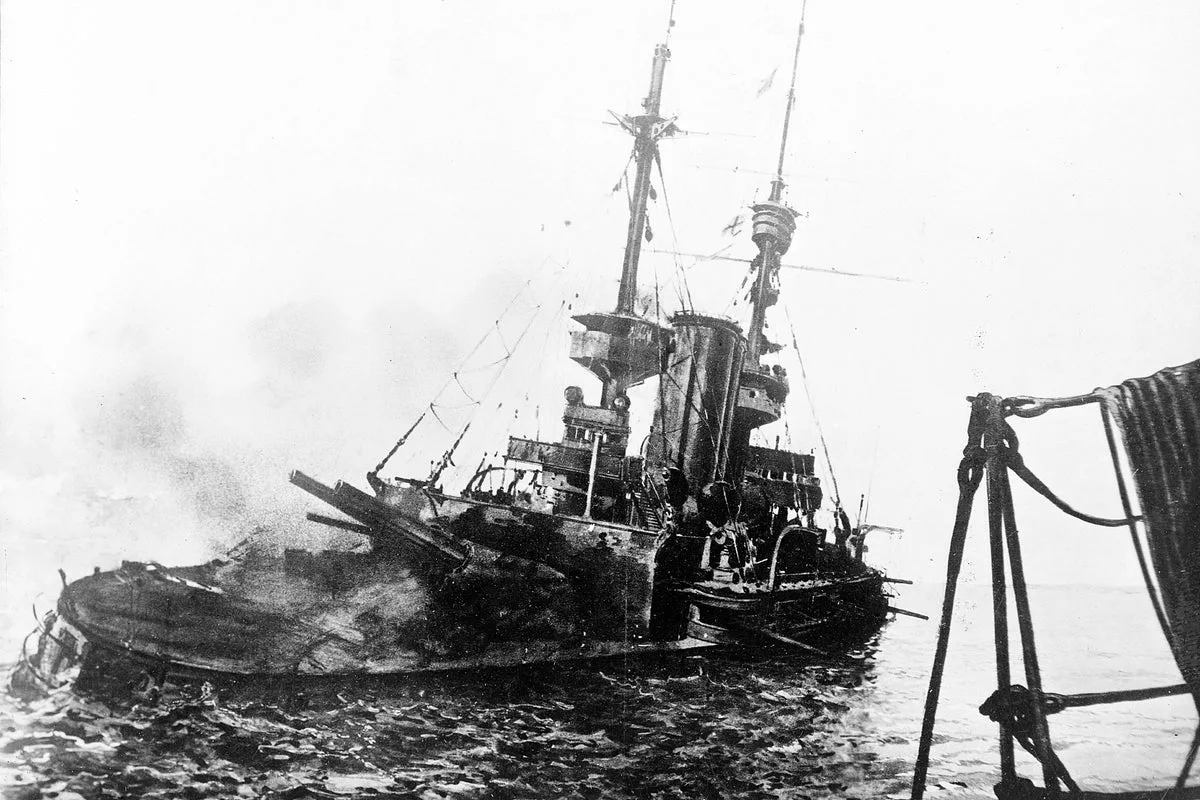
History gives a stark lesson on why America needs to tread warily – a page from the First World War. It was March 1915. The “straits” concerned were the Dardanelles – the narrow passage linking the Mediterranean to the Black Sea and giving access to Istanbul. The Turks were the defenders, the British and the French the attackers.
A decision was made by the British and French that the straits were to be reopened by force – and a very considerable force was assembled for that purpose. It comprised no fewer than 14 “capital” ships supported by escorts and a large force of minesweepers. The plan was a good one: capital ships would stand off and bombard shore defences, then minesweepers would clear an area, and the ships would move forward again into swept water.
However, the operation on 18 March 1915 quickly went wrong. FS Bouvet hit a mine and sank with 75 survivors out of 718. HMS Irresistible struck two mines and was abandoned. HMS Inflexible hit a mine and was beached. HMS Ocean struck another mine and was abandoned. Vice-Admiral John de Robeck gave the order to withdraw after less than seven hours.
The lesson is clear: forcing a mined strait when the shore is heavily defended can result in heavy losses, as history shows. The US must weigh these risks carefully in the Strait of Hormuz.




