

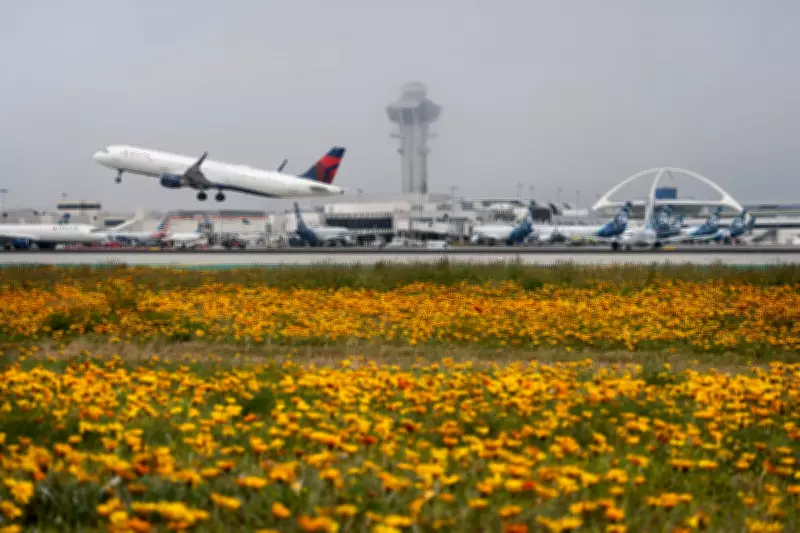
Federal Scrutiny Intensifies in California Airport Funding Dispute
The Federal Aviation Administration has significantly escalated its scrutiny in a yearslong dispute over California's use of airport funding, putting hundreds of millions of dollars in federal support at risk. The federal agency is questioning whether California is properly spending revenue generated from jet fuel taxes on airport infrastructure projects as required by federal regulations.
Compliance Deadline and State Response
The FAA gave California's Finance Department until the end of March to produce detailed records documenting how jet fuel tax revenue is being spent. In a letter dated March 5, the agency warned it "reserves the right to take appropriate compliance and enforcement actions as necessary" if the state fails to demonstrate proper use of these funds.
California's Finance Department responded on March 20, arguing that the state spends substantially more on airport infrastructure than it collects from jet fuel taxes. According to the department's analysis, California will have invested over $2 billion in airport projects from 2020 to 2026, while collecting only $226 million in jet fuel tax revenue during that same period. The state maintains this demonstrates compliance with the spirit of federal regulations.

Historical Context and Audit Findings
This dispute has roots in longstanding practices. According to a December 2023 audit by the U.S. Transportation Department's Office of Inspector General, California has historically redirected jet fuel tax revenue to other accounts, including the state's general fund. The jet fuel tax, set at 3.9%, generates fluctuating revenue based on fuel sales to airlines.
Significant discrepancies exist in reported revenue figures. While the Finance Department cites $226 million over six years, state Tax and Fee Administration data shows much higher annual collections: $134 million in 2024 and nearly $154 million the previous year. This discrepancy may stem from disagreements about which taxes are subject to FAA oversight.
Federal Funding at Stake
The financial implications are substantial. According to Jim Lites, executive director of the California Airports Council, at least $650 million in federal funding is pending for eight airports across the state this year. These airports include major facilities in San Francisco, Los Angeles, Palm Springs, Burbank, Orange County, Monterey, San Jose, and Sacramento.
FAA spokesperson Cassandra Nolan confirmed the agency is "assessing" California's compliance but declined to specify potential enforcement actions. However, in a September 2020 letter, the FAA indicated it was "prepared to seek assistance from the U.S. Attorney's Office" if necessary.
Legislative Response and Policy Changes
California remains one of only four states not in compliance with FAA regulations regarding jet fuel tax revenue usage. The FAA began enforcing 1980s mandates in 2014, giving states three years to comply, yet California continues to operate under its existing system.
State Senator Melissa Hurtado, a Democrat representing Bakersfield, has introduced Senate Bill 661 to address the issue. The legislation would ensure half of jet fuel tax revenue supports non-commercial airports, with the remaining half retained by airports where fuel was sold. Currently, the state collects fuel taxes from retailers, deposits state shares into the general fund, and allocates local taxes to appropriate jurisdictions.
Broader Implications and Stakeholder Support
Supporters of the legislative solution include the California Airports Council, the cities of Merced and Bakersfield (whose airports would benefit from mandated tax revenue allocation), and the airline industry. Senator Hurtado has emphasized that her bill proposes a new allocation formula to better address the needs of all California airports, particularly in rural communities.
"Obviously I represent a rural community and the goal is to ensure that these funds are able to go back to those communities, and right now they're not," Hurtado told the Assembly Standing Committee on Transportation last summer.

The Finance Department has declined interview requests regarding ongoing discussions with the FAA but has shared some correspondence between the agencies. This dispute represents a critical juncture in federal-state relations regarding infrastructure funding, with significant financial consequences for California's airport system.





