

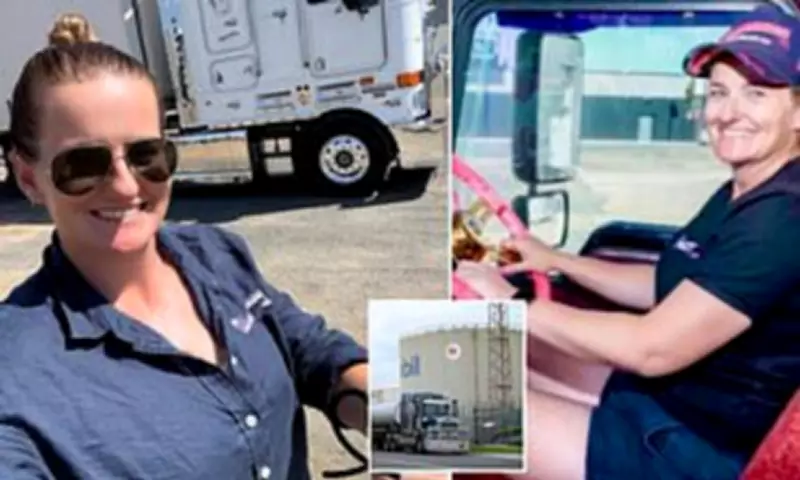
An Australian truck driver and fleet owner has issued a stark warning that she may be forced to shut down her business as the nation's fuel crisis intensifies, describing the situation as potentially turning into a disastrous scenario. Sharna Chapman, who operates Runnymede Trucking Company in Echuca on the Victoria-NSW border, says soaring fuel prices, driven by escalating conflict in the Middle East, have pushed her operation to breaking point.
Fuel Costs Skyrocket Amid Global Tensions
Shipping disruptions in the Strait of Hormuz, a vital route for approximately one-fifth of the world's oil, have sent Australian fuel prices above $3 per litre in some regions. Hundreds of service stations are reportedly running out of supply, exacerbating the crisis. Chapman reveals that her fuel expenses have jumped by $20,000 in the past month alone, and by March 18, she had already matched her entire fuel bill for February.
To stay afloat, her drivers have taken several days off to cut fuel use. 'I've had this business for nine years - myself and all of my drivers work their arses off,' she told the ABC. 'I'd like to think I won't have to shut the doors, but I know three owner-drivers who handed in their keys today because they just can't keep going. It's not viable anymore.' She added that the emotional toll is evident, with tears visible in Facebook posts from those closing their businesses.

Day-to-Day Survival for Small Operators
Chapman emphasises that small transport operators are now working day-to-day to survive the fuel crisis, with some already ceasing operations as costs spiral out of control. 'We're just working day-to-day. We can't look too far ahead because I don't know what's going to happen,' she said. 'We can only pass on so much to the customers. It's not as simple as that. Then the customer has to find a way to absorb it. In the end, it's going to turn into a disastrous situation.'
She has called on the government to introduce a diesel subsidy before the impacts spread across the wider economy. 'We understand prices have to go up and that it's out of their control, but what is in their control is coming up with a plan to help subsidise transport companies that are working their backsides off to keep the country going.'
Domino Effect on Consumers and Supply Chains
Queensland truck driver David highlighted the personal impact, noting that his fill-up costs have surged from $950 to $1,550 per week, a jump of $500 to $600. He warned that rising costs would create a domino effect, ultimately hitting everyday Australians. 'It's all going to come to one place and that's the consumer. We deliver eggs, milk, bread, meat, and vegetables. They all have to go up. Prepare yourself for Armageddon, because if this keeps going, it has to go into the shops. There's no other place it can go.'
National Road Transport Association chief Warren Clark echoed these concerns, stating that the situation has become so dire that some businesses owning trucks outright are choosing to park vehicles and wait out the crisis rather than operate at a loss. He predicted consumers could start to see effects as early as mid to late April, with noticeable price hikes on everyday essentials or empty shelves altogether.
Government Response and Industry Warnings
Clark emphasised that the cost of fuel must be borne by end customers or businesses cannot survive. 'Some of our members are telling us they simply cannot keep going. We are seeing long-term operators parking their trucks and walking away from businesses they've spent years building.' He pointed to April 21 as a critical date when fuel card bills for March arrive, potentially forcing more operators to make tough decisions.
The consequences of government inaction could extend far beyond the transport sector, flowing directly into higher prices for groceries, fuel, and essential goods. 'When trucking businesses collapse, supply chains suffer, and Australian households pay the price,' Clark warned.

Broader Agricultural Impacts
With the closure of the Strait of Hormuz also interrupting crucial fertiliser shipments from the Middle East, farmers are bracing for impact. National Farmers' Federation president Hamish McIntyre said dairy products would be among the first to see prices skyrocket, followed by fresh produce. 'We estimate in a matter of weeks we'll start to see the costs flow through to the consumers on supermarket shelves. It starts with dairy, then our fruit and veg, and in any of our intensive animal industries too.'
In response, the government announced changes to the Fair Work Act on Tuesday, allowing truck drivers and transport businesses to make emergency applications for contract changes due to fuel price spikes. These changes will enable faster re-negotiation of contracts and remove a six-month minimum waiting period, helping companies avoid being caught out by higher fuel prices.





