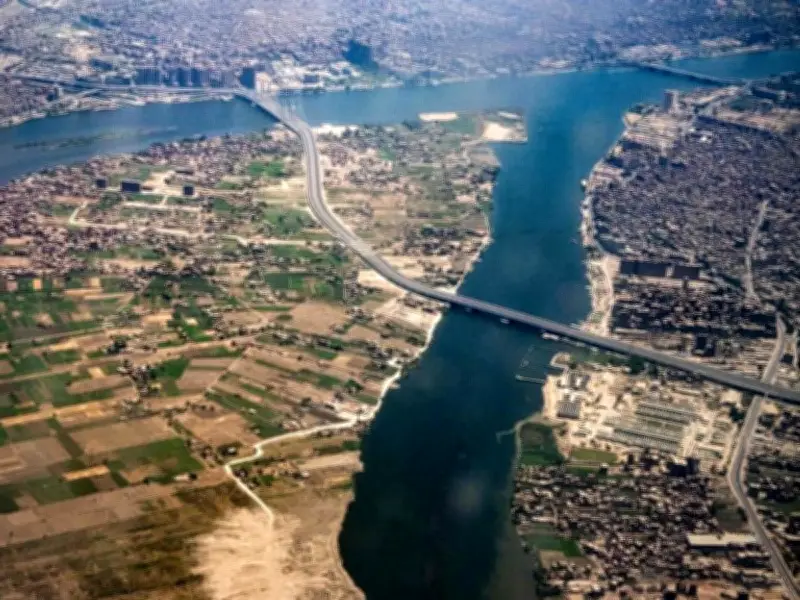
The Rod El Farag Axis Bridge, also known as the Tahya Misr Bridge, is a cable-stayed bridge spanning the Nile River through Cairo, Egypt. It holds the Guinness World Record as the widest bridge in the world, with a width of 67.3 metres. The bridge features six lanes in each direction and serves as a major tourist attraction.
Free Pedestrian Access with Panoramic Views
Pedestrian visitors can cross the bridge using a walkway that offers panoramic views over the Nile. The walkway is interspersed with glass panels, creating the sensation of hovering above the river below. As a public road, crossing the bridge is free of charge, allowing visitors to enjoy spectacular views of Cairo.
Construction and Cost
The bridge was built by the Armed Forces Engineering Authority (AFEA) in cooperation with several national companies. Construction took four years, finishing in 2019. According to Ihab Alphar, chairman of the AFEA, the basic cost of the project reached £7.43 billion. The bridge is 540 metres long, with 92-metre-high suspension towers and seven entry and exit ramps.
Engineering Challenges
To build the bridge, 4,000 workers, including engineers, technicians and labourers, worked tirelessly. Mohsen Salah, chief executive officer and chairman of Arab Contractors Company, said: “The engineering crews responsible for the implementation of the bridge faced many difficulties that were overcome with Egyptian engineering innovations.” He noted that one major issue was moving 226.8 tonnes of metal beams to the assembly area. During peak construction, 200 cranes were deployed at the site, and builders constructed two custom ferry boats strong enough to move 544.3 tonnes of equipment to assembly zones.