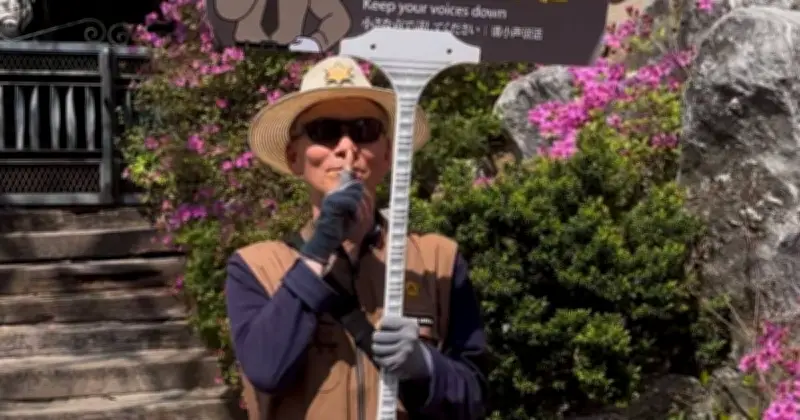
Residents of Seoul's historic Bukchon Hanok Village have taken matters into their own hands, deploying 'quiet police' known as the Bukchon Guardians to ask noisy tourists to keep the noise down.
A man in an immaculate uniform approached me, raised a finger to his lips and gestured for silence. Unaware of 'the quiet police', I was puzzled about what had caught his attention. Then I noticed his placard. "This place is a residential area. Keep your voice down," it stated. I promptly fell silent and adopted an apologetic facial expression.
Frustration in a Historic Neighbourhood
Bukchon is one of Seoul's most visited and photographed districts. Its maze of traditional hanok homes recently inspired the Netflix hit KPOP Demon Hunters. The neighbourhood's history stretches back 600 years, but residents have only recently begun voicing their frustration.
People living in its 900 properties have grown tired of the constant chatter from crowds outside their homes. Many visitors wear traditional hanbok rented from nearby costume shops. Meanwhile, local shops have been replaced by gift retailers doing brisk business during the April peak period.
Once you see the crowds and visitors lounging on doorsteps and blocking pathways, residents' frustration is easy to understand. Rather than simply complaining, they have chosen to act.
New Rules and Penalties
In July 2025, the district introduced a trial ban on large tour coaches entering the area's narrow lanes. The measure became permanent in February, with a 300,000 won (£150) penalty for any coach entering.
Tourist-free 'red zones' have also been cordoned off. At 5pm each day, the quiet police – officially known as the Bukchon Guardians – politely ask visitors to leave. The district then returns to its peaceful atmosphere.
Although the scheme is still in its early stages, it offers a model that other destinations struggling with heavy tourist crowds could follow. It is easy to imagine how busy residential areas of Venice or Barcelona, or villages such as Bibury in the Cotswolds, might benefit from similar measures.
Support from Residents and Experts
Kim Nam-jo, a professor in the Department of Tourism at Hanyang University, supports the changes. "The convenience of the residents must be the number one priority," the professor told the Korea Times, explaining why the hanok houses deserve respect. "They are the traditional housing of Korea that carries the identity of the Korean people. It represents the residential identity of those who have lived in this country for generations. People come here to feel the aura and the collective identity of our culture, which is why preserving the actual living environment is so important."
The changes appear to have won support from local residents. Jung, who has lived there for nearly 30 years, welcomed the new rules. "We deserve peace and quiet too. In the past few years, the noise and traffic from both tourists and weekend protests made it impossible to stay at home or move around the neighborhood. These rules help us control our own daily lives again and make the neighborhood predictable," he said.
Other districts adopting this approach may find managing crowds more challenging. According to Numbeo, South Korea has one of the world's lowest crime rates. Seoul's streets are remarkably clean across most districts, despite the city having virtually no public bins. The capital also has a visible police presence, with officers ready to fine anyone breaking the many rules displayed on street signs.
Penalties include fines of 100,000 won (£50) for smoking outside designated areas and for jaywalking. Smoking restrictions cover most of the city. Road-crossing rules are enforced so strictly that pedestrians can often be seen hurrying across before the countdown expires.
The scheme's apparent success in Bukchon may partly reflect this widespread respect for the rules. Whether British tourists abroad would show similar restraint remains uncertain.