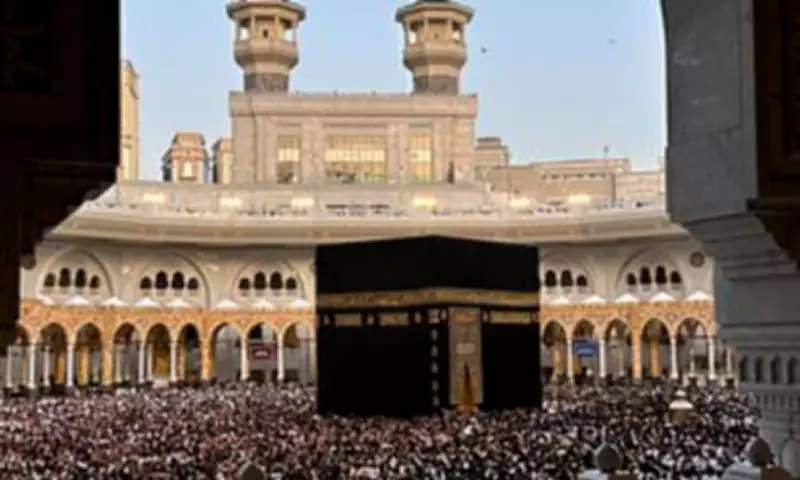
Saudi Arabia Greenlights Major Transport Hub for Mecca
Saudi Arabia has officially approved the development of a new international airport and metro system in Mecca, Islam's holiest city, which hosts over one million foreign pilgrims annually. This strategic move is designed to provide direct access for visitors undertaking the Hajj and Umrah pilgrimages, significantly easing travel logistics that have long been hampered by the city's mountainous terrain.
Overcoming Geographic Challenges
For years, Mecca's rugged landscape was considered too hazardous for an airport, with risks of turbulence, limited visibility, and difficult landing conditions. As a result, international visitors have typically flown into King Abdulaziz International Airport in Jeddah, approximately 100 kilometres away, before completing the journey by car or bus. The newly approved Makkah International Airport, confirmed by Saleh Al-Rasheed, CEO of the Royal Commission for the City of Makkah Al Mukarramah and the Holy Sites (RCMC), aims to eliminate this inconvenience.
In a recent meeting with Harvard Business Review Arabia, Al-Rasheed outlined that the airport will be developed in partnership with the private sector, adhering to world-class standards for both residents and pilgrims. He emphasised that the project will maintain the economic balance of neighbouring regional airports, ensuring a harmonious integration into Saudi Arabia's broader transport network.

Enhanced Infrastructure for Pilgrims
Alongside the airport, plans for the 'Mecca Metro' have been unveiled, representing a significant upgrade from the city's existing bus system. Currently, 185 million passengers rely on 400 buses covering 580 kilometres across 12 routes. The metro is expected to streamline transport within the holy city, catering to the massive influx of visitors during peak pilgrimage periods.
Al-Rasheed noted that feasibility studies and initial designs have been completed and submitted to the relevant authorities, paving the way for the project's next phases. This development follows successful tests in 2024 of self-driving aerial taxis for pilgrim transport between holy sites, emergency travel, and medical equipment delivery, showcasing Saudi Arabia's commitment to innovative solutions.
Pilgrimage and Tourism Context
Hajj, a five to six-day pilgrimage occurring in the summer, and Umrah, which can be performed year-round, are central to Islam, with Hajj being one of the Five Pillars required for physically and financially able Muslims. According to data from the General Authority for Statistics (GASTAT), around 1.5 million foreign pilgrims arrived in Mecca for Hajj last year, with international pilgrims from Europe, America, and Australia accounting for 3.2 per cent of travellers, as reported by Euro News.
Saudi Arabia has been actively enhancing its tourism offerings, including new attractions and facilities, to attract more visitors. However, the current political landscape in the Middle East, marked by ongoing conflicts, poses significant risks. A recent report by Tourism Economics warns that the region's tourism industry could face losses of up to £35 billion, with inbound arrivals potentially declining 11-27 per cent in 2026 due to the conflict.
Helen McDermott, Director of global forecasting, and senior economist Jessie Smith highlighted that this could result in 23-38 million fewer international visitors and a $34 billion-$56 billion loss in visitor spend, impacting plans like the Mecca megaproject. Brits and other international travellers are already experiencing severe disruptions, with flights to major hubs cancelled or suspended, casting uncertainty over the future of the region's travel industry.