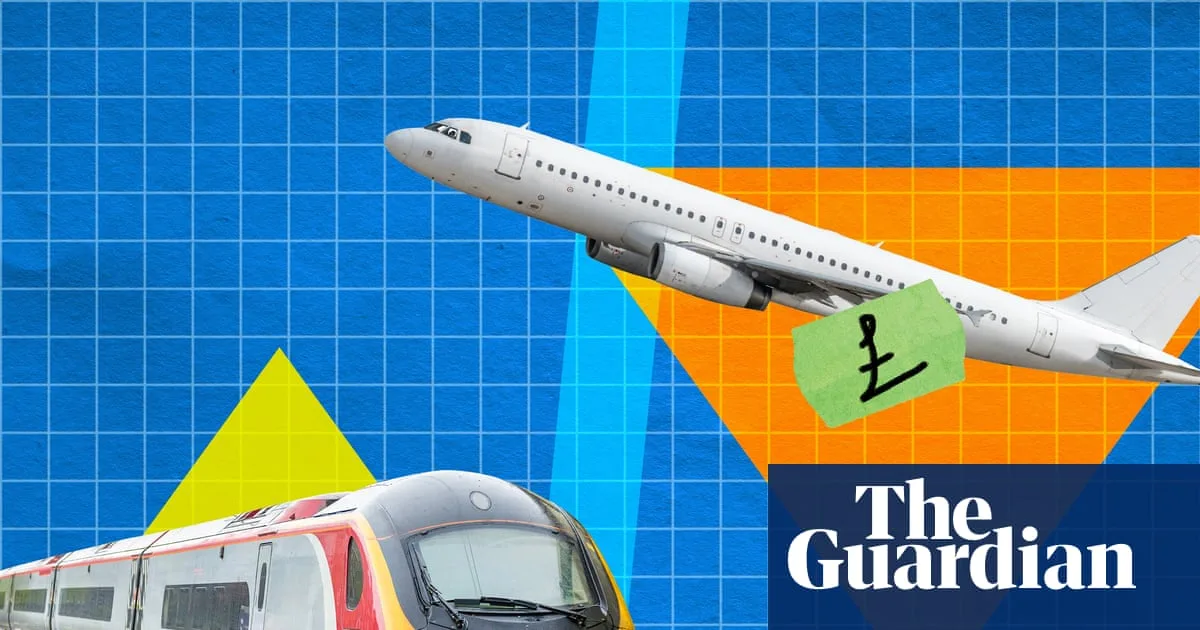
Despite the higher environmental cost of flying and government subsidies for rail travel, domestic flights in the UK are often cheaper than train tickets. Recent research by personal finance comparison site Finder found that flying within the UK was the cheapest option more often than taking the train, a result that surprised many respondents. Louise Bastock, a money expert at the site, said people told her that “trains should be cheaper as it is public transport and more accessible”, with some saying “it feels all wrong” when plane travel cost less.
Comparing prices on a specific day in October reveals the scale of the gap. A midday trip from London to Edinburgh on Thursday 2 October cost from £77.10 by train but from just £15 by plane, with some flights below £20 and the cheapest from Stansted. A Heathrow departure at 1.30pm started at £37. Similarly, from Newquay to Manchester the next day, train fares began at £113 while flights were advertised from £53, and Glasgow to Bristol flights cost from £15 against train fares starting at £56.50. These prices vary throughout the day and by purchase timing, suggesting fares are not simply reflecting operating costs.
Train operating costs are dominated by leasing trains, staffing, and track maintenance, which together account for about 85% of the total. Fuel, either diesel or electricity, attracts VAT at 5% or 20% respectively, and running a single London-to-Edinburgh train has been estimated in the tens of thousands of pounds. Even so, rail travel is subsidised, with the government supporting train operating companies to the tune of £4.1bn in the year ending March 2024. Airlines face similar costs for leasing aircraft, landing slots, and staff, but they benefit from a key difference: jet fuel is exempt from VAT and duty. The Campaign for Better Transport estimated three years ago that taxing domestic flight fuel at the same rate as petrol would raise £1.5bn a year, a cost airlines currently avoid.
However, headline fares may not tell the whole story. Add-ons can significantly increase the final price. Ryanair’s latest annual accounts show an average fare of €46 (£41) per passenger, but total revenue per person, including extras, reached almost €70. On the London-to-Edinburgh route, a cheap Ryanair flight allows only one small bag measuring 40 x 30 x 20cm, whereas LNER trains permit three bags. Adding a 10kg suitcase to the flight costs £28, bringing the total to £43, still below the train’s £77.10. Taking a bicycle, though, is free on LNER (subject to reservation) but costs £60 on Ryanair, and while reserving a train seat is free, the airline charges for preferred seating.
For travellers whose final destination is not near an airport, a budget flight may prove a false economy. Even so, on many domestic routes, flying remains the cheaper option, leaving consumers to weigh the cost savings against the environmental and practical implications.