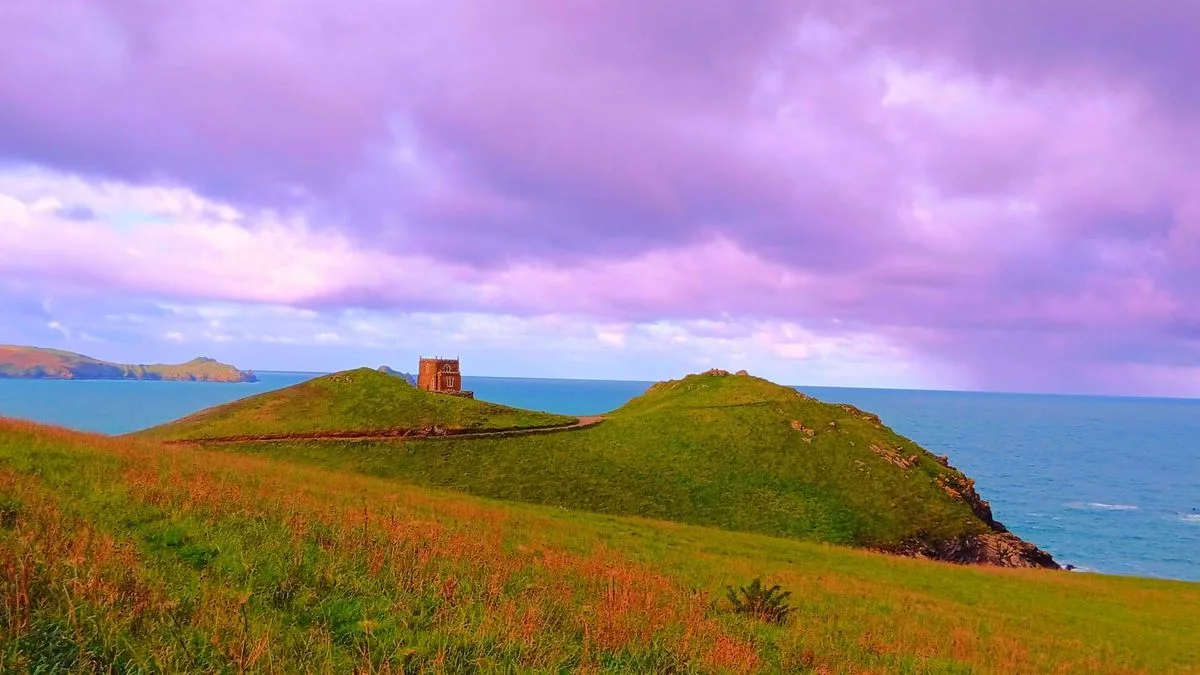
Port Quin, a tiny hamlet in North Cornwall, is often described as a 'village which died' due to a tragic 19th-century event. According to local legend, all the village's men perished in a storm while fishing on a Sunday, leaving their families unable to survive. The women were forced to abandon their homes and seek refuge elsewhere. This poignant story is immortalised in Frank Bramley's 1888 painting 'The Hopeless Dawn', now displayed at Tate Britain in London.
Today, Port Quin is a tranquil haven under National Trust ownership, with only a handful of holiday lets and no modern construction. Its name derives from the Cornish words 'porth' (cove) and 'gwynn' (white), meaning 'White Cove'. The hamlet boasts spectacular coastal views and is surrounded by three local farms: Scarrabine, Trevigo, and Roscarrock.
Despite its modest size, Port Quin has a rich history encompassing fishing, smuggling, mining, and even a stint as a filming location for the television adaptation of Winston Graham's Poldark novels. The old fish cellars remain visible, hinting at its once-flourishing fishing community.
The protected inlet is ideal for rock pooling, kayaking, and angling, and is beloved by families for safe paddling. However, winter storms make swimming inadvisable during those months. A National Trust car park serves visitors, often accompanied by a mobile vintage café in summer.
Port Quin is conveniently located near Port Isaac, a renowned fishing village with restaurants, pubs, and two Michelin-starred establishments: Outlaw's New Road and Outlaw's Fish Kitchen. Chef Nathan Outlaw's flagship venue, Outlaw's New Road, is set to close on March 28, to be replaced by a new venture, Outlaw's Bi.