Viral Photo Sparks Tourism Crisis in Japanese Town at Foot of Mount Fuji
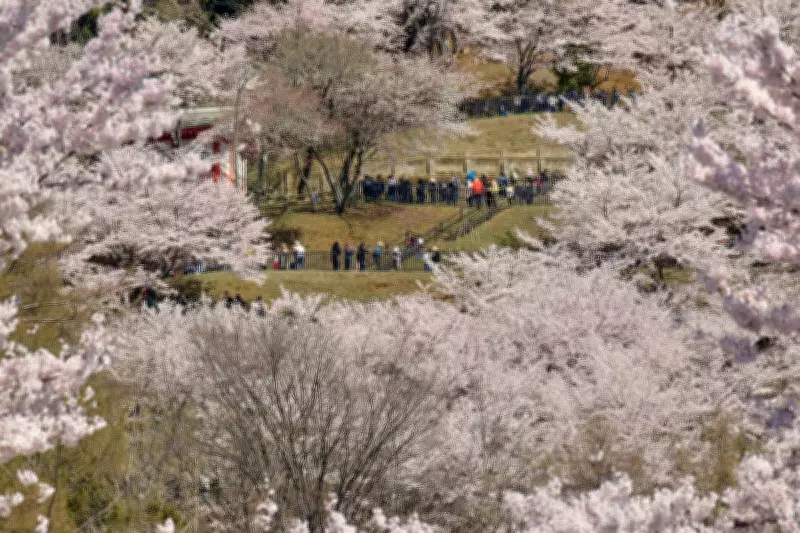
A single captivating photograph has transformed a tranquil Japanese community into an overcrowded tourist hotspot, creating significant challenges for local residents. The image, which spread rapidly across social media platforms, features Japan's iconic snow-capped Mount Fuji towering above a traditional red pagoda, framed by the delicate pink blossoms of cherry trees that signal spring's arrival.
From Promotion to Problem: Festival Cancellation Signals Growing Crisis
The picturesque scene proved irresistible to international travelers, who descended upon the previously peaceful town of Fujiyoshida in overwhelming numbers. What began as a beautiful representation of Japanese natural and cultural heritage quickly escalated into what locals now describe as "tourism pollution." The situation deteriorated so significantly that municipal officials made the unprecedented decision in February to cancel this year's annual cherry blossom festival—an event originally established a decade ago specifically to promote tourism.
Masatoshi Hada, manager of the Fujiyoshida Economics and Environment Department, explained the difficult decision to The Associated Press: "This area is primarily an ordinary residential neighborhood, where balancing tourism with the safety of people's living environment has become difficult. We decided not to promote a festival that would invite more visitors."

Daily Disruptions: 10,000 Tourists Threaten Community Life
Even without the organized festival, foreign visitors continued to flood the area during peak cherry blossom season in early April. The city reported that foreign tourists have recently exceeded 10,000 per day, a volume that has "threatened residents' daily lives" according to an official February statement. The narrow streets leading to popular Arakurayama Sengen Park became congested with visitors queuing for hours to capture the world-famous panoramic views.
The tourism surge has created numerous practical problems for residents:
- Chronic traffic congestion throughout the town
- Significant litter accumulation in public spaces
- Tourists knocking on private doors requesting toilet access
- Visitors relieving themselves in residential front yards
- Blocked streets as tourists photograph Mount Fuji
Broader National Context: Japan's Tourism Dilemma
Fujiyoshida's experience reflects a larger national challenge as Japan navigates competing priorities. While the country seeks to boost its economy through increased tourism—with goals to raise inbound visitors from 40 million to 60 million by 2030—local communities often find themselves unprepared for the practical realities of hosting large numbers of international guests.
This "tourism pollution" phenomenon coincides with Japan's demographic shifts, including a rapidly growing foreign worker population and an aging native citizenry. The combination has contributed to rising xenophobia in some areas, with Prime Minister Sanae Takaichi's nationalistic government proposing stricter regulations for foreigners.
Similar overtourism challenges have emerged in other popular Japanese destinations:
- Kyoto: Residents complain of tourists with oversized luggage blocking city buses
- Kamakura: Historic sites experience overwhelming visitor numbers
Local Responses: Security Measures and Mixed Feelings
Beginning April 1, coinciding with the region's cherry blossom season, Fujiyoshida implemented several measures to manage the tourist influx:
- Increased security personnel throughout affected areas
- Restricted tour bus and vehicle access to scenic neighborhoods
- Required visitors to reach popular parks on foot
Security guard Hiroaki Nagayama described the daily challenges: "I'm struggling. I cannot communicate with them in Japanese. Some people buy food at stalls and leave litter behind. I think what's happening here is a typical example of overtourism."

Local residents express ambivalent feelings about the tourism boom. Ninety-three-year-old Hitoshi Mori, who lives just blocks from the crowded areas, summarized the mixed emotions: "Having many visitors is good but annoying. It's too crowded outside so I can only get groceries once a week and stock up on food."
Economic Opportunities Versus Community Disruption
The tourism surge has created divisions within the community between residents seeking quiet and those capitalizing on economic opportunities. Some homeowners have converted their yards into paid parking spaces, while entrepreneurs have established new shops and food stalls catering to visitors.
In a nearby shopping arcade that previously suffered from numerous closed family businesses, commerce has revived following another viral social media image showing Mount Fuji visible from the street. Kyoko Funakubo, a 60-year-old hotel employee and part-time souvenir vendor, noted: "This place used to be almost abandoned, with many shuttered shops. But now, with many stores reopened or new shops that have opened, I feel good seeing this area come alive again."
However, she also acknowledged safety concerns: "I once almost hit a tourist who jumped into the street without looking."
Visitor Perspectives: Spectacular Views Despite Challenges
Despite the implementation of numerous signs encouraging better tourist behavior and the hours-long queues at popular viewpoints, international visitors generally express satisfaction with their experiences. Lisa Goerdert from Paris described the organized approach: "It's pretty well organized. When they let you come in, you have like five minutes to take as many pictures as you can, and it was amazing."
Vicky Tran, visiting from Melbourne, Australia with family and friends, acknowledged limitations but maintained appreciation: "We could not go all the way up to see the pagoda with Mount Fuji and the cherry blossoms because it was too crowded. Still, I enjoyed the view and the neighborhood."
Looking Forward: Balancing Tourism and Community Needs
Masami Nakamura, who operates a decades-old school uniform shop with her husband, represents many long-term residents adjusting to dramatic changes: "The sudden flood of visitors is a huge change for people like us who are used to a quiet suburban lifestyle. I only hope the tourists respect our rules and manners."
As Japan continues to pursue ambitious tourism targets while addressing the practical challenges of overtourism, communities like Fujiyoshida serve as important case studies in balancing economic benefits with quality of life preservation. The town's experience highlights the complex reality that viral social media content can generate both welcome economic activity and significant community disruption, requiring careful management and thoughtful policy responses.