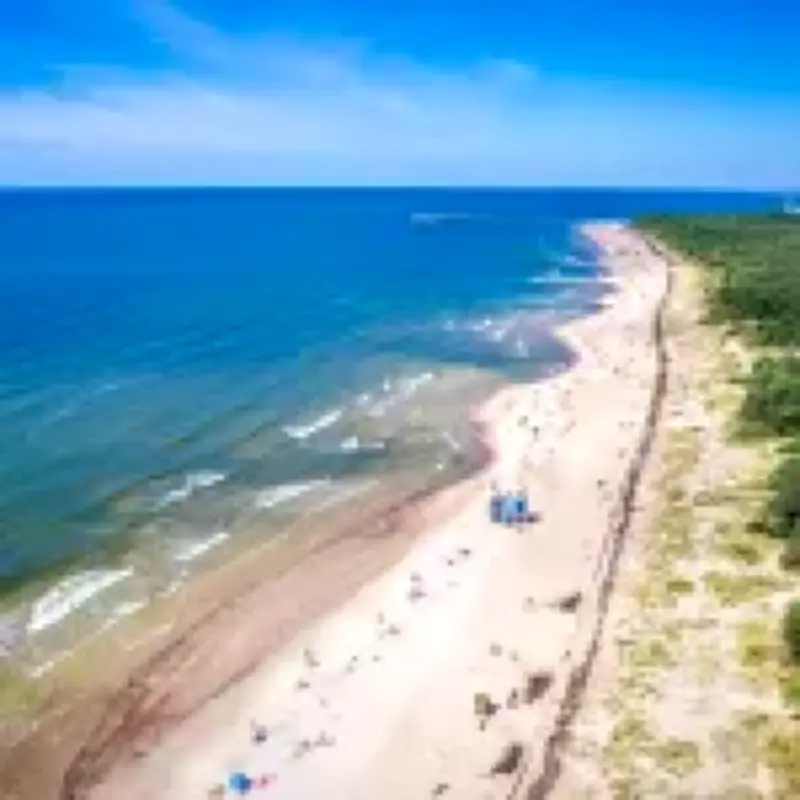
A traveller who has visited 28 European countries says Lithuania's Baltic coast is the most underrated beach escape, praising its inviting beaches, beautiful nature and consistently good food. The discovery began in the UK, where regular flights to Palanga were found from £88 return, despite many people not realising Lithuania has a coastline.
A small but striking coastline
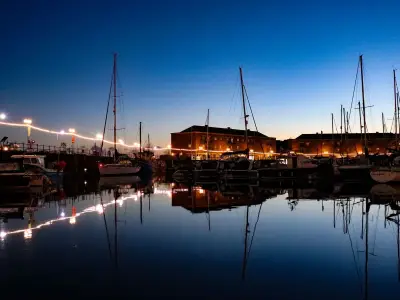
The coastline is small, just over 90km in total, but the town of Palanga offers a sweeping stretch of immaculate white sand. There are several charming sea view bars, a public toilet, and access via paths with wooden planks so shoes do not get full of sand. While it does not get the heat of the Mediterranean, summer temperatures of a pleasant 23°C attract local crowds, though even at the height of the season it is easy to find quiet spots on the sand.
The main pedestrian drag, Jonas Basanavičius Street, is alive with cafes and bars, especially in the summer from late May to September. Palanga has the feel of a classic seaside resort with a distinctly Baltic twist, featuring elegant wooden villas ensconced among trees, flower-filled streets leading towards the sea, and a long pier drawing revellers at sunset.

History and amber treasures
Palanga was a favourite holiday destination for 19th century aristocrats, whose legacy is still found in some of the architectural highlights. One of these, Tiškevičiai Palace, a grand Neo-Renaissance style building, is now an Amber Museum and is surrounded by Birute Park's botanical gardens, which are free to visit. Inside, the magnificent displays include pieces that are over 50 million years old, some with insects trapped inside.
Huge prehistoric forests, ancient river systems and a unique geological quirk mean that even today in the colder months, pieces of amber can float right into the hands of beachcombers. Locals say that after storms, amber hunters head to the beaches at first light hoping to find newly deposited treasures among the seaweed and driftwood.
Affordable prices and local specialities
What really caught the traveller's attention about this stretch of the Baltic coast was the cost. At a time when many European destinations seem determined to empty your wallet before you've even unpacked, Lithuania feels wonderfully affordable. A cup of coffee costs £3.50, and it is quite possible to get a hearty restaurant meal under £10. The speciality here is a cold pink soup known as Šaltibarščiai, made with kefir, shredded beetroot, cucumbers, fresh dill, and hard-boiled eggs, usually served with a side of warm, buttered boiled potatoes, all for about £5.
Fresh fish is eaten everywhere. The traveller tasted a delicious fillet of sturgeon for the first time in restaurant Melynasis Karpis, surrounded by its own fishponds. Lithuania declared independence from the Soviet Union on March 11, 1990, becoming the first Soviet republic to break away. Today, it seems to be flourishing as a spirited country, with pride in many things, including fast internet connections which can be a real boon for tourists.
Klaipėda and the Curonian Spit
The largest city in this area, Klaipėda, has one of the few ice-free ports in northern Europe. Because of this, it has been fought over many times and has a complicated history, becoming first part of Prussia, but more recently forging its Lithuanian identity. Known for its German-influenced architecture, its ancient castle and tower built as early as 1252 had been totally destroyed, but it has just been restored. The traveller was lucky enough to visit before it officially opened. It is beautifully constructed with modern materials but maintaining the dimensions of the original, and the plan is for it to be used for cultural events. Next door, an excellent museum explains the city's dramatic and fascinating past.
The favourite part of the whirlwind tour was the Curonian Spit, a 60-mile finger of land separating the Baltic Sea from the Curonian Lagoon. This UNESCO-protected strip forms a narrow ribbon of dunes, forests and traditional fishing villages. It's just a 10-minute car ferry ride from Klaipėda but seems like another world. It is mostly a National Park and the whole district goes by the name 'Neringa'.

The writer Thomas Mann, author of 'Death in Venice', was so captivated by its beauty that he and his wife built a house overlooking the sea. As he explained, 'this fantastic world of shifting dunes, the birch and pine tree groves with grazing elk between the lagoon and the Baltic, the wild magnificence of the beach' struck such a chord that they decided to build a permanent residence. The house is now the Thomas Mann Museum.
Dunes, bird-watching and a lasting impression
A National Park ranger led a walk across some of the largest shifting sand dunes found on this continent at the Nagliai Nature Strict Reserve. Climbing up a viewpoint, the traveller was rewarded with extraordinary views: vast waves of sand rolling towards the horizon with the Baltic shimmering in the distance. It felt more like a desert than a part of northern Europe. Over hundreds of years, 14 villages have been totally lost by shifting sands.
Millions of migratory birds pass through this narrow corridor every year, making it one of Europe's most important routes. A captain named Egidijus took some of the group in a small boat on a bird-watching trip across to the Nemunas Delta, where they were able to spot bearded tits, terns and eventually, white tailed eagles, among an immense wetland landscape of rivers, reed beds and flooded meadows. Afterwards, at the Ventė Cape Ornithological Station, the traveller met Vytautas Jusys, a cheerful ornithologist recognised as one of the most prolific bird ringers in the world, having worked with over a million during his remarkable career. His work has significantly contributed to the development of ornithology in Lithuania and beyond.
By the end of the trip, the traveller was left wondering why Lithuania's coast remains such a secret. For British travellers searching for somewhere different this summer, it may just be Europe's best-value, varied and most enjoyable, beach escape. Flights fly direct to Palanga from London Stansted with Ryanair from around £88 return.