With October half-term beginning, British travellers are asking whether ongoing protests and riots across Europe could affect their holidays. The UK Foreign Office (FCDO) has not issued a "do not travel" or "essential travel only" warning for any of the affected countries, including France, Italy, Spain, Belgium and Albania.
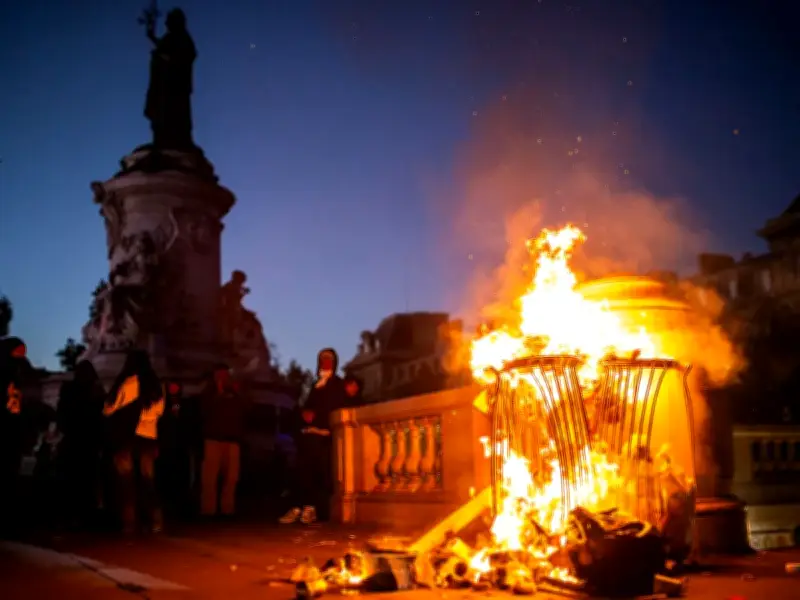
In recent weeks, anti-government and cost-of-living protests have turned into violent clashes, fires and riots in major cities and popular holiday destinations. Police have clashed with young people in Paris, Milan, Rome, Barcelona and Brussels, with tear gas and water cannons used on masked protesters.
Protests in France
French cities including Paris, Marseille and Lyon have seen widespread rioting and looting in recent weeks. According to The Mirror, more than 1,300 people were arrested on Saturday, and 53 security force members were injured as violent riots broke out in several cities. Police used tear gas, loud sound grenades and water cannons, while protesters with face coverings threw objects and set off firecrackers.
Students, unions and the Yellow Vests movement have come together, with over half a million people protesting about education standards and the cost of living. While many protested peacefully, violence broke out in several parts of France, with photos showing looting, burning buildings and vehicles, and smashed shop fronts.
The FCDO updated its guidance for France on October 22. The latest update reads: "There is an increased likelihood of demonstrations, political gatherings and marches taking place across France, sometimes at short notice." The FCDO also says ongoing demonstrations are very likely to disrupt local transport.
Disneyland Paris remains open and operating as usual, with tickets available and hotels welcoming guests. The theme park and hotels have not been affected by the unrest, mainly because Disneyland Paris is in Chessy, about 20 miles (32 km) east of central Paris.
Italy and Spain
Over the weekend, protesters entered Rome's Colosseum to protest issues including the cost of living and government policies. Riot police used water cannons, tear gas and batons to push crowds back after demonstrators threw bottles while trying to march toward government buildings.
The FCDO updated its guidance for Italy on October 21. The latest update reads: "Recent demonstrations across northern Italian cities have led to violent riots and looting. There is an increased presence of police and military personnel in Milan. Further demonstrations may take place in major cities. A national strike is planned for 30 October and is expected to affect transport systems. Check with your travel provider for the latest information."
Italy is experiencing a wider wave of strikes and protests, including student walkouts and a truck-driver blockade in the south that has disrupted the national food supply chain. Reuters reported that authorities deployed a large police presence over the weekend of October 25 and 26, and many shops closed as a precaution against possible damage. Street violence seems to have stopped for now, but many luxury shops in central Milan are still boarded up.
In response to the protests, Italy will introduce stricter anti-riot laws. Prime Minister Giorgia Meloni announced, "Demonstrating is a right, but destroying our cities is not." The new law will apply to anyone who joins a group of at least five people and endangers public safety during protests. Penalties include up to five years in prison and a maximum fine of €20,000 ($22,460).
In Barcelona, Spain, the city centre experienced chaos and looting on Saturday, 24 October, with more than 120 people arrested after a student protest turned into what local authorities called "gratuitous violence". Social media calls using the slogan "Instituts Indignats" prompted hundreds of young people to gather around Plaça de Catalunya. Groups put up barricades, set fire to rubbish bins and smashed business windows. Barcelona Mayor Jaume Collboni said acts of vandalism in the city "will not go unpunished", including legal consequences for the guardians of any minors involved.
The FCDO last updated its advice for Spain on 12 August 2026.
Brussels and Albania
Brussels Times reports that between 300 and 400 people, mostly students, trade unions and civil society groups, gathered at Albertine Square (Mont des Arts) in central Brussels on October 24. The protest, held at noon with official approval, focused on the proposed "Arizona" coalition government, changes to education, public budget cuts and the rising cost of living.
The FCDO updated its guidance for Belgium on October 17. The latest update states: "Strike action is an ongoing issue that can cause disruption. Monitor local news and check with your provider regarding potential delays and closures. Always check with your travel operator for the latest updates."
In Tirana, Albania, ongoing student and anti-government rallies against corruption and tuition fees turned violent over the weekend. Protesters attempted to storm and burn government buildings, forcing police to retaliate with heavy volleys of tear gas. The Mirror reports that Albania has seen five months of daily protests in the capital, sparked after plans were made public that US President Donald Trump's son-in-law, Jared Kushner, and his associates planned to build luxury resorts on a protected nature reserve and Albania's only island. Demonstrators are now calling for Prime Minister Edi Rama, in power since 2013, to resign.
The FCDO updated its guidance for Albania on October 15. The latest update reads: "Demonstrations have been held in central Tirana, with some reported incidents of violence and property damage." The FCDO recommends travellers "stay away from any demonstrations, large-scale gatherings or political rallies" and follow the advice of the local authorities.
What to do before you travel
Since the FCDO has not issued any specific advice against travelling to European destinations currently experiencing protests, you can continue with your trip as planned, and your travel insurance should still be valid. The Foreign Office's "safe to travel" warnings show the level of risk involved in visiting a particular country or region, helping British nationals make informed choices about their travel plans.
If the FCDO advises against travel to your destination, your travel insurance will probably not cover you, and you may not get consular support if something goes wrong. Before you travel, the FCDO recommends reading its advice on if you're affected by a crisis abroad, monitoring local and international media for the latest information, and checking with relevant airlines for the latest updates before travelling.