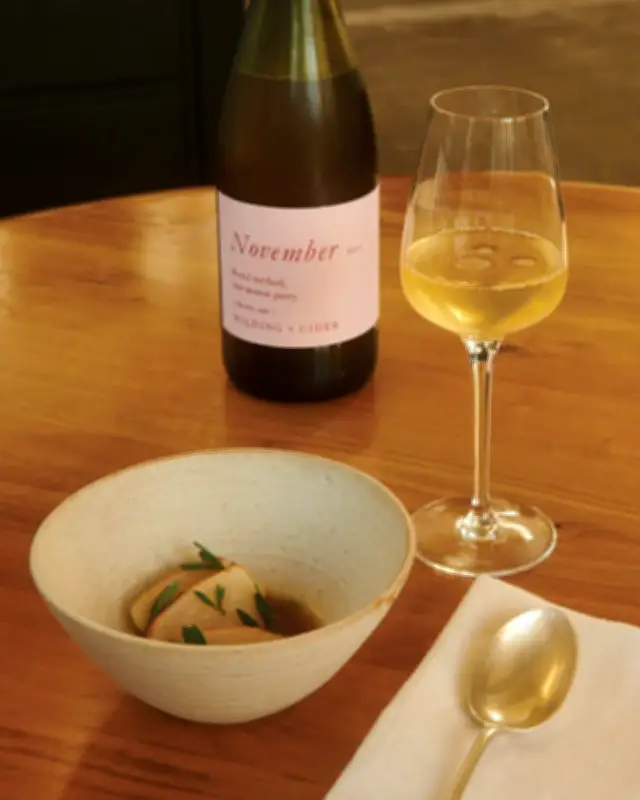
Fine perry – the fermented juice of perry pears – remains a relative cottage industry compared with cider, but it offers a naturally low-alcohol, food-friendly and often inexpensive alternative to wine. Made in small batches from specific perry pears grown on vast trees in ancient, biodiverse orchards in the British West Country and northern France, it is a drink that has historic roots and modern appeal.
Why perry is hard to make well
Pears are ripe for a notoriously short time, begin to rot from the inside out and, given the height of their gnarly branches, can be difficult to pick. “Perry-making is hard to do well,” says Felix Nash of the Fine Cider Company, a retailer specialising in craft drinks made from apples and pears.
Nash uses the term “fine perry” to distinguish his perries from the industrial kind, which includes the likes of Babycham and Lambrini. Unlike cider, fine perry has no mass-market presence beyond such kitsch anachronisms. The fine perries Nash sells range from medium-dry and sparkling to sweet and still, from aperitifs to pudding accompaniments, and include vintage perries, single-varietals and blends with names such as hendre huffcap, butt, green horse, thorn and gin.
A historic drink with modern appeal
Perry-making dates back centuries in Gloucestershire, Herefordshire and Worcestershire, and is said to have been one of Elizabeth I’s favoured tipples. As the 2026 harvest season approaches, it offers much for the modern drinker: a naturally low ABV (usually 5-6%) and sorbitol, a non-fermentable sugar alcohol that can leave even a technically dry perry with an impression of sweetness.
It is also surprisingly food-friendly. Nash cites the classic pairing with oysters or cheese, while the author enjoyed a bottle of Tom Oliver’s sparkling medium-dry We Aren’t Stopping Now with chilli paneer, noting it would also suit most oily fish.
Value for money
The production of fine perry has all the elements of fine wine, Nash says, reflecting fruit varietal, terroir, vintage and skill – some perries are made using the champagne method, others have tannins with the grip of red wine. “It’s largely the little known nature of great perry that has helped keep the cost where it currently is.” Without wine’s prestige, with relatively minimal transport costs and considerably lower UK alcohol duty than wine at those ABVs, some bottles are nothing short of a giveaway.
Six recommended perries include Oliver’s Fine Perry Wild Ferment Rolling Blend (£3.50, 6.5%, with notes of elderflower), Ross On Wye Red Longdon Perry 2025 (£12, 5.8%, dry enough for an aperitif), Little Pomona Fausset Pét Nat Perry 2023 (£15, 6%, juicy and aromatic), Wilding Cider Moorcroft 2022 (£25, 10.1%, an excellent stand-in for pudding wine), Eric Bordelet Poiré Authentique (£16.50, 5%, off-dry and biodynamic) and Oliver’s We Aren’t Stopping Now 2024 (£14, 5.5%, an elegant medium-dry perry for curry nights).