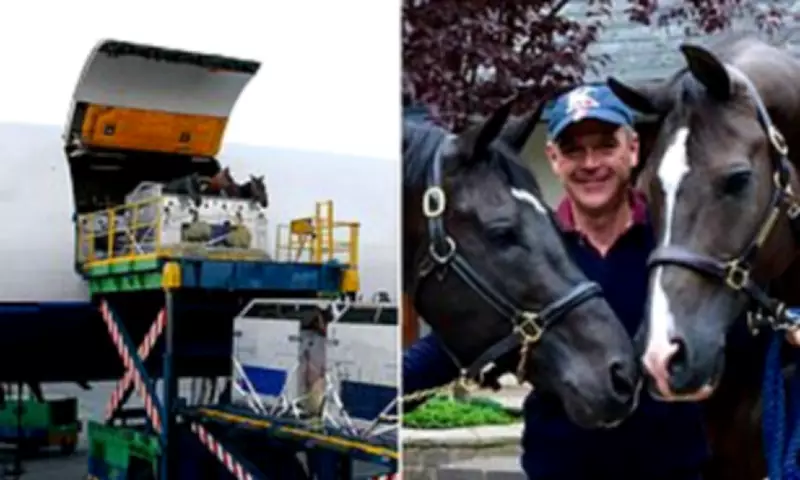
How Horses Take to the Skies: Inside the £25,000 Journey from Dubai to the UK
While horses are typically seen with all four feet firmly planted on the ground, grazing peacefully in countryside fields, some of these gentle mammals do indeed take to the air. For international events, competitions, and races, flying horses has become a standard practice in the equine world.
The £25,000 Flight Plan from War-Torn Dubai
Luisa Zissman recently revealed her ambitious plan to spend £25,000 transporting her six horses back to the United Kingdom from war-torn Dubai via airplane. While this might sound like an unusual mode of transport for such large animals, for professional horse groomer Alan Davies – who was named Team GB's Groom of the Year in 2015 – it's simply business as usual.
With over three decades of experience in the equine industry, Davies has cared for some of Britain's most legendary dressage horses. "They give me their trust totally," Davies says. "I've won the Horse and Hound award which is amazing for me and amazing for grooms. But I think the most incredible achievement is to have the trust of those horses, to take them to these places."

Inside the Flying Stable: How Horses Travel by Air
Davies, who has transported horses "all over the world," explains that the most stressful part of the journey for many horses is the loading and unloading process. The animals are placed in their own crated areas inside a large cargo plane, while any accompanying humans sit behind the cockpit and return to the horses as soon as it is safe to move around the aircraft.
"As soon as the pilot says we can go back, we go and tend to them – but we have to take an oxygen mask with us in case anything happens," he reveals.
Pilots take extra care when flying with horses on board. "These days they take off very steadily," Davies adds. "It's not like when you're flying economy to Benidorm for a holiday. The plane goes up much more gradually to give the horses a good ride – and they cope amazingly well."
The 56-Horse Challenge: Sydney 2000
One of Davies' most challenging flights occurred in 2000 when he helped transport 56 horses all the way to Sydney. The long-haul journey involved stops in Singapore and Dubai, meaning multiple take-offs and landings.
"That was a big undertaking," he recalls. "We had 56 horses on the flight, loading took a long time, the flight was a long time and we had to land and refuel, so that added even more time. It was very challenging to keep the horses healthy and happy." Despite the distance, he says the animals "travelled fantastically."
Keeping Horses Calm and Comfortable Aloft
Davies prefers not to give horses any "calmers" before a flight. Instead, he wants them to stay fully aware of their balance. "I like them to know where their legs are and what they're doing," he explains.
As for the ear-popping sensation humans often experience in the air, Davies says no research has confirmed whether horses feel the same. "There's no way of measuring the pressure in their ears," he notes.
As a precaution, he brings apples and carrots on board to help keep their stomachs moving and encourage chewing during take-off and landing. "I'll give them a carrot once we've taken off and once we've landed to crunch on. It makes me feel better because that's what we do if our ears pop," he says.
Equine Passports and Paperwork
Like humans, horses need proper documentation before they can fly – and the process requires extensive planning. "They have a microchip, generally in their neck, and they have a passport which records all their markings, any white bits, any whorl – everything is recorded on a diagram, along with their breeding and owners," Davies explains.
Horses also need customs paperwork, health certificates, blood tests taken no more than 30 days before departure, and a final vet check within 12 hours of flying. "It's a complicated procedure and there's a lot of paperwork," Davies acknowledges.
Remarkable Adaptability
Despite the unnatural experience of being airborne, Davies says horses generally cope remarkably well. After three decades of transporting horses across the world, he notes that one thing has never changed – their incredible adaptability to the journey.

"On the whole, they cope so well," Davies concludes. "They're generous, amazing creatures."