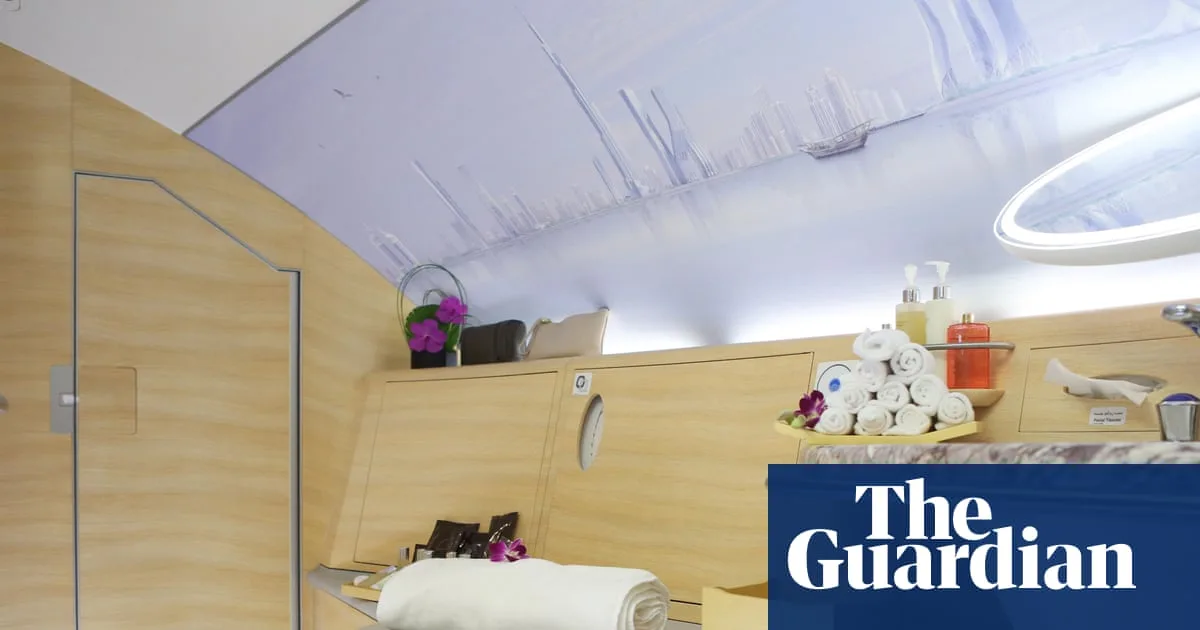
Emirates airline is set to introduce en suite bathrooms in its first class cabins, offering passengers private facilities at a cost of up to £13,000 per one-way ticket. The announcement was made by Emirates CEO Tim Clark at an industry summit last week, where he stated his intention to make the concept widely known.
Currently, first class passengers on Emirates travel in personal pods the length of three plane windows, with access to a well-appointed communal bathroom featuring luxury perfumes and complimentary toothbrushes. The new en suite suites will provide an even higher level of privacy and convenience, though exact pricing for the upgraded cabins has yet to be confirmed.
The move reflects a broader trend in the airline industry towards increasing luxury offerings for premium travellers, which often leads to reduced space for economy passengers. For example, the average Boeing 777 now seats ten economy passengers per row, up from nine a decade ago. Seat pitch—the distance between rows—has also been reduced on some carriers to accommodate additional premium seating.
Southwest Airlines has reportedly decreased economy seat pitch by an inch to give more legroom to premium customers. Analysts note that luxury seats are more profitable, and rising demand is driving airlines to reconfigure interiors accordingly.
While the new en suite cabins mark a significant advancement in first class comfort, critics argue that such innovations rarely trickle down to economy travellers, who may face increasingly cramped conditions as airlines prioritise premium services.