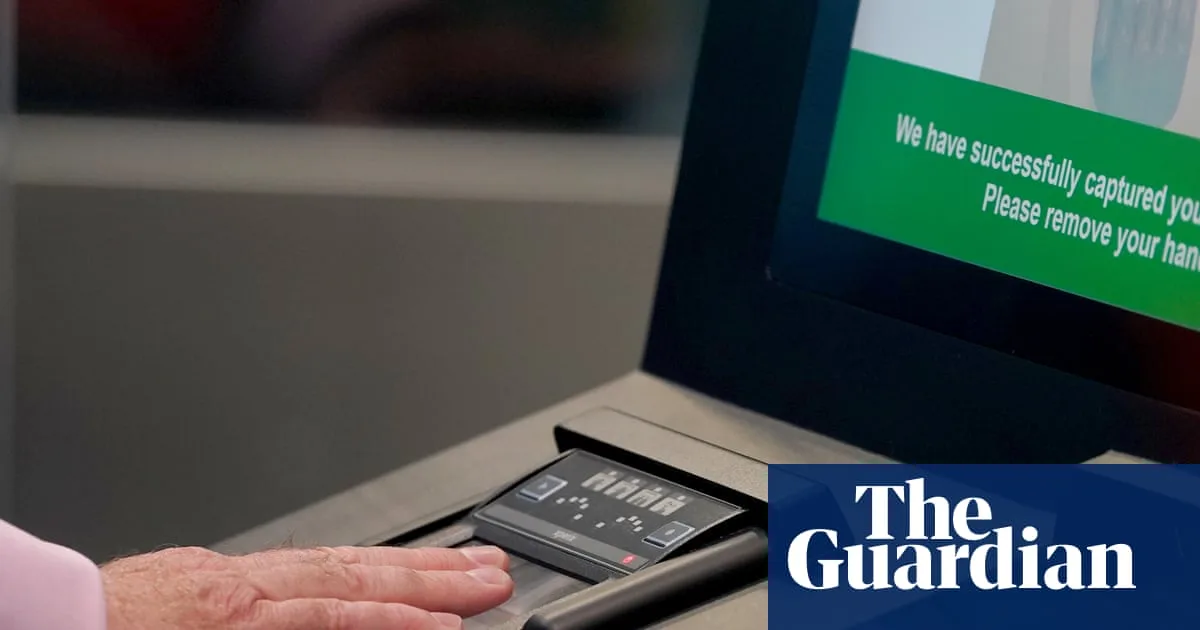
British passengers returning home via European airports should arrive three hours before their flights are due to depart, an airline boss has advised, amid concerns about new security procedures causing large queues. The EU entry-exit system (EES), which replaces passport stamps with digital registration, has been gradually introduced in Europe since October 2025 and became fully operational last month. Some passengers have faced huge delays at border checks, airports have said.
As part of the system, biometric checks are done on entry and exit for non-EU citizens. On Saturday, Wizz Air boss Yvonne Moynihan said: “Because there is another passport check … that’s where we see that people have, again, experienced longer waiting times than anticipated.” She told the BBC that, while usual advice would be to get to the airport two hours before a flight, “in these circumstances, we are advising three hours”.
Moynihan told the broadcaster the impact of the new checks was “fragmented across Europe”. While there has been “seamless travel” in some cases, there have been long queues at “usual hotspots such as Spain, Portugal, France”. On her own trip to Mallorca for half-term, there were no queues, extra staff were available, and there were a “significant amount of [EES] kiosks”. But she said that, in general, her airline was advising passengers to expect long waits, telling the BBC: “When you land in the destination airport, there might be queues, so you should bring a portable charger or water.” Moynihan also suggested allowing several hours between connecting flights.
The European airports association, ACI Europe, has said the “situation is deteriorating”, telling Travel Weekly earlier this week: “The queues are up to 3.5 hours at peak traffic times, according to a survey we conducted among 45 airports in 20 EU states on 26 May. Airports which previously did not report excessive waiting times are now doing so despite the extensive use of partial suspension of EES.” Last week, French police temporarily suspended the checks at the port of Dover as thousands of holidaymakers faced long delays in the hot weather. A spokesperson for the port described the situation as “challenging”, adding: “We are pleased that Police Aux Frontières (PAF) have responded positively by invoking the article 9 clause of the EES regulations.” This allows for checks to be temporarily relaxed.
The European Commission told the BBC that EES was not the only thing that could cause delays, and registering information usually only took about a minute.