

Cornwall's Tourism Industry at a Crossroads
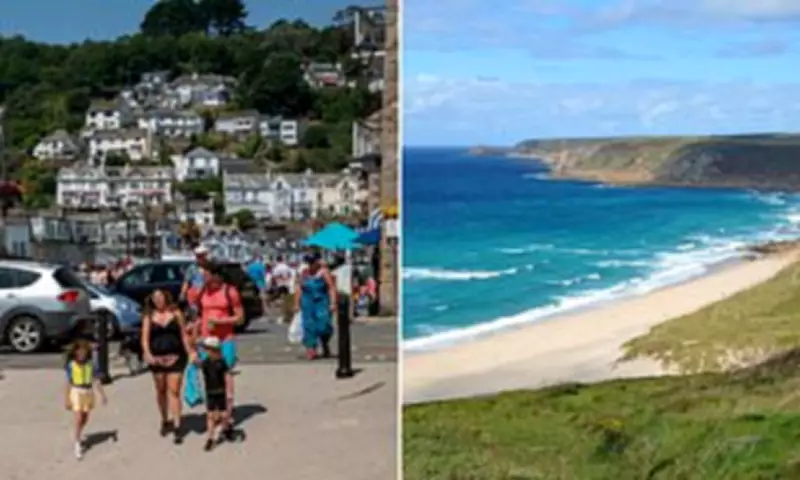
Just twelve months ago, residents in Cornwall's most sought-after coastal towns were loudly expressing their frustration about the overwhelming presence of holidaymakers disrupting their everyday existence. The phenomenon, often described as a 'tourist takeover,' has been particularly acute in picturesque locations like St Ives, where approximately one in six properties functions as a holiday home. Full-time inhabitants have been vehement in their calls to reclaim the coastal communities they consider home.
The 'Emmets' Controversy
Perhaps the most blunt illustration of these simmering tensions emerged during the peak staycation summer of 2022. Malcolm Bell, the former head of the now-defunct tourist body Visit Cornwall, stated that the region sought only 'certain types' of visitors. In a candid interview with Cornwall Live, he elaborated: 'You have friends, then you have guests, then you have tourists, then you have bloody tourists, then you have f***ing emmets. You can quote me on that.'
The term 'emmet' is Cornish slang for ants, commonly used to refer to tourists. This sentiment has been visibly displayed, with the word graffitied onto road signs across the holiday region—a stark contrast to an industry that injects £2 billion annually into the local economy.

A Cooling Welcome and Declining Numbers
This perceived hostility has arguably influenced visitor numbers to the South West. Tourism figures dropped by 12 percent in 2024, with only a slight recovery noted last year. Prospective visitors, once attracted by charming seaside villages and a mild climate, now cite prohibitive costs, severe traffic congestion, and overcrowded beaches as reasons to avoid the area.
Compounding the issue, Cornwall's official tourist board entered voluntary liquidation in the autumn, citing 'insurmountable financial problems.'
The Government's 'Sledgehammer Blow' to Hospitality
If local discontent over overtourism was a minor irritant for the region's hospitality sector, business owners describe recent government policy as a devastating blow. The crisis escalated following Chancellor Rachel Reeves's October budget, which introduced a series of steep rate increases.
This month, Labour raised the national living wage for those aged 21 and over to £12.71 per hour—a 4.1 percent increase. Coupled with rises in the minimum wage, higher national insurance contributions, and the implementation of pension auto-enrolment, many Cornish business owners now fear imminent insolvency.
A Trail of Casualties
The casualties are mounting rapidly. One bleak day in February witnessed the closure of four pubs simultaneously, including The Golden Lion in Port Isaac, famed for its appearance in the television series Doc Martin. The Pityme Inn at St Minver, The London Inn in Padstow, and The Lugger Inn in Polruan—all part of The Cornish Inns group—shut their doors abruptly. Company co-director Jason Black stated there was 'simply not enough capital left to continue safely and responsibly.'
In March, the trendy Falmouth restaurant Hevva!, led by acclaimed chef Will Johnson, announced its closure just weeks after being featured in the 2026 Michelin Guide. While Johnson cited irresistible opportunities in London, he acknowledged 'times are tough for restaurants, and they’re getting tougher.'
Business Owners on the Brink
Vanessa Clark, 52, who operates the 100-seater Grade II-listed waterfront restaurant Indidog in Falmouth, revealed the harsh realities of surviving Labour's quadruple rates hit. Neither she nor her husband Simon are currently drawing a salary to keep the business stable.
'Last year, it was £1,300 extra for every member of staff, and we have 31 on average. That cost us around £50,000,' she explained. 'What I have to now do is pay more for more senior people, of which there's not very many, so that I have a more effective team. I can't train up young people anymore, because it's very rare that you get someone who can hit the ground running at the age of 16 or 20.'
Clark expressed her dismay: 'I'm not earning any money, and people who are 18 years old are earning more than I am. How can it be that, because I own a company, I'm therefore told, "You wear the t-shirt, so don't get paid?"'

Widespread Frustration and Hopelessness
Brothers Hugh and Steve Ridgway, who have owned Falmouth's St Moritz Hotel and Cowshed Spa since 2004, report that many in hospitality are experiencing feelings of 'utter frustration and hopelessness.' Despite anticipating the largest post-pandemic staycation summer, driven by aviation fuel supply fears, they have reduced staff from 95 to 83.
Hugh Ridgway argues: 'The Government has priced people out of the market. We can't afford to employ people. No one is more eager than me that people should be earning a decent living on the minimum wage but we can only do that when the economy allows us to do it.'
He criticises the policy: 'I think what the Government forgets is that the minimum wage on a 40-hour week is now at the top end of £26,000 a year. By the time we've added NI and pension costs, a minimum wage person costs us £34,000 a year. A heartbeat ago, we were paying highly qualified graduates that sort of money.'
Ridgway adds: 'We have a government that seems to be completely paralysed. They've come into power saying 'growth, growth, growth' and the first thing they've done is put a tax on jobs. That is the economics of the madhouse.' In response, his hotel is offering to cover fuel surcharge costs for British holidaymakers this summer.
A Plea for Perspective and Cooperation
Regarding the vocal minority of locals protesting overtourism, Ridgway offers little sympathy. He contends: 'The only time that Cornwall has been oversubscribed was in 2022, when we unlocked from the pandemic but that was the first time ever. There is a very vociferous, tiny minority talking about overtourism but they should be very, very careful about what they wish for, because we [the hospitality industry] are 20 per cent of the economy down here.'
He emphasises the sector's role: 'The tourism industry employs a lot of young people. We are the first port of call, we train them and inculcate a work ethos into them. We're a wonderful stepping stone to future employment. So, yes, people need to be careful what they wish for.'
Fostering Mutual Respect
Vanessa Clark suggests that successful holidays depend on mutual respect: 'If you want to go to Cornwall and have a lovely time, thank the people in the shop, smile at them, ask them how they are. Our customers are lovely and we give them everything we've got.'
Despite the challenges, Ridgway remains hopeful that Cornwall's enduring appeal—exceptional cuisine, stunning beaches, and genuine hospitality—will help businesses endure the summer. 'Cornwall is just particularly special. It's just that little distance away from everywhere else and magical. Where we sit, we've got just this wonderful light reflected off the Atlantic Ocean. We've got extraordinary beaches, we've got the surfing. You can play in the water, under the water, on the water. You can just have an absolutely wonderful time. And that's what my team are going to deliver this summer.'





