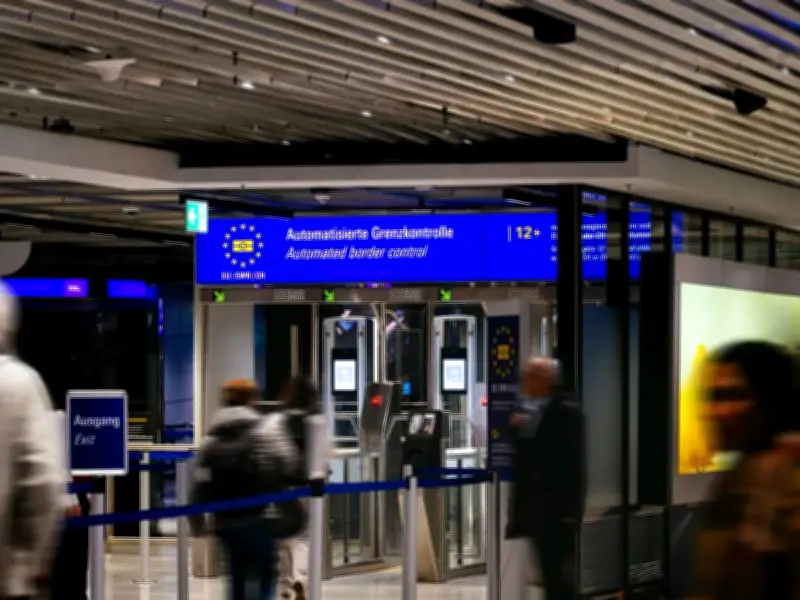
British passport holders are still being caught out by the European Union's Entry/Exit System (EES), with some holidaymakers reportedly left 'utterly terrified' about travelling to Europe after being wrongly accused of exceeding their permitted time in a country. Others have been threatened with a two-year ban and a €10,000 (£8,345) fine.
EES technical faults reported
The EES was fully launched across airports on 10 April 2026, requiring all British passport holders to create a digital record and register their biometric details, such as fingerprints and a photograph, upon arrival in the Schengen area. The system records a traveller's date of entry and exit for the EU, replacing the need to manually stamp their passport.
British passport holders can spend up to 90 days within any 180-day period in the European Schengen zone, including countries such as France, Spain and Italy. However, despite travelling within this permitted timeframe, Brits are being falsely accused, as reported by Which? The consumer group said it had received dozens of reports from travellers whose exit records had been incorrectly logged, indicating that they had overstayed their permitted time in the EU.
Travellers' experiences
One traveller revealed to Which? that her elderly parents were 'utterly terrified' after their departures through Bilbao airport were not recorded properly, with their remaining days continuing to 'tick down' after leaving. They have since decided against travelling to Europe again.
Another holidaymaker reportedly told Which? that they had been temporarily detained for two hours at the Serbian/Romanian border and questioned over missing entry data in the EES system. This was due to their journey through the Channel Tunnel from the UK to Calais not being logged in the EES at Folkestone.
Additionally, Me Before You author Jojo Moyes said she was stopped by a border control officer at Marseille airport while travelling home following a five-day trip to France in October, and was told that she had overstayed her time in Europe. She had spent only 23 days in Europe in the previous six months, but the EES system had failed to correctly record her departure from Portugal earlier in the year.
Advice for affected travellers
"The clock had been ticking ever since. Under Brexit rules, I was now an overstayer," she told Which?. "The border control senior officer at Marseille warned me that I should not attempt to re-enter Europe until it is sorted out, or face a €10,000 (£8,345) fine and a two-year ban." The author is currently attempting to correct her records so they accurately reflect her travel to and from the EU.
To help avoid any complications, the Foreign, Commonwealth & Development Office (FCDO) is advising Brits to hold on to travel documents such as boarding passes and booking records, in case their time spent in the EU is incorrectly logged. These will serve as evidence of the length of their stay should they need to amend it.
Earlier this year, the FCDO updated its travel guidance to incorporate EES requirements across the Schengen area. This includes a warning outlining what steps to take if you suspect an error was made when processing your details. The guidance states: "If you believe you have been incorrectly entered into EES or your record of time spent in the Schengen area is incorrect, approach border officials when you next cross the Schengen border and request a correction. If you are exempt, carry documentation confirming your status. If you believe your time spent in the Schengen area has been recorded incorrectly, raise this with border officials and be prepared to provide supporting evidence if requested."