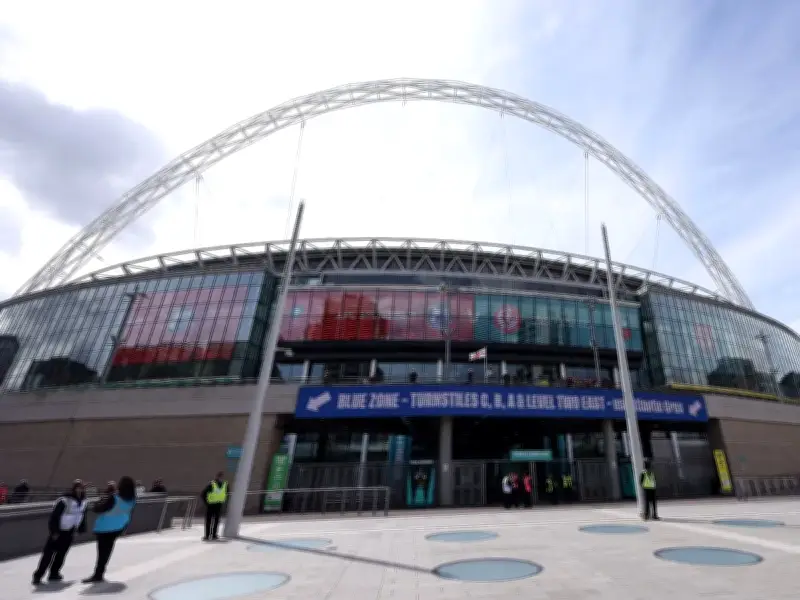
The leader of Brent Council, which covers Wembley Stadium, has welcomed the Government's tourism levy announcement, calling it a "pro-growth measure" that would bring "real benefits to our businesses and local economy" while ensuring residents are not left to shoulder an unfair share of the cost.
Plans for the visitor levy
The Government announced plans on Thursday to give regional mayors greater economic power and the ability to implement a levy on overnight stays. Local leaders will set the fee as a percentage of the cost of accommodation, rather than a flat rate, which ministers argue will protect budget trips.
The levy will have no upper limit, though Government sources said mayors are unlikely to make it too expensive. Brent Council, home to Wembley Stadium and Wembley Arena, last year proposed a motion to implement a visitors levy.

Council leader's response
Cllr Muhammed Butt told the Mirror a visitor levy would help the authority as large-scale events in the borough bring "very real pressures". Wembley Stadium welcomed more than 2.5 million fans this summer alone for concerts from Harry Styles, The Weeknd and Luke Combs. England's national football stadium will also host the final of the 2028 Euros and an NFL match this October.
Cllr Butt said: "We are immensely proud to be home to Wembley Stadium and Arena and to host some of the biggest sporting and music events in the world. There are few better sights for me than seeing Wembley packed, with families and fans enjoying themselves and people travelling from across the country and around the world to visit our borough. These events are a huge part of what makes Brent such a special place and bring real benefits to our businesses and local economy."
He added: "But hosting events on this scale also brings very real pressures – from waste and street cleaning to enforcement, community safety and pressure on our public spaces. That's why it is so important we get the visitor levy right, so we can sustain that success while making sure our residents aren't left to shoulder an unfair share of the cost."
Revenue ringfencing and industry concerns
The council leader said the levy "should not simply disappear into general budgets" and that money generated should not be used "to plug unrelated funding gaps in areas like adult social care or housing". He said the money should be ringfenced for the visitor economy and the pressures that come with it, adding: "The money should be ringfenced for the visitor economy and the pressures that come with it – keeping streets clean, improving the public realm, enforcement and making the areas people come to visit better places to spend time in."
Similar schemes already exist in Europe, the US and Canada to help fund local services and attractions. Mayors will decide how to spend the revenue raised from the fee rather than money being funnelled back into the Treasury.
Labour's 10 regional mayors, in a letter to the Chancellor and the Communities Secretary, committed to a 5% cap on any tourist tax introduced in their areas. They said: "Our underlying principle is that any levy we introduce should be modest and the revenue should be reinvested into areas which support our local economies."
Plans for the tax were first announced under Sir Keir Starmer following similar schemes introduced by the devolved administrations in Scotland and Wales. Prime Minister Andy Burnham reiterated his commitment to the scheme, framing it as part of his wider devolution agenda aimed at pushing power out of Whitehall.
Some industry chiefs shared their concerns over the plans and said they believe it could cost the UK hospitality and tourism sector as a whole as much as £1.6 billion. Allen Simpson, chief executive of UK Hospitality, said jobs could be at risk in communities that rely on tourism and hospitality. Speaking on BBC Radio 4, he said: "I would say to those people in these communities that their jobs are now at risk. It will be the case that you'll have holiday parks which can't open in the shoulder seasons and of course people who go on holiday will just have that little bit less money in their pocket."