

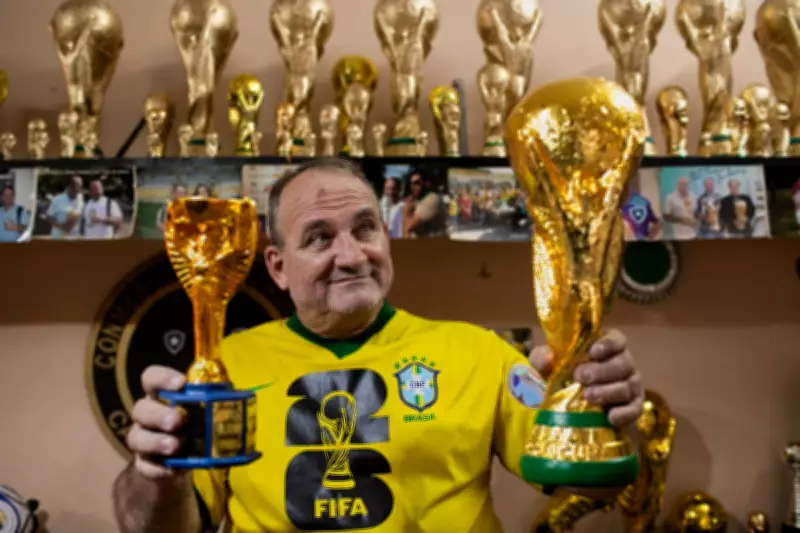
For more than three decades, Brazilian soccer enthusiast and former metallurgist Jarbas Meneghini Carlini has been combining his passion for the sport with his business, crafting replicas of the FIFA World Cup trophy in his workshop in western Rio de Janeiro.
A Dream Born from Victory
After watching Brazil's then-captain Dunga triumphantly lift the trophy following the team's fourth World Cup win in 1994, Carlini resolved to create his own. "They weren't for sale. So I decided to make the trophies myself. And today, I'm a trophy craftsman," he said from his workshop in Campo Grande.
The 58-year-old makes the replica World Cup trophies by hand from molds and finishes them with paint. They range in size and price from about $1 to $100. Carlini sells them to fans and tourists at the nearby Maracanã soccer stadium. He has also gifted the trophies to stars including Pelé, Jorginho, and Ronaldinho, and sent them across Brazil and around the world.

The Meaning Behind the Trophy
To explain the emotion often evident on his clients' faces when they pose for photos with his work, Carlini points to the trophy's meaning. "Everyone wants to be a world champion, everyone wants to be the best," he said.
Like the game's original most-coveted accolade, Carlini's trophies depict two stylized human figures reaching upward to support a globe. But his are made from plaster, rather than 18-carat gold. "Yet it brings the same sense of wonder, as if it were made of gold," Carlini added.
Expanding the Collection
Over the years, the artisan has branched out and now creates replicas of the former World Cup trophy used between 1930 and 1970, the Copa Libertadores trophy, as well as golden balls, gloves, and boots. World Cup years are particularly good for business, Carlini said. As the country gears up to support the Seleção in this year's tournament hosted by the United States, Canada, and Mexico in June and July, Carlini has prepared 200 trophies, but says sales could reach 600 if Brazil were to win.
South America's biggest country has won five World Cup titles, more than any other nation, but its last successful attempt dates to 2002. Brazilians are known for their joyful style of play and pulling off spectacular tricks such as a bicycle kick, said Carlini, who hopes his team will end the dry spell this year. "That's what we should use in the next World Cup to become champions: use joy, use artistry," he concluded.






