

Australian Mother Issues Urgent Bali Henna Tattoo Warning After Daughter's Severe Reaction
An Australian mother has issued an urgent health warning to travelers considering getting henna tattoos in Bali after her daughter suffered a severe and painful skin reaction. The concerned parent shared alarming before-and-after photographs on social media, documenting how what began as a temporary beach tattoo escalated into a medical situation requiring steroid treatment.
From Temporary Tattoo to Medical Emergency
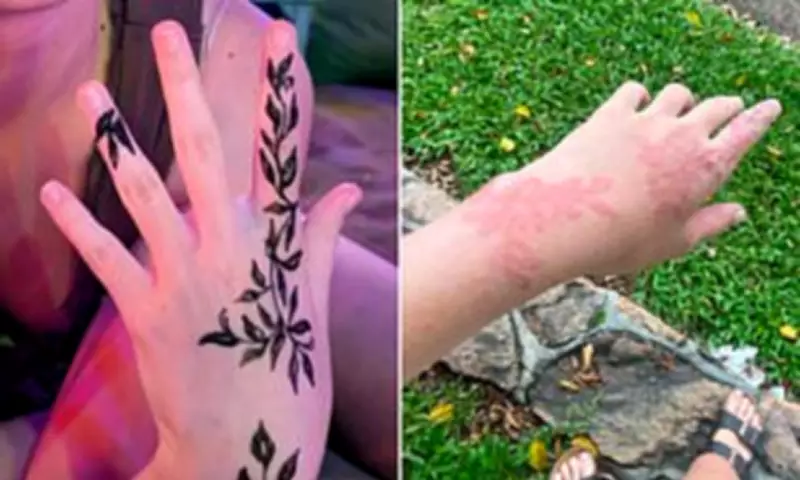
The mother posted images on the Australian Bali Info for Traveling Facebook page showing her daughter's initial black henna tattoo, which appeared shiny and fresh when applied at a Bali beach. However, photographs taken just seven days later revealed the tattoo had faded dramatically to a light pink color while the surrounding skin became inflamed with angry red welts.
'My daughter came back with what she thought was a henna tattoo,' the mother explained. 'Approximately one week afterwards, the dye had almost completely faded, but she developed a very angry reaction that left her skin red and stinging with itchy welts.'

The young woman is now on day four of a steroid cream treatment course and is slowly recovering, though her mother expressed serious concern about potential long-term consequences. 'There is a concern that this will leave a long-lasting or even permanent scar on her hand,' she stated.
The Black Henna Danger Signal
Australian commenters quickly identified the crucial warning sign that the tattoo artist had used dangerous materials. Unlike natural henna, which produces an orange-brown stain that fades naturally without harming skin, the black coloration indicated the presence of paraphenylenediamine (PPD), a chemical irritant and allergen commonly found in hair dyes and some skincare products.
'We talked about not buying knockoff perfumes and makeup because we don't know what is in them,' the mother reflected, 'but clearly I should have added temporary tattoos and henna to the list.'
PPD in black henna formulations can cause severe reactions including bubbling blisters that may form shapes like suns, stars, and flowers, potentially leaving lifelong scars. While PPD exists in many legitimate products like sunscreen and hair dye, these contain carefully regulated tiny doses, unlike the unregulated concentrations often found in tourist tattoo applications.
Widespread Reactions and Traveler Warnings
Other social media users shared similar horror stories, with one person revealing: 'They use hair dye for their tattoos. I got a dolphin tattoo about 25 years ago and I'm still sporting the scar. It was awful.' Another added a crucial warning about secondary allergies: 'As a result of this, I am now completely allergic to hair dye, so I would suggest if she uses hair dye, to do a patch test before using in your hair.'
Some commenters expressed frustration that travelers continue to take risks with black henna despite longstanding awareness campaigns. 'People have known not to get this crap for years, it's nothing new,' one person remarked, while another emphasized: 'Black henna has been known as dangerous for many years.'
The Australian Department of Foreign Affairs and Trade officially advises travelers to avoid temporary black henna tattoos while visiting Indonesia, specifically warning that they 'often contain a dye which can cause serious skin reactions.'
Understanding Traditional Versus Dangerous Henna
Traditional henna, made from grinding dried henna leaves into a paste, has been used safely across various cultures for centuries for temporary body art. This natural form rarely causes allergic reactions and fades gradually without damaging skin.
The contrast between traditional practices and dangerous commercial shortcuts highlights the importance of traveler education. As this Australian family's experience demonstrates, what might seem like harmless holiday fun can result in painful medical consequences with potential long-term effects, transforming a beach souvenir into a permanent reminder of the risks associated with unregulated tourist services.






