

Airports and Planes Are Dirtier Than You Think: Hidden Germ Hotspots Revealed
When travellers set off to the airport for a flight, they usually do not spend too much time dwelling on other passengers' germs. However, hygiene experts have suggested that international transport hubs are amongst the grubbiest places you can visit. From disgusting tray tables to questionable toilets both in the airport and on board a plane, the list of unhygienic spots you might pass through while travelling is long and alarming.
We may all know the basics - wash your hands, take hand sanitizer on board, wear shoes when heading to the toilet on a flight. But it turns out, planes and airports might be even filthier than you imagine, with hidden crevices often harbouring serious grime that you might not have considered. The key reason? There is not a standard 'rule' all planes must follow to maintain cleanliness.
Why Are Planes and Airports So Dirty?
Elliot 'Mo' Kreitenberg, an infection prevention specialist and co-inventor of GermFalcon, a UV cabin treatment system, explained the lack of regulations. He said, 'Airlines are not required to meet any standardised hygiene benchmark. What happens between flights is trash removal and a visual wipe-down - that is it. Hundreds of different passengers cycle through the same cabin surfaces every day, and there is no restaurant-style sanitation standard holding anyone accountable for what germs might get left behind.'

Kreitenberg added, 'We fly with culture plates (like petri dishes) and our tests show the aisle seat is generally dirtier, which is just a product of contact volume.' So what else are germ magnets when catching a flight? Here is a detailed rundown of the worst offenders you should be aware of.
Security Trays: A Major Germ Hub
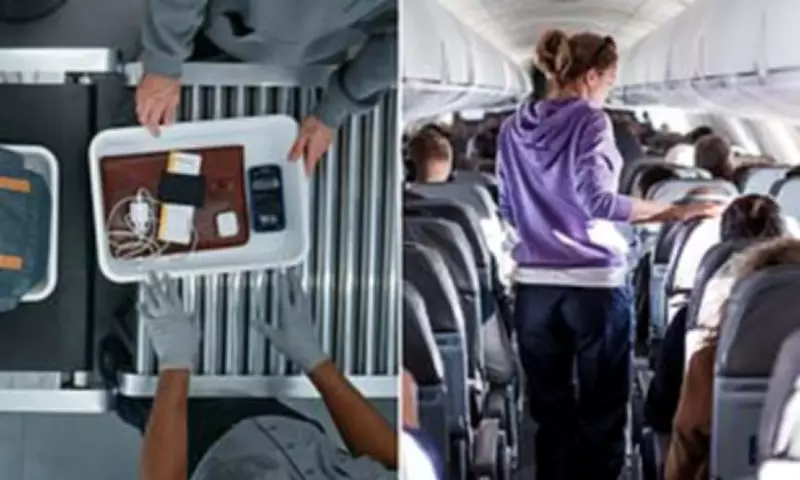
When going through security, you might not realise how dirty the trays are. It is one of the first things you will do at the airport, but security checkpoints are some of the dirtiest areas located there, according to Dr Darin Detwiler, who previously served as a public health expert for the FDA. A 2018 study found that the plastic trays used at airport security checkpoints harbored more germs than airport toilets.
Researchers took eight samples from the trays used at the Helsinki airport over three weeks. When the results came back, they found that half of the samples carried respiratory diseases, including influenza A, rhinovirus, adenovirus, and coronavirus. In comparison, viruses were not detected in most samples from toilets. The scientists said this may be due to people paying attention to hand hygiene in bathrooms.
Dr Detwiler told the Daily Mail, 'Much like old days when public pay phones were the most handled (and contaminated) surfaces, today those plastic security bins harbor more respiratory viruses than public toilets.' To prevent germ spread, he recommends using hand sanitiser immediately after touching security bins, conveyor belts, or fingerprint scanners.
Airport Buffets and Lounges: Not as Clean as They Seem
Darin Detwiler said premium airport lounges may offer a quieter atmosphere, but they are not immune from contamination, 'especially when it comes to shared food stations and high-touch surfaces.' He advises avoiding self-serve buffets and opting for packaged or made-to-order meals instead. He also recommends disinfecting tables and seating areas before eating to minimise risk.
Baggage Claim Belts: A New Risk After Landing
Think you are safe once you have landed? Think again. Darin Detwiler revealed that baggage claim areas, customs, and ground transportation all present new risks. Baggage claim belts come into contact with thousands of suitcases and hands, making them potential areas for bacteria to gather. Studies show suitcases, particularly their wheels and bases, can carry significant bacteria, sometimes exceeding levels found on public toilet seats.
Plus, 'exhaustion can make you more vulnerable as you are less alert and it is easy to let your guard down.' To stay protected, he recommends sanitising hands after collecting luggage, as your 'bag has been tossed around and handled by multiple people, moving along on conveyor belts, trolleys and cargo holds.' He suggests keeping your mask on in crowded areas like customs and baggage claim, and showering after long-haul flights.

The Aisle Seat: A Germ Hotspot
Usually, picking a seat for a flight is based on personal preference, but your choice could impact hygiene. Infection prevention specialist Elliot Kreitenberg said, 'Every passenger walking to the bathroom, every crew member steadying themselves during turbulence - they grab the aisle seatback. The top of the seatback is consistently, and far and away the most quantitatively contaminated surface in the passenger cabin. The window seat does not get touched by nearly as many strangers.' As such, the aisle seatback harbours far more germs than middle or window seats.
Seats in General: More Than Just Tray Tables
Dirty and germ-ridden seats can affect not just hygiene, but also your skin. Annabelle Taurua, a beauty expert at Fresha, says, 'It is common for people to sanitise their seat tray when getting on a flight, but what they do not realise is that that is not enough, and they should in fact be sanitising their whole seat as well. It might look clean, but it can harbour bacteria and residue from previous passengers that will then be in very close contact with your skin.'
She adds, 'Touching any unsanitised surfaces in your seating area, whether it be the tray, your seat, the arm rests and then touching your face will very quickly undo all the effort you put into your skincare routine, potentially leading to breakouts. Cabin air is very dry, and this can weaken your skin barrier, making it much more prone to irritation and sensitive to bacteria.'
Plane Toilets: A Known Danger Zone
This one is hardly a surprise. A former flight attendant said, 'The aeroplane loo is essentially a cupboard, with no clean air. There is no window and the air ventilation is poor. This means that every time you go to the loo, not only are you breathing in the air of many others who have done their business before you but you could also be breathing in potential faeces particles, circulating the air after a toilet flush.'
She added, 'It sounds dramatic but I highly recommend you avoid direct contact with as many surfaces as possible in the aeroplane loo cubicle.' That starts from opening the door; use your foot or wear disposable gloves. Most plane loos have wipes next to the sink for use. The worst times to use the toilet are right before take-off and at the end of a long-haul flight, or after turbulence when many people rush to the bathroom.
Other Germ-Ridden Spots on Planes
Seatbelt Buckles: On every flight, passengers repeatedly fasten and unfasten seatbelts, touching the buckle each time. Touched by thousands of hands over years, seatbelts are rarely cleaned or replaced. Researchers have found human 'bacteroides' here, which can cause health damage.
Safety Instruction Cards: Designed to help in emergencies, the instruction card in your seat pocket could be ridden with germs. Josephine Remo, a travel blogger and former flight attendant, told Travel + Leisure, 'The dirtiest spot on a plane is the safety instruction card in the seat pocket.' These cards are not usually cleaned by cabin crew, so wiping them down is advisable.
Overhead Locker Handles: Josephine also recommended wiping down overhead lockers, because they are 'rarely cleaned' and get 'touched by a lot of people'. They are opened and closed every flight, and no one cleans their hands right before doing so. Use gloves or a wipe to avoid contact.
Seatback Pockets: Brenda Orelus, a flight attendant for nine years, said seatback pockets are 'dirtier than the lavatories, they are dirtier than the seat cushions and they are dirtier than the tray tables.' According to her, they are 'never cleaned unless somebody vomits or there is something ooey coming out of there.' Cleaners only remove trash, allowing germs to accumulate.
Fold Away Tables: Research in 2015 revealed that fold-down tables are the dirtiest surfaces on a plane, with more germs than toilets and seatbelt buckles combined. The study by Travelmath found tray tables have 2,155 colony-forming units per square inch, far more than other surfaces. Plus, reports of passengers putting feet on tray tables make wiping essential.
TV Screens: According to Travel + Leisure, TV screens can be filthy. Think of how many people have touched the screen with unclean hands. Even if disinfected occasionally, it is worth giving it a wipe down.
How to Stay Protected While Flying
Elliot Kreitenberg says, 'Seat choice is a pretty minor variable. What you actually do when you sit down matters more. Wipe your zone - tray table top and bottom, armrests, touchscreen, seatbelt buckle, overhead controls, your seatback and the one in front of you. But make sure you follow the instructions on your disinfectant. Most people do not check the dwell time on their wipes, which is where they fail: the surface must stay visibly wet for 30+ seconds to actually disinfect.'
He adds, 'Wiping and it immediately air-drying does not get you there. Also, bring hand sanitizer. Hand sanitizer and surface disinfectant are different products and do different jobs. Until aviation is held to real hygiene standards, personal prep is the most reliable layer of protection you have!' By following these tips, travellers can minimise contamination and stay healthier during their journeys.





