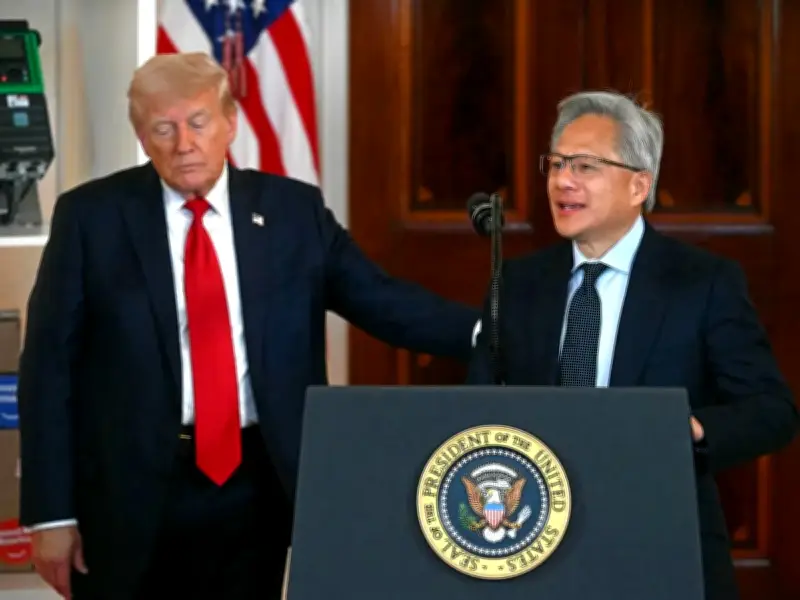
Nvidia's board has reinstated Jensen Huang as CEO, days after he resigned over an affair with a subordinate and a businesswoman alleged to be a Chinese spy. The decision followed reported pressure from President Donald Trump, who acknowledged providing assurances on national security concerns.
Reinstatement after resignation
Huang quit as CEO last week after admitting to affairs with a subordinate and with Alice Huang, a businesswoman described as a potential Chinese spy. The New York Times reported that US intelligence had established Alice Huang had been in contact with China's ministry of state during the affair.
The board's decision to bring him back came after Trump leaned on Nvidia's directors, who capitulated, according to reports. In a CNBC interview, Trump was asked whether the board worried about a national security threat. He replied: "They did ask for assurance on the national security threat. And we gave them assurances at least with everything we know. And we know a lot."
Market impact and Trump's stake
Huang's departure, combined with concerns that some of Nvidia's AI chip secrets could be in the hands of America's rival in the AI arms race, contributed to a sharp stock market decline. About $540bn (£412bn) was wiped off Nvidia's value in a week, and the S&P 500 fell by about $1.2trn over the same period.
Trump also personally owns Nvidia stock, thought to be worth as much as $62m (£47m) by the end of August, with trading activity on his behalf as recently as September. Trump defended Huang by saying Huang had told him he did not know his girlfriend was a spy.
Impeachment prospects
Democrats are set to take over the House and Senate in January, and investigations into the scandal are already underway, with Huang due to face Congress in early December. However, Democrats would lack the Senate supermajority needed to convict in an impeachment trial.
Data centres were a major issue in last month's midterm elections, with polling suggesting more than half of voters said they played a "major" or "crucial role" in their vote, and 57% of Republicans supporting limits on construction. Those numbers could make Huang more difficult for Republican senators to defend to constituents.