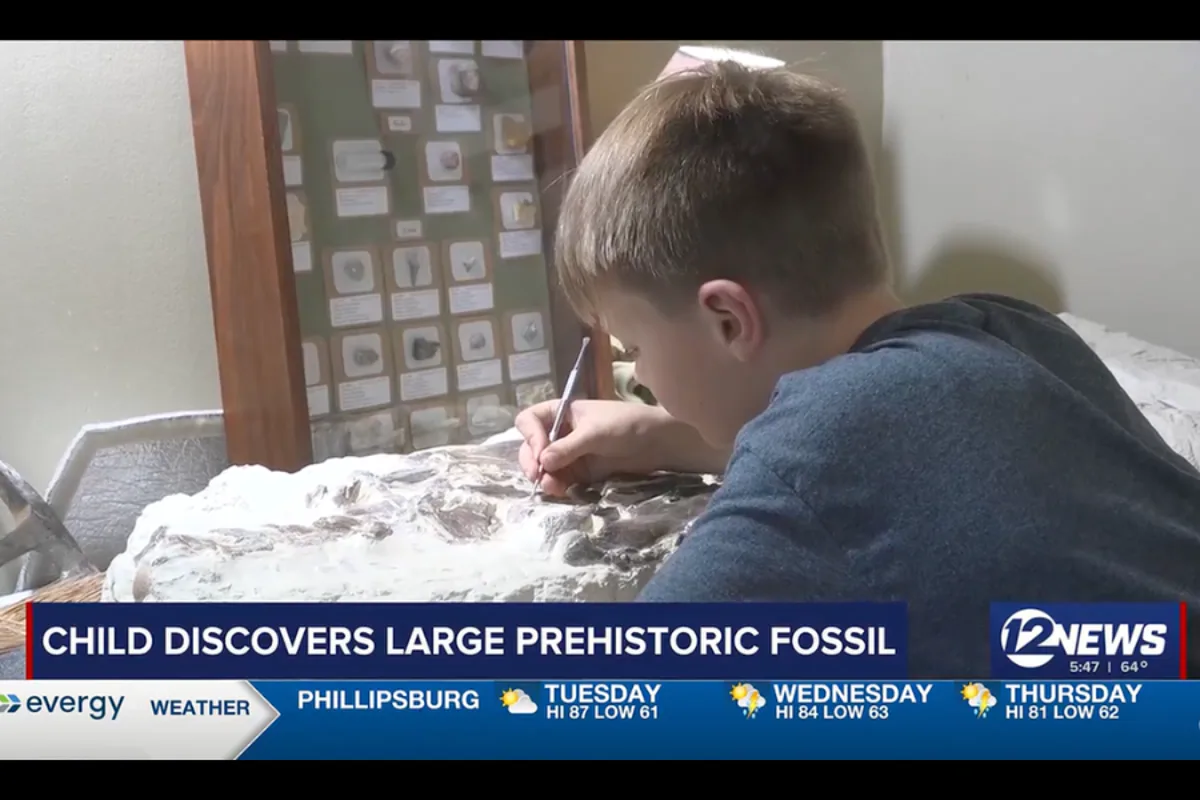
A 12-year-old boy from Kansas has made an extraordinary prehistoric discovery, unearthing an 80-million-year-old marine fossil while on a field trip with his 4-H club. Corbin Bullard, from Clearwater, found the fossil in September 2025, when he was just 11 years old, during a visit to Jewell County with the Sedgwick County 4-H Geology Club. The club, which teaches children aged 7 to 19 about earth science, rocks, and fossils through hands-on activities, provided the perfect setting for this remarkable find.
The Discovery
While exploring the area, Corbin noticed something unusual. "He said, ‘Whoa.’ So we looked down and found what I think were seven or eight large vertebrae," Corbin’s mother, Wendy Bullard, told KWCH. The family made three separate trips to fully excavate the fossil from the site. Although Corbin has long been fascinated by dinosaurs, experts identified his discovery as a tylosaurus, a type of mosasaur—a large marine reptile that swam through the ancient sea covering Kansas during the Cretaceous period, approximately 80 million years ago.
About the Mosasaur
The tylosaurus is a member of the mosasaur family, which includes the Tylosaurus proriger, a species that could grow up to 45 feet in length. These creatures are related to modern-day snakes and lived during the same time as dinosaurs, though they are technically not dinosaurs. They propelled themselves through water using their tail and paddle-like flippers, according to National Geographic. The fossil Corbin discovered consists of eight pieces and stretches more than 15 feet.
Preparation and Display
Corbin has already spent at least 30 hours carefully cleaning the fossil. "I feel like it’s very surreal to have had this happen. I’m very proud of Corbin for sticking through it and finding everything," said Stephanie Hays, the Sedgwick County 4-H agent. The young paleontologist plans to showcase his find at the Sedgwick County Fair, which will take place from July 8 to July 11. This exhibition will allow the public to see the impressive specimen and learn about Kansas's prehistoric marine past.