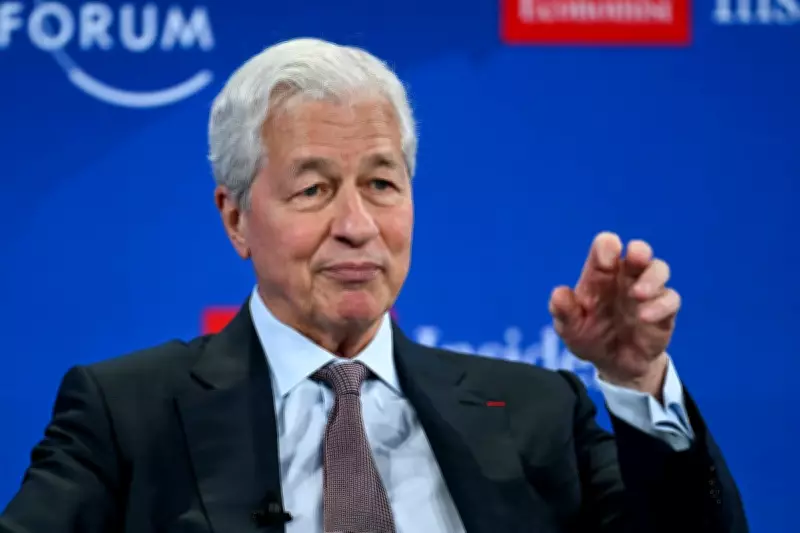
JPMorgan Chase CEO Jamie Dimon has sparked fresh concerns over mass job losses on Wall Street, stating that the bank will increasingly hire artificial intelligence specialists while reducing the number of traditional bankers in certain roles. Speaking from Shanghai, Dimon told Bloomberg News, "There will be all different types of jobs, and I think we will be hiring more AI people and fewer bankers in certain categories, and it will make them more productive." He added, "I think it will reduce our jobs down the road."
Gradual Workforce Transition
Dimon highlighted that JPMorgan's annual attrition rate of 10 percent, affecting 25,000 to 30,000 employees, allows for a gradual management of workforce changes. He suggested retraining staff, redeploying workers, or offering early retirement as alternatives to large-scale layoffs. This approach aims to soften the impact of automation on employees.
Industry-Wide Trend
Dimon's comments align with a broader trend across the banking sector, where institutions are ramping up AI investments to reshape workforces and job functions. For instance, Standard Chartered has announced plans to cut 7,000 jobs over four years, replacing what it terms "lower-value human capital" with technology. This shift deepens concerns among investors and economists that AI will disrupt industries, with job losses emerging in sectors most exposed to automation.

Previous Warnings on Interest Rates
In April, Dimon made headlines by warning that the world could face "significant" interest rate shocks as a consequence of geopolitical tensions involving Iran. He noted that spiraling oil and gas prices, following Iran's blockade of the Strait of Hormuz and attacks on regional energy infrastructure, could lead to "stickier" inflation and push up interest rates. Higher rates increase borrowing costs for loans, mortgages, and government debt, and are associated with slower economic growth as firms reduce spending and hiring.
Dimon cautioned: "Now, because of the war in Iran, we additionally face the potential for significant ongoing oil and commodity price shocks, along with the reshaping of global supply chains, which may lead to stickier inflation and ultimately higher interest rates than markets currently expect. Nations that are heavily dependent upon imported energy are already seeing the effects. And it's not just energy, it's commodity products that are byproducts of oil and gas, like fertilizer and helium. Given our complex global supply chains, countries are experiencing disruptions in shipbuilding, food and farming, among others."
He concluded that the outcome of current geopolitical events could be the defining factor in how the future global economic order unfolds, though he acknowledged uncertainty.