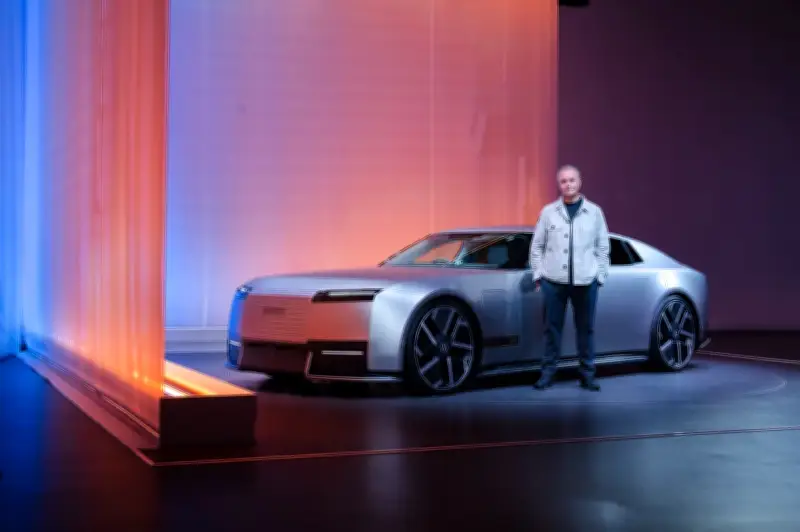
Jaguar has unveiled the Type 01, the first model in its radical reinvention, an electric four-door GT that will lead its move upmarket. With 1,016bhp and an expected maximum range of 450 miles, the car offers plenty to discuss beyond its looks.
First Impressions and Performance
Before the official unveiling in New York, Steve Fowler spent time in the Type 01, exploring the car inside and out and observing its on-road capabilities with Jaguar’s chassis expert Matt Becker at the wheel of a disguised prototype. Fowler was surprised by how nimble the big, heavy car felt, while it remained comfortable on the rougher roads around JLR’s test track. That offered an encouraging answer to a question all the arguments about its styling couldn’t settle: would it still feel like a Jaguar?
The harder question is whether customers will be prepared to pay much more for one. According to Jaguar MD Rawdon Glover, prices are expected to have a ‘centre of gravity’ around the £125,000 mark. That’s a sizeable leap for the brand, with a lot depending on whether buyers are prepared to come along.
Engineering and Design Details
The engineering team’s reference point was the old V12-engined XJC, chosen for the way it mixed pace with a comfortable ride. Becker said, “At its best, Jaguar has always delivered two characters – performance and refinement.”
Three electric motors, one at the front and two at the back, make this Jaguar’s most powerful road car. It reaches 62mph from rest in 3.2 seconds, but the engineers are equally interested in the four seconds needed to get from 62–112mph. Air suspension and adaptive dampers help balance performance with comfort.
For London, the rear-wheel steering could be particularly useful. Despite being 5,235mm long, the Type 01 has an 11,500mm wall-to-wall turning circle, comparable to a compact family car. Jaguar’s entirely new underpinnings were developed to fit a big battery without making the car tall. Some cells sit ahead of the passenger compartment, protected by a new crash structure, while spaces within the underfloor pack give rear passengers somewhere to put their feet. The rear electric motors can also switch off when cruising, leaving the front one to do the work.
Range, Charging, and Interior
The headline range comes from a 118kWh usable battery. Jaguar also quotes up to 320 miles at a steady 75mph, giving a better indication of its long-distance ambitions. At a suitable 350kW rapid charger, Jaguar says up to 200 miles can be added in as little as 13 minutes, with a 10–80 per cent charge taking around 22 minutes. Slower AC charging sockets are fitted on both sides, and Jaguar’s app can find available chargers and bring payments for participating networks together on one monthly bill.
Its roof is just 1,403mm high, the bonnet stretches out ahead and 23-inch wheels are standard. There’s still no rear window, while the famous Jaguar leaper survives on the side finishers. Getting the sharp creases around the rear side window into metal took more than 1,500 hours of work and a pressing machine four storeys high – Jaguar calls that section the Impossible Panel. There’s even a London Red paint inspired by the capital’s redbrick buildings and gallery walls, joining French Ultramarine Blue in the Chromatic Moments collection, limited to 60 cars worldwide between the two colours.
The driving position comes as something of a surprise: for once, Fowler was inclined to raise the seat. A divider running the length of the cabin separates the four seats, all heated and cooled, with massage functions in the front. For luggage, a powered tailgate reveals more than 450 litres of space, rising to 1,000 litres when the rear seats fold.
Rather than putting a camera screen where the mirror would normally hang, Jaguar places it at the bottom of the windscreen. The rear-view screen shares its home with a soundbar, part of a 38-speaker Meridian system. A 24-inch display handles instruments and infotainment, with smaller, seven-inch, phone-like touchscreens front and rear for everyday adjustments. Wireless Apple CarPlay and Android Auto are included, and software can be updated remotely.
Market Positioning and Production
Jaguar isn’t simply trying to sell another fast, comfortable car. Rawdon Glover describes its expected price positioning as “double where we were”. He sees room between the premium market, which he puts at up to £120,000, and luxury cars at £300,000 and beyond. The GT was picked to change perceptions, not to become the company’s biggest seller. That explains why the first car of this new generation isn’t an SUV; Jaguar wants to establish its new position before the rest of the range follows.
Production will be at Solihull, with orders expected to open early in 2027 and deliveries following in the second half of the year. Glover is also emphatic about getting quality right. At these prices, keeping customers happy long after the handover will be every bit as important as persuading them through the showroom door.