

People are spending more time on their phones while on holiday than when they are at work, according to new research. Two-fifths of British holidaymakers admit their screen time increases during breaks, despite 88% actively trying to disconnect.
Screen Time on Holiday
The study, commissioned by Tourism Tasmania, reveals that 41% of people, equivalent to 16.7 million, spend longer glued to their devices while out of the office, even when they intend to go offline. More than half of respondents said social media makes holidays feel like work, while the same proportion admitted their phones have compromised key travel moments through distraction, pressure to post, or an inability to fully switch off.
Disconnection as a Status Symbol
The research suggests that disconnection has become a new status symbol. Nearly six in ten British holidaymakers describe being able to switch off completely as the 'new luxury' and a status symbol in itself. Peace and quiet has overtaken traditional hotel perks, with 83% naming it the most luxurious part of a getaway, while 51% believe a proper holiday is one where they cannot be contacted at all.

Willingness to Pay for Limited Connectivity
More than a third (37%) of holidaymakers said they would forgo Wi-Fi altogether over room service. This shift is also reshaping travel spending habits. Two-fifths (43%) of British holidaymakers say they would pay extra for destinations or accommodation with limited or no connectivity. Those actively seeking a tech-free escape are willing to spend up to £32.50 more per night for this. The same proportion (42%) rank remote, nature-led destinations as the most appealing option for a true digital reset.
Tasmania as a Haven
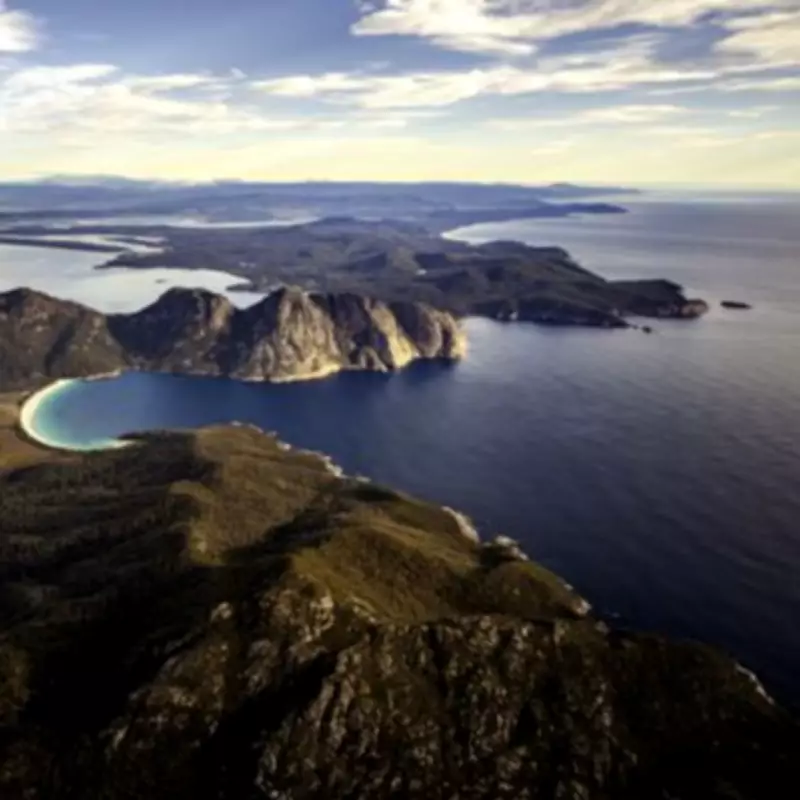
Tasmania, Australia's only island state, is emerging as a restorative haven for those seeking to disconnect. Recent high-profile visitors, including Gordon Ramsay and Sophie Ellis-Bextor, have praised the island's world-class culinary offerings and pristine environment. More than half of Tasmania's land is protected in national parks and reserves, and over 20% of the island is a World Heritage wilderness. It offers a concentration of nature, from glacial lakes and ancient rainforests to rugged coastlines, iconic walks, and more than 1,500 beaches.
Across parts of Tasmania, limited coverage and low population density mean switching off is not something visitors necessarily need to plan for.
CEO Comments
Tourism Tasmania CEO Sarah Kingston Clark said: "British travellers are telling us that holidays don't feel like a proper break when the pressure to be online follows them everywhere. When people say social media is making holidays feel like work, and that being unreachable is now the marker of a 'real' escape, it points to a deeper shift in how many are wanting to travel."
"What's changing for many is the role holidays play. For a long time, they've been about seeing more, doing more, sharing more. But that constant layer of connectivity means many travellers never truly switch off. What we're seeing now is a growing desire to step out of that cycle altogether and spend time in places where there's less connectivity, less noise, and fewer expectations."
"That's why Tasmania is resonating with so many people right now. Being an island set apart from mainland Australia, there's a natural sense of distance from the noise and pace of the rest of the world - and with it a very different kind of holiday experience. Travellers can step away from devices, avoid large crowds and queues, and immerse themselves in remarkably pristine nature, while still enjoying easy access to world-class food and drink, arts and culture, and a vibrant calendar of events - often all within close reach."
"If travellers want to stay connected they absolutely can, but if they're looking to switch off, it tends to happen quite naturally here. For many people it's not about disconnecting for the sake of it, it's about slowing down, feeling present, and reconnecting with what matters."






