Government Issues Freeview Update Amid Fears of Internet-Only TV Switch-Off
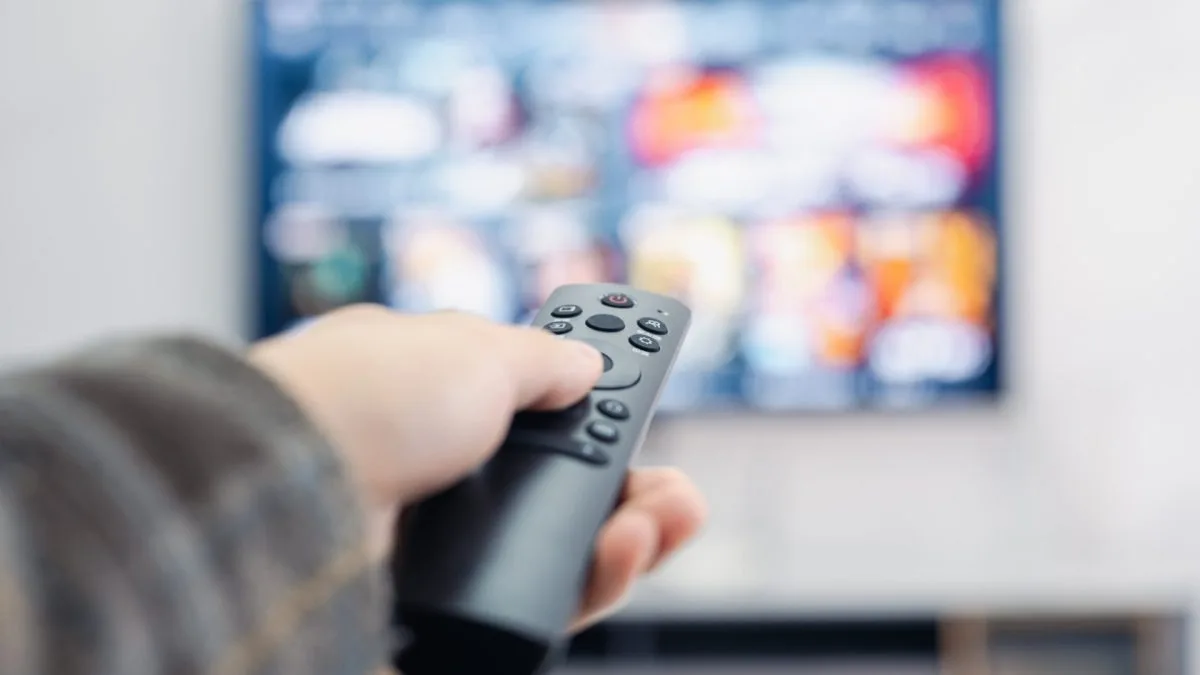
Concern is mounting across the United Kingdom that the Freeview television service could be permanently switched off within the next decade, as the government explores a potential transition to internet-only broadcasting. A recent parliamentary intervention and a rapidly growing public petition have highlighted fears that hundreds of thousands of households, particularly those in areas with poor broadband connectivity, could be left without access to television.
Petition Gains Momentum as Sky Pushes for Change
A petition on Change.Org has attracted more than 110,000 signatures in recent weeks, reflecting strong public opposition to any move that would phase out terrestrial television. This surge in support comes after Sky published research urging the government to end traditional broadcasting and "move fully to internet-delivered TV in the 2030s." The petition argues that scrapping Freeview would force every household to take out an expensive fixed broadband contract to watch television, disproportionately affecting older, disabled, and low-income viewers.
Parliamentary Questions and Ministerial Response
Independent MP Dan Norris recently questioned Secretary of State for Culture, Media and Sport, Lisa Nandy, about "the potential effect of turning off Freeview on areas with poor broadband connectivity" and "what steps her Department is taking to ensure the Freeview TV distribution system remains available to all." In response, Ian Murray, Minister of State for Media, Tourism and Creative Industries, revealed that officials are currently examining the future of digital terrestrial television (DTT).
Murray stated: "Digital inclusion and ensuring that all households across the country have access to high-quality, reliable broadband is a priority for the Government. The Department for Culture, Media and Sport is working closely with the Department for Science, Innovation and Technology to ensure that all aspects of digital inclusion are considered as part of any decisions we make on the future of digital terrestrial television."
He continued, "The Department is leading a project to assess the future of TV distribution and we are committed to maintaining access for all. Digital Terrestrial Television (DTT) is protected until at least 2034, safeguarding access for millions of households. Before any decision is made close consideration will be given to how any changes would impact audiences, especially those who rely on DTT as their primary means of watching television."
Vulnerable Viewers Voice Their Concerns
The potential switch-off has sparked alarm among vulnerable demographics who depend on Freeview for entertainment, news, and social connection. Lynette, an 80-year-old from Kent, explained, "Free Terrestrial TV is essential for me - whether it's for entertainment, the news or even learning new things from magazine shows. I don't want to be choosing apps and making new accounts, I don't want a screen that pops up with the TV trying to work out what I want to watch."
She added, "I've tried watching television programmes online with family members, and they stop part way through with a whirling circle and then an error message appears. I tried a streaming service and didn't like it. It is time-consuming and irritating trying to work out where I want to be, to remember the sequence of clicks, with hieroglyphics instead of words. If I make a mistake I have to start again. I have more important things to remember than clogging up my memory with unnecessary information."
Freeview's Widespread Reach and Parliamentary Debate
Freeview currently reaches 16 million homes throughout the UK, making it the principal television platform for 40% of households with a TV and the country's biggest television service. During a recent Westminster Hall debate, MPs expressed serious concerns about the service's future, noting that the licences supporting terrestrial television are due to expire in 2034 with no government pledge yet secured to extend them.
Conservative MP David Mundell emphasised, "Freeview is a universal service reaching 98.5% of the UK population, including those in remote and rural areas. It is available at no additional cost over and above the licence fee. This is a crucial point: people do not need to pay any additional monthly bills to watch terrestrial TV; all they need is a TV set and an aerial."
He further noted, "The options for watching TV have broadened in the last few years, with the arrival of TV streaming over the internet, or IPTV, as it is known. Many of us enjoy those services, but the fact is that to do so, someone needs a high-speed fixed broadband subscription of sufficient speed and reliability, and not everyone has that."
Government Acknowledges Shifting Viewing Habits
In response to the debate, The Parliamentary Under-Secretary of State for Culture, Media and Sport Stephanie Peacock acknowledged, "The way we watch TV is changing rapidly. Over the past decade, we have seen significant shifts in how content is delivered and consumed. Increasing numbers of viewers are moving to internet-based platforms, both for on demand content and, increasingly, for live programming."
She continued, "DTT is guaranteed until at least 2034. Before making any decisions, we will carefully consider the challenges for public service broadcasters and, importantly, the impact on loyal daily viewers, especially those who rely on digital terrestrial services."
As the government continues its assessment, the future of Freeview remains uncertain, with millions of households anxiously awaiting a final decision that balances technological advancement with digital inclusion and accessibility for all.