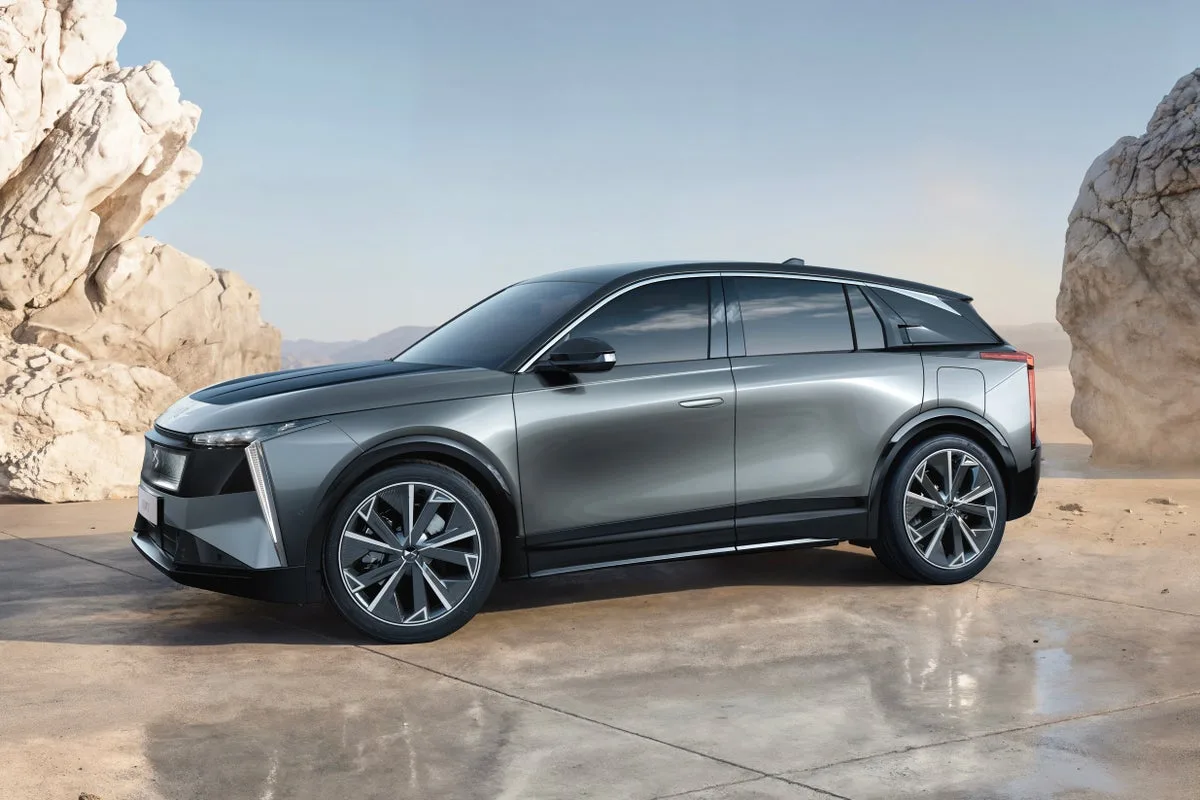
DS No7 SUV Arrives with Up to 460-Mile Range as French Brand Reinvents Best-Seller
French premium car manufacturer DS Automobiles has officially revealed the all-new DS No7, a fully renewed SUV set to challenge established rivals such as the BMW iX3 and Mercedes-Benz models. This launch marks a significant milestone for the brand, representing the first complete overhaul of a core model since DS became a separate entity in 2014. The introduction signals a strong push towards electrification and advanced technology across DS's vehicle lineup.
Strategic Electrification and Platform Flexibility
The DS No7 continues the successful formula of its predecessor, the DS7, by combining compact exterior dimensions with a focus on interior spaciousness, comfort, and distinctive French design. Built on a versatile multi-energy platform, the new SUV offers buyers a choice between fully electric and hybrid powertrains from the moment it hits the market.
Xavier Peugeot, CEO of DS Automobiles, emphasised the strategic importance of this launch. He stated, "After the launch of No8, our 100 per cent electric flagship offering up to 750km of range, followed by No4, the most comfortable multi-energy saloon in its segment, the arrival of No7 continues this momentum for DS Automobiles. DS No7 embodies a new stage of maturity: blending refinement, comfort and technology, it stands as a key strategic milestone for the brand."
Enhanced Dimensions and Aerodynamic Design
Measuring 4,660mm in length, the DS No7 is slightly larger than the outgoing DS7, with an overall increase of 70mm and a wheelbase extended by 50mm to 2,790mm. The width remains at 1,900mm and height at 1,630mm, ensuring the vehicle maintains a similar footprint while optimising interior cabin space.
The design evolves from the DS7, featuring a more aerodynamic profile inspired by the DS Aero Sport Lounge concept. A drag coefficient of 0.26 is achieved through a curved roofline and integrated rear spoiler, which also helps preserve rear headroom. Lighting plays a crucial role in the styling, with a new DS Light Blade signature at the front paired with an illuminated grille. Vertical light elements at the rear echo the front design and contribute to airflow management.
Buyers can select from six exterior colours, including a new Silk Green finish, along with bi-tone paint options and wheels up to 21 inches in diameter. Despite the aerodynamic focus, DS claims interior space has been improved, particularly in the rear, where larger doors increase window area by 30 per cent. The optional panoramic roof is also 40 per cent larger than before.
Practical Interior and Boot Capacity
Boot capacity has been enhanced to 560 litres depending on specification, reducing to 500 litres in all-wheel drive versions and models with a subwoofer under the boot floor. A two-position boot floor and folding 40/20/40 rear seats aim to improve flexibility, while storage for charging cables is integrated beneath the load floor in electric variants.
The interior continues DS's emphasis on uniquely French materials and craftsmanship, with options including Nappa leather, Alcantara, and various fabric finishes. Signature design elements such as 'Clous de Paris' detailing and pearl stitching remain, alongside a choice of five interior themes.
Electric Range and Powertrain Options
The headline figure for the DS No7 is its electric range, with the E-Tense FWD Long Range version offering up to 460 miles. This falls slightly short of the BMW iX3's 500-mile claim and the Volvo EX60's 503 miles, but the DS No7 utilises a smaller 97.2kWh battery produced in France. An all-wheel drive version with the same battery delivers up to 421 miles, while a front-wheel drive model with a 73.7kWh battery offers up to 337 miles.
On motorways, DS claims the long-range version can achieve up to 279 miles between charges, aided by its aerodynamic efficiency. Rapid charging is rated at up to 160kW, allowing a 20 to 80 per cent charge in 27 minutes for the larger battery, or 31 minutes for the smaller one. Under optimal conditions, up to 118 miles of range can be added in just 10 minutes.
Three electric power outputs are available:
- Entry-level front-wheel drive: 230hp
- Long-range model: 245hp
- Dual-motor all-wheel drive: 350hp
A temporary boost function increases outputs to 260hp, 280hp, and 375hp respectively, with the all-wheel drive version accelerating from 0-62mph in 5.4 seconds. The car also features battery preconditioning, plug-and-charge functionality, route planning with charging stops, and a vehicle-to-load system for powering external devices.
For buyers not ready to go fully electric, DS offers a self-charging hybrid combining a 1.2-litre petrol engine with an electric motor integrated into a six-speed dual-clutch gearbox. This delivers 145hp, fuel economy of 52mpg, and CO2 emissions between 121 and 127g/km.
Advanced Technology and Driver Assistance
The DS No7 introduces updated driver assistance and infotainment systems. DS Drive Assist 2.0 offers level two semi-autonomous driving, including adaptive cruise control and semi-automatic lane changes. Lighting technology is led by DS Pixelvision, which adapts the beam to avoid dazzling other road users while maintaining visibility up to 400 metres, or 520 metres with its boost function.
Inside, the DS Iris System 2.0 centres around a large 16-inch touchscreen and includes integrated ChatGPT functionality for voice control, along with wireless smartphone connectivity and access to vehicle health data. Additional features include a head-up display projected onto the windscreen, night vision capable of detecting pedestrians and animals up to 300 metres ahead, and a digital rear-view mirror.
Focus on Comfort and Sustainability
Comfort remains a key priority for DS, with the No7 featuring the Active Scan Suspension system that uses a camera to read the road ahead and adjust each damper in real time to improve ride quality. Acoustic laminated glass and additional sound-deadening materials enhance cabin quietness, while a 14-speaker Focal sound system is available.
Front seats can be specified with heating, ventilation, and massage functions, along with a 'neck warmer' system designed to improve thermal comfort without increasing energy consumption. Rear passengers also benefit from heated seats and separate climate controls.
The DS No7 will be built in Europe, with batteries produced at the ACC Gigafactory in northern France and final assembly taking place in Italy. DS emphasises the use of recycled materials throughout the car, including textiles, carpets, and Alcantara, while reducing chrome in favour of alternative finishes.
The first DS No7 models are expected to go on sale in the UK towards the end of the year, positioning the French brand as a formidable contender in the premium SUV market.