

The second day of CES 2026 saw the Las Vegas convention centre truly come alive, as crowds poured onto the expansive showroom floors. Visitors were greeted by a staggering array of thousands of robots, AI companions, health longevity devices, and wearable technology, setting the stage for a day of major announcements and futuristic prototypes.
Industry Titans Forge AI Alliance
The day's proceedings were launched with a significant keynote from Siemens President and CEO, Roland Busch. He detailed how Siemens customers are leveraging artificial intelligence to revolutionise their operations. He was joined on stage by Nvidia CEO Jensen Huang to announce an expanded partnership. Together, they proclaimed the launch of a new AI-driven industrial revolution aimed at reinventing manufacturing, production, and supply chain management globally.
Later, Lenovo hosted a star-studded event to showcase its AI platforms. CEO Yang Yuanqing was flanked by tech luminaries including Nvidia's Huang, AMD CEO Lisa Su, and Intel CEO Lip-Bu Tan. The presentation focused on how Lenovo's AI can assist individuals through wearables, empower businesses via enterprise platforms, and impact the wider world.

Gadgets and Robotics Take Centre Stage
Among the myriad of products unveiled, several stood out for their ingenuity and potential impact:
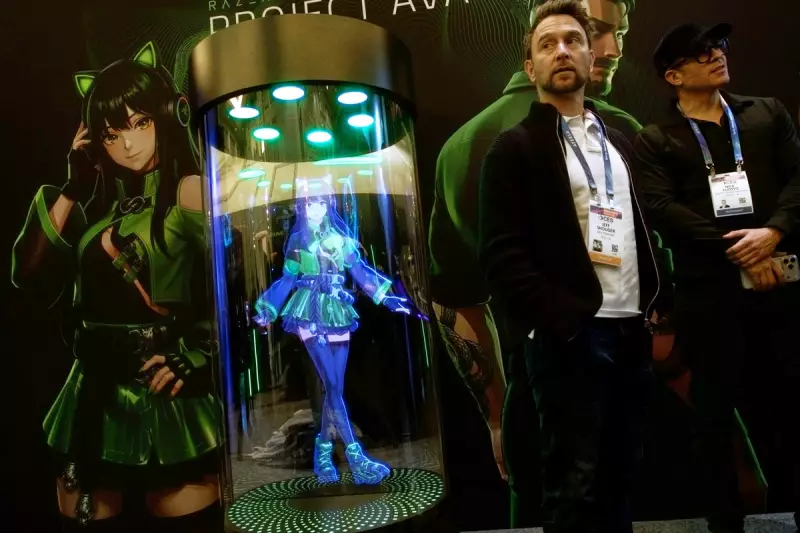
Razer's AI Leap: The gaming hardware giant moved beyond its core market with two AI-powered prototypes. Project Motoko is an over-ear gaming headset that also functions as a general-purpose AI assistant. Meanwhile, Project Ava evolved from an on-screen assistant into a physical holographic companion housed in a small glass tube, equipped with a camera and speakers. Both devices are AI-agnostic, with demos using OpenAI's ChatGPT and xAI's Grok respectively. Razer anticipates a commercial release later in 2026.
Autonomous Airport Crews: Oshkosh Corporation presented a vision of a fully automated tarmac. It debuted a fleet of autonomous robots designed to manage the complex 'perfect turn' process after a plane lands—handling guiding, unloading, fuelling, and cleaning. CEO John Pfeifer stated the technology aims to reduce delays and maintain operations in severe weather. Testing with major airlines is ongoing, with a rollout at major hubs like Atlanta or Dallas targeted within the next few years.
The Stair-Climbing Vacuum: Chinese company Roborock introduced the Saros Rover, a robot vacuum that deploys chicken-like legs to navigate and clean stairs. Though its demo ascent was slow, the company claims it will handle almost any stairwell, including spiral designs. The Rover remains in development with no confirmed release date.
Health Monitoring and Clean Energy Breakthroughs
Withings Body Scan 2: Far more than a simple scale, this $600 device measures 60 different biomarkers in 90 seconds through hand and foot pads, including heart age, vascular age, and nerve health. Paired with a subscription app ($10 monthly or $100 annually), it provides personalised health advice and trajectory tracking, aiming to promote longevity. It is slated for release in spring 2026.
AI Accelerates Fusion Energy: In a landmark partnership, Commonwealth Fusion Systems (CFS), NVIDIA, and Siemens announced they are collaborating to use AI to fast-track viable nuclear fusion energy. CFS is building the SPARC prototype fusion plant in Massachusetts, which is roughly 70% complete. The alliance will create a 'digital twin' simulation to compress years of manual experimentation into weeks of analysis. CEO Bob Mumgaard confirmed the first high-temperature superconducting magnet has been installed in SPARC, a precursor to the planned ARC power plant targeting grid connection in the early 2030s.

The Road Ahead from CES
Day 2 of CES 2026 solidified the event's role as the premier launchpad for transformative technology. From AI permeating every sector to robotics tackling logistical challenges and ambitious clean energy projects, the innovations showcased are poised to move from prototype to reality in the coming years, promising significant shifts in how we live, work, and manage our environment.





