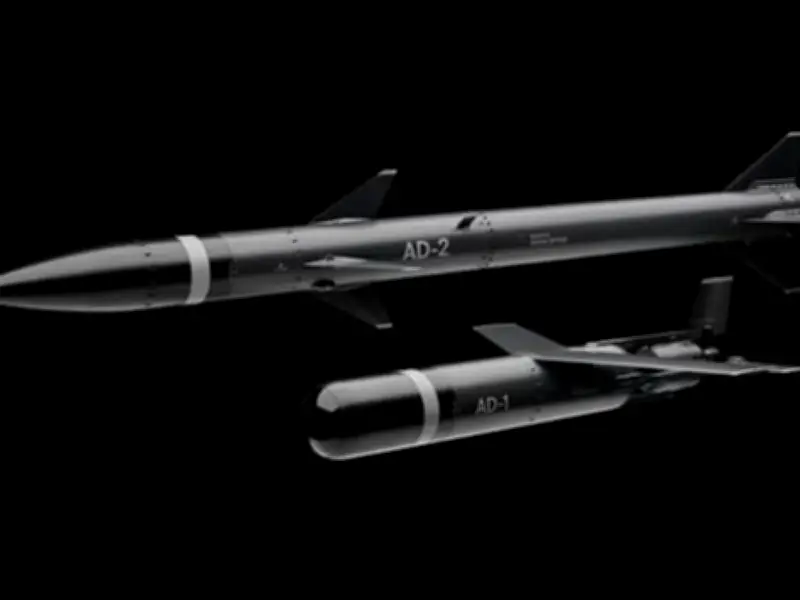
Military firm Helsing has unveiled a new air defence system designed to protect European cities from potential Russian drone attacks, using artificial intelligence to coordinate interceptor missiles.
The Contra system was displayed on Monday and is built to counter Russia's most advanced jet-powered drones and cruise missiles, which have caused devastation in parts of Ukraine in recent weeks. The platform uses sophisticated AI linked to radars and sensors to quickly detect aerial threats before deciding whether to launch one of two new interceptor missiles: the AD-1 Inferno and AD-2 Ambush.
Similar to Israel's Iron Dome
The technology is similar to Israel's Iron Dome system, which creates a virtual half-sphere barrier of protection over key elements in the country. According to Helsing, the AI can detect and coordinate interceptions against hundreds or even thousands of incoming drones and cruise missiles at the same time.
The development comes as Russian President Vladimir Putin could use drones to attack critical infrastructure, defence firms and military bases across Europe. Intelligence reports claim Moscow can now build 4,000 Geran-4 and Geran-5 jet-powered drones a month, with Russia able to launch hundreds of the aircraft at a time.
Cost-effective interceptor missiles
Both of the new missiles cost less than £100,000, significantly cheaper than US-manufactured Patriot missiles, which cost more than £3 million each and have been used to down Iranian drones over the Middle East. They can be launched from containers placed on the back of a lorry, a ship or in a field.
Niklas Köhler, Helsing's co-founder and president, said: "Contra ends the air defence dilemma: slow fair-weather drones, or million-euro missiles fired at cheap, mass-produced targets."
UK involvement and production plans
According to the Daily Mail, major parts of the two new missiles' development have been done in the UK. Helsing also said it would be able to produce thousands of missiles a month at sites across Europe.
The missiles are currently completing tests and will be operational later next year.