The Growing Chasm Between Silicon Valley's AI Dreams and Public Skepticism
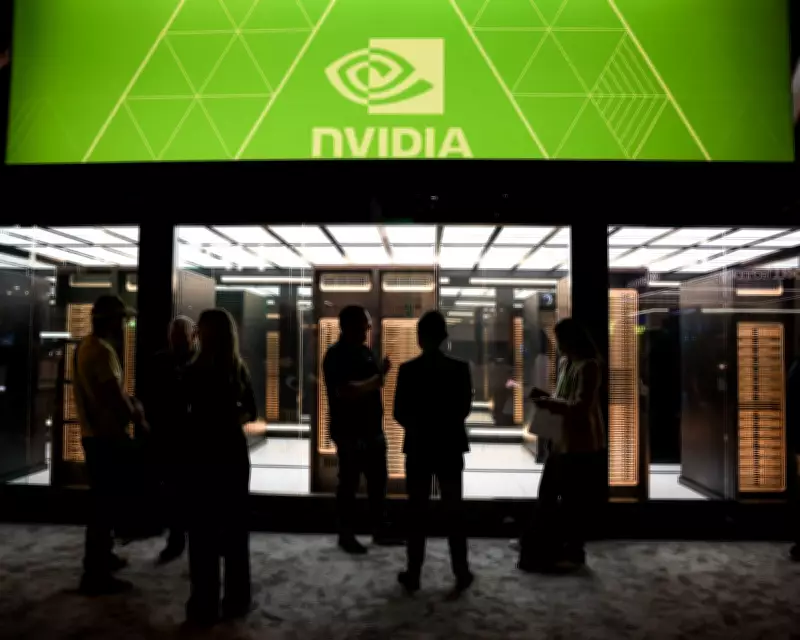
At the recent Nvidia GTC global AI conference in San Jose, California, the tech giant unveiled its vision for AI agents—semi-autonomous chatbots designed to handle digital tasks. Nvidia introduced NemoClaw, a software suite for businesses, signaling a bold step into this new frontier. CEO Jensen Huang projected staggering sales of $1 trillion by 2028, a figure equivalent to 3% of the entire US yearly GDP, underscoring the company's confidence in AI's growth trajectory.
Public Distrust and Diverging Realities
However, this optimism contrasts sharply with public sentiment. A Pew Research survey reveals that 65% of Americans do not use AI in their work, with widespread skepticism about its regulation by both major political parties. This divide echoes novelist William Gibson's observation that "the future is already here. It's just not evenly distributed." Exclusive polling for the Guardian further highlights this gap, showing twice as many Americans believe their financial security is worsening rather than improving, a stark counterpoint to Huang's bullish predictions.
Meta's Pivot to AI at a Cost
Meta exemplifies the industry's all-in bet on artificial intelligence. The company is reportedly considering layoffs of up to 20% of its workforce to offset ballooning AI expenditures, including a data center the size of Manhattan. Simultaneously, Meta has scaled back its metaverse ambitions, shutting down the virtual reality version of Horizon Worlds and reallocating resources. Since 2020, Reality Labs has recorded losses of $80 billion, prompting a strategic shift towards becoming "AI-native from day one," as CEO Mark Zuckerberg aims to build AI agents for his own role.

Tesla Cybertruck Safety Concerns
Beyond AI, safety issues plague the tech sector, particularly with Tesla's Cybertruck. The Guardian has tracked five known Cybertruck fires, resulting in four fatalities, including three college students in California. These incidents have led to four lawsuits against Tesla, with families and experts alleging design flaws. The truck's high-density laminated windows and lack of external door handles complicate escape during fires, raising alarms about its "apocalypse-proof" claims.
The Broader Implications
This moment marks a critical divergence: as tech giants like Nvidia and Meta pour billions into AI, everyday people remain wary, and safety risks like those with the Cybertruck underscore the human cost of innovation. The industry's focus on hardware and infrastructure over human talent may reshape the tech landscape, but public trust and safety must not be overlooked in this relentless pursuit of progress.