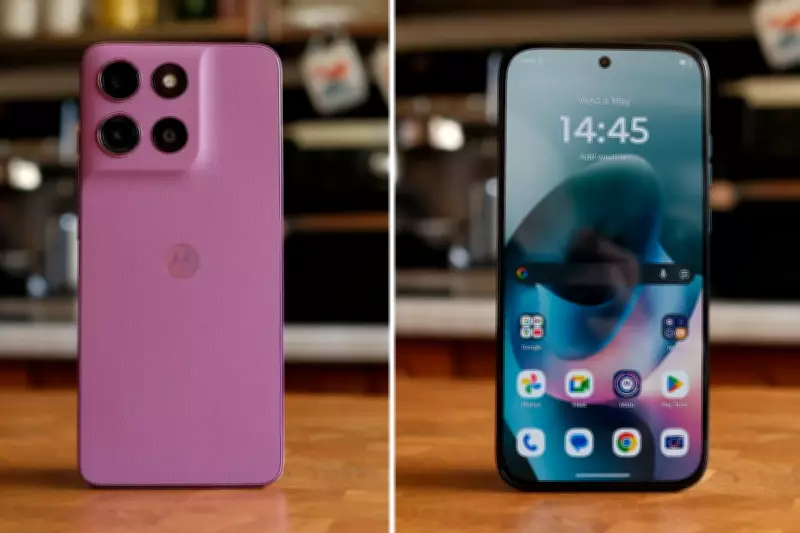
5 Best Cheap Phones in 2026 That Deliver Real Performance

Time was, buying the best cheap smartphone meant serious compromise. From potato-quality cameras to sluggish processors that can barely handle scrolling, the budget end of the smartphone world was a sad, maddeningly slow place. But no more.

Today, you do not need to spend flagship money to get a great smartphone. In fact, the cheaper end of the market is more competitive than ever, with brands packing high refresh-rate displays, capable cameras and long battery life into phones that cost a fraction of premium models. You can also get away with the sensible approach of buying phones that have been out for a year or so, getting more bang for your buck.

Whether you are after a reliable everyday handset, a secondary device, or simply want something that covers the basics without costing a fortune, there are plenty of strong options out there. The key is knowing where corners have been cut – and, more importantly, which compromises actually matter once you are using the phone every day.

Wide Pickt banner — collaborative shopping lists app for Telegram, phone mockup with grocery list

From Google’s consistently excellent Pixel A-series, to budget-friendly Motorola phones and Apple’s most accessible iPhone, we have tested and assessed the latest cheap smartphones to find the ones worth your money in 2026.

The best cheap phones for 2026

  • Best overall – Google Pixel 9a: £349
  • Best for performance – Poco M8 pro 5G: £299
  • Best for big-screen streaming – Motorola G77: £250
  • Best for Apple fans – iPhone 17e: £599
  • Best ultra-budget – Motorola G17: £130

1. Google Pixel 9a

Screen size: 6.3in | Screen type: P-OLED, 120Hz | Dimensions: 154.7mm x 73.3mm x 8.9mm | Weight: 186g | Camera (rear): 48MP wide, 13MP ultrawide | Camera (selfie): 13MP | RAM: 8GB | Storage: 128GB / 256GB

After using the Pixel 9a as a main phone, it is hard to escape the feeling that this is what most people should be buying right now. It nails the basics, avoids unnecessary compromises and, crucially, does not feel like a budget phone once you are actually using it. And that is even more true now that the Pixel 10a is out. While the newer model brings a brighter display and faster charging, both phones use the same Tensor G4 processor and deliver almost identical performance and camera results in day-to-day use. With the 10a sitting around £449 on offer, the 9a’s current £349 price makes it the clear sweet spot.

In daily use, everything feels smooth and predictable. Apps open quickly, switching between tasks is seamless and it handles everything from maps to streaming without fuss. Elsewhere, the camera setup remains a standout feature. The main sensor consistently produces sharp, balanced images with excellent dynamic range, so bright skies do not blow out, while darker areas keep their detail. It is also the most reliable low-light camera here, producing clean, detailed night shots without the heavy noise or smudging you see elsewhere. The ultra-wide is solid rather than spectacular, but colour consistency means switching lenses does not feel jarring. Selfies are similarly dependable, with natural-looking results that do not rely on heavy processing. It is also one of the few phones at this price where you can trust the camera every time you open it. Combined with clean software and long-term updates, the Pixel 9a remains the easiest recommendation here.

2. Poco M8 pro 5G

Screen size: 6.83in | Screen type: AMOLED, 120Hz | Dimensions: 163.3mm x 78.3mm x 8.3mm | Weight: 260g | Camera (rear): 50MP wide, 8MP ultrawide | Camera (selfie): 32MP | RAM: 8GB / 12GB | Storage: 256GB / 512GB

Pickt after-article banner — collaborative shopping lists app with family illustration

The Poco M8 Pro 5G feels like it has been built to prove that you can get serious performance and battery life without spending much money. It is noticeably quicker than most cheap phones. Apps load faster, multitasking feels smoother and it holds up better when you start pushing it with games or heavier workloads. It is a difference you notice immediately when switching from a slower budget device. The display plays into that feeling as well. It is large, bright and smooth, making everything from scrolling to streaming feel more polished than you might expect at this price.

Battery life is a big part of the appeal, too. The large 6,500mAh battery easily lasts a full day with heavy use, and the fast charging means you can get it back up quickly when needed. It is one of the most forgiving phones here if you tend to push your device hard. As for its photography prowess, the 50MP main camera can produce decent shots in good light, with enough detail for everyday use, but consistency drops indoors and in low light, where images soften and pick up some noise. The ultra-wide is useful when needed, but clearly a step down in quality, while selfies from the 32MP front camera are sharp enough for everyday use. Where it falls short is the software. Xiaomi’s HyperOS is not as clean or intuitive as what you get on the Pixel or Motorola phones here. Out of the box, there are more pre-installed apps than you really need, and the interface leans heavily into visual tweaks and extra features that do not always add much day-to-day value. Notifications can feel a little less consistent, and it takes a bit of time digging through settings to get things behaving exactly how you want. None of it is a deal-breaker, but it does mean the phone feels slightly less polished overall. If you are happy to spend a bit of time tidying things up, it is easy enough to live with, and once you do, the underlying performance and battery life make a strong case for themselves.

3. Motorola G77

Screen size: 6.72in | Screen type: AMOLED, 120Hz | Dimensions: 164.2mm x 77.4mm x 7.3mm | Weight: 182g | Camera (rear): 108MP wide, 8MP ultrawide | Camera (selfie): 32MP | RAM: 8GB | Storage: 128GB / 256GB

The Motorola G77’s standout feature is its gorgeous, large 120Hz AMOLED screen. It is bright, sharp and delivers the punchy colours that OLED fans love, making everything from watching videos to general browsing feel more comfortable and immersive. Battery life backs things up nicely. It comfortably lasts a full day of regular use, even with a fair amount of streaming and social media scrolling, which means you are not constantly worrying about topping it up. The overall design helps here as well – it feels slimmer and more refined than older Moto G devices, and does not come across as bulky despite the large display.

Performance is fine, albeit not a highlight. For everyday tasks – messaging, browsing, apps – it ticks along without much fuss, but it does not have the same snappiness as the Poco, and you will notice the difference when switching between heavier apps or pushing it a bit harder. The camera setup follows a similar pattern. The 108MP main sensor can capture good detail in bright conditions, producing vibrant, shareable images, but it is less consistent than the Pixel or even the Poco once lighting becomes more challenging. Indoor shots can look softer, and low-light photos lose clarity more quickly than you might hope. As with most phones, the ultra-wide camera is noticeably weaker, with softer detail and less reliable exposure, so it is best used occasionally rather than as a go-to lens. Selfies are perfectly serviceable without standing out, doing the job for video calls and social posts without much fuss. Motorola’s software is one of the nicer parts of the experience. It is clean, close to stock Android and refreshingly free of clutter, which makes the phone feel easier to use day to day than some similarly priced rivals. At this price, though, it is not the obvious value pick, especially next to the Poco, which offers more power for less money. This is very much a screen-and-battery phone first – and if that is what you care about, it still delivers.

4. iPhone 17e

Screen size: 6.1in | Screen type: Super Retina XDR OLED | Dimensions: 146.7mm x 71.5mm x 7.8mm | Weight: 169g | Camera (rear): 48MP wide | Camera (selfie): 12MP | RAM: 8GB | Storage: 256GB / 512GB

The iPhone 17e sits in a slightly different category – at around £569, it is significantly more expensive than every Android phone here, but if you want iOS, it remains the most accessible way to get a current iPhone without jumping all the way to flagship pricing. In day-to-day use, it leans heavily on the things Apple tends to get right. The interface feels smooth and consistent, apps behave exactly as you expect them to and there is a level of polish here that cheaper Android phones do not always match. It is not about doing anything dramatically different per se – it just nails the basics very cleanly.

The 6.1in OLED display is sharp and colour-accurate, making it great for video, browsing, and general use, but it is worth noting that it sticks to a 60Hz refresh rate. That means it does not feel quite as fluid as some of the Android rivals here when scrolling, even if overall responsiveness is still strong. The camera setup takes a very Apple approach. There is just a single 48MP rear lens, but it is tuned for consistency rather than versatility. Photos come out with natural colours, balanced exposure and a level of detail that holds up well in most situations. It is particularly good for quick, everyday shots where you just want something that looks right, without needing to tweak anything. The trade-off is flexibility. There is no ultra-wide lens, so you do not have the same freedom for landscapes or group shots as you do on most Android phones here. Apple gets around that slightly with a 2x zoom mode that crops into the sensor, and it works well enough for casual use, but it is still a more limited setup overall. Low-light performance is solid, producing clean, usable images without excessive noise, but it can sometimes struggle when it comes to pulling detail out of darker scenes or handling more difficult lighting. Video, on the other hand, is typically strong, with stable footage and reliable colour, which is something Apple tends to prioritise.

The 12MP front camera follows the same pattern as the rear – clean, consistent and easy to use. It is well-suited to video calls and social media, with natural skin tones and good exposure, even if it does not chase overly sharp or heavily processed results. Performance is another strength. Apple’s speedy A19 chip keeps everything feeling fast and responsive, and more importantly, it is likely to stay that way for years. Combined with Apple’s long-term software support, this is a phone you can realistically keep for much longer than most budget Android devices. That longevity is part of the value argument, because upfront, it is still expensive compared to everything else here. It is less flexible than Android rivals, particularly when it comes to cameras and display tech, but it makes up for it with consistency, polish and long-term usability. If you are already in Apple’s ecosystem, it is the easiest way to stay there without overspending.

5. Motorola G17

Screen size: 6.72in | Screen type: IPS LCD | Dimensions: 165.7mm x 76.0mm x 8.2mm | Weight: 189.9g | Camera (rear): 50MP wide, 5MP ultrawide | Camera (selfie): 32MP | RAM: 4GB / 8GB | Storage: 128GB / 256GB

The Moto G17 is about as straightforward as cheap phones get, and after spending time using it as a main device, its simplicity proves one of its biggest strengths. At this low a price, it is not trying to compete with anything higher up this list – it is here to cover the basics, and for the most part, it does exactly that. For everyday tasks, it is perfectly usable. Messaging, browsing, streaming and social apps all run without too much friction, and while it is clearly not fast, it does not feel completely bogged down either. The Helio G81 chip is not built for heavy lifting, though, so you do start to notice slowdowns when switching between apps or pushing it beyond light use.

The 6.72in display is a pleasant surprise at this price. It is not especially punchy compared to OLED panels, but it is large, sharp enough and easy to watch for long periods – whether you are scrolling or catching up on video. The 50MP Sony LYTIA main camera sounds ambitious, and in good lighting, it can produce perfectly usable shots. Colours are reasonably punchy, and exposure is handled well enough for quick snaps, so for casual photos in daylight, it does the job. Look a little closer, though, and the limitations become obvious. Detail is not especially strong, and even in decent lighting, you will start to notice noise creeping into skies and finer textures. Once you move indoors or into low light, those weaknesses become more pronounced, with softer images and less reliable results overall. The 5MP ultra-wide is more of a box-ticking addition. It is useful when you need to fit more into the frame, but detail drops off significantly and noise increases, so it is not something you will want to rely on regularly.

The 32MP selfie camera is actually one of the better elements here. In good lighting, it produces sharper, more detailed images than you might expect at this price, and it holds up well for video calls and social use, even if portrait processing can be a bit inconsistent. Battery life is solid rather than exceptional. The 5200mAh battery will get you through a full day of lighter use, but efficiency is not class-leading, so heavier use will bring it back in line with the rest of the pack. Motorola’s clean Android software once again helps keep things simple, and there is very little clutter getting in your way. The bigger limitation is long-term support – with minimal OS updates expected, it is not a phone you will want to rely on for years. In short, you are buying this for simplicity and its low price, not performance. And if that is what you are after, you are in safe hands.

What are the best cheap phones?

Having tested some of the best cheap phones, the Google Pixel 9a is the standout offering. It diligently serves up the best balance of camera quality, performance and long-term value, and with the Pixel 10a costing more for very similar results, it remains the clear choice. If performance is your priority, the Poco M8 Pro 5G delivers serious value, while the Motorola G77 is best suited to those who want a large, high-quality display. At the lower end, the Moto G17 proves you can still get a usable phone for very little money. And if you are tied to Apple’s ecosystem, the iPhone 17e costs more, but remains the most accessible modern iPhone available.

How we tested

We used each of the phones in this guide as our main device for several weeks, during which the below criteria were taken into account:

  • Power: Given their budget status, many cheap phones often save on costs by using less powerful processors. In the past, that meant frustratingly slow experiences, but today, even lower-end smartphone chips pack a punch. In the real world, this means we keep an eye on how each phone handles multiple apps, multitasking, gaming, and general browsing and scrolling.
  • Battery: Battery life remains one of the most important features for most people. For review purposes, we always feel that reaching the end of a heavy-use day with at least 20 per cent battery remaining is a sign of decent battery life for most people.
  • Camera: Even more expensive flagships struggle to deliver on every single camera. For cheaper phones, we are more concerned with the performance of the main camera, as it is the one most users will be snapping away on. We expect quality, detailed shots across all phones in good lighting. It is the low-light performance that cheaper phones can expect to struggle with, and the same goes for secondary, less important cameras like wide-angle lenses and macro features – both of which are more niche options for general smartphone photography. For testing, we took pictures in bright and dim conditions, as well as testing out selfies and additional lenses.

Our technology journalist has more than a decade of experience reviewing smartphones, wearables, and consumer tech. He has tested hundreds of devices across all price ranges, from flagship handsets to ultra-budget phones, and understands where cheaper models deliver real value – and where they fall short. For this guide, the phones were used extensively as everyday devices, ensuring recommendations are based on real-world experience rather than spec sheets alone.