

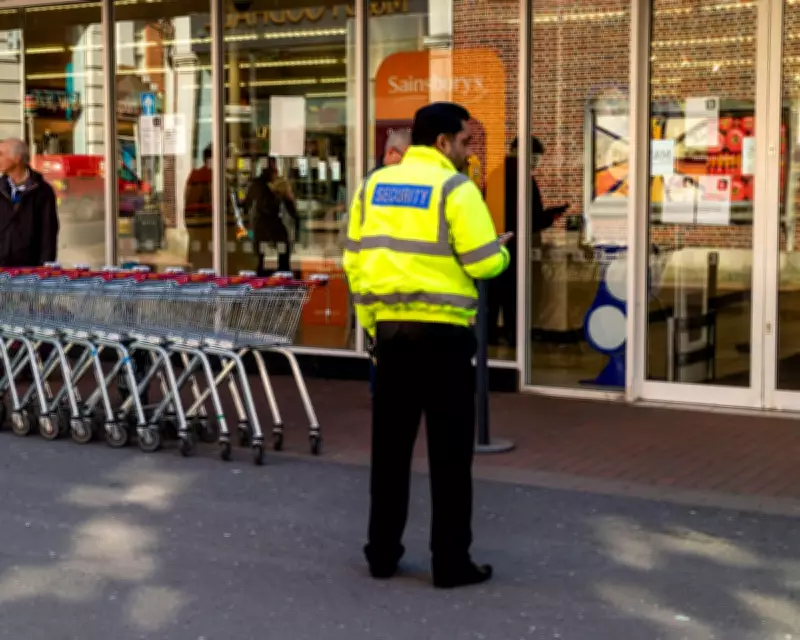
UK Retailers Face 'Systematic' Targeting by Criminal Gangs, Costing £400m Annually
The British Retail Consortium (BRC) has issued a stark warning, revealing that criminal gangs are "systematically" targeting shops across the UK, with 5.5 million incidents of shoplifting detected last year, costing the industry an estimated £400 million. This alarming trend highlights an "endemic" level of violence towards retail workers, who faced an average of 36 incidents of violence involving a weapon every day in the same period.
Violence and Abuse: A Persistent Threat to Shop Workers
According to the BRC's annual survey on crime, incidents of violence and abuse against shop workers fell by a fifth to 1,600 per day in the last financial year, down from 2,000 daily in 2023-24. This improvement is attributed to heavy investment by retailers in more security guards and advanced technologies such as facial recognition and security tags, alongside an enhanced police response, with 13% of retailers now rating police efforts as good or excellent, up from 9% the previous year.
However, the number of incidents remains the second highest on record, more than triple the 455 daily cases recorded before the Covid pandemic. Physical assaults have remained unchanged at 118 incidents daily. Helen Dickinson, chief executive of the BRC, emphasised: "Violence remains endemic. No one should go to work fearing for their safety, and we must redouble our efforts to bring these numbers much further down once and for all."

Theft and Organised Crime: Driving Anxiety Among Staff
The high levels of theft are causing significant anxiety among retail staff, with Joanne Thomas, general secretary of the shop workers' union Usdaw, noting: "The 5.5 million incidents of shop theft are in no way a victimless crime. Usdaw evidence shows that two-thirds of attacks on retail staff are triggered by theft or armed robbery." She added that dealing with persistent offences can lead to issues beyond theft, such as anxiety.
Experts suggest that contributing factors include the rising cost of living, with increasing prices for basics like baby formula and dairy products, and retailers' efforts to cut labour costs through technology like self-checkouts. The BRC cautions that the true number of incidents and cost of crime could be much higher, as the 5.5 million recorded thefts cannot be directly compared to prior years due to changes in data representation methods.
Government Measures and Future Challenges
The government has proposed new legislation, including a stand-alone offence for assaulting a retail worker and removing a £200 threshold for "low-level" theft, which carries a maximum six-month custodial sentence. These measures are part of the crime and policing bill currently passing through parliament, expected to be implemented this spring. Additionally, the government has pledged £7 million over the next three years to support increased responses to retail crime, as part of a broader plan to improve local policing with 13,000 additional neighbourhood and community support officers across England and Wales by 2029.
Dickinson welcomed these steps but stressed: "Theft remains a huge issue, with an increasingly concerning link to organised criminal gangs, who continue to systematically target one store after another, stealing tens of thousands of pounds worth of goods in one go." She called for sustained collaboration between retailers, police, and government, focusing on consistent enforcement, better data and intelligence sharing, and targeted action against prolific offenders and organised gangs. "For the sake of the 3 million hard-working people in retail, this work must not stop," she concluded.






