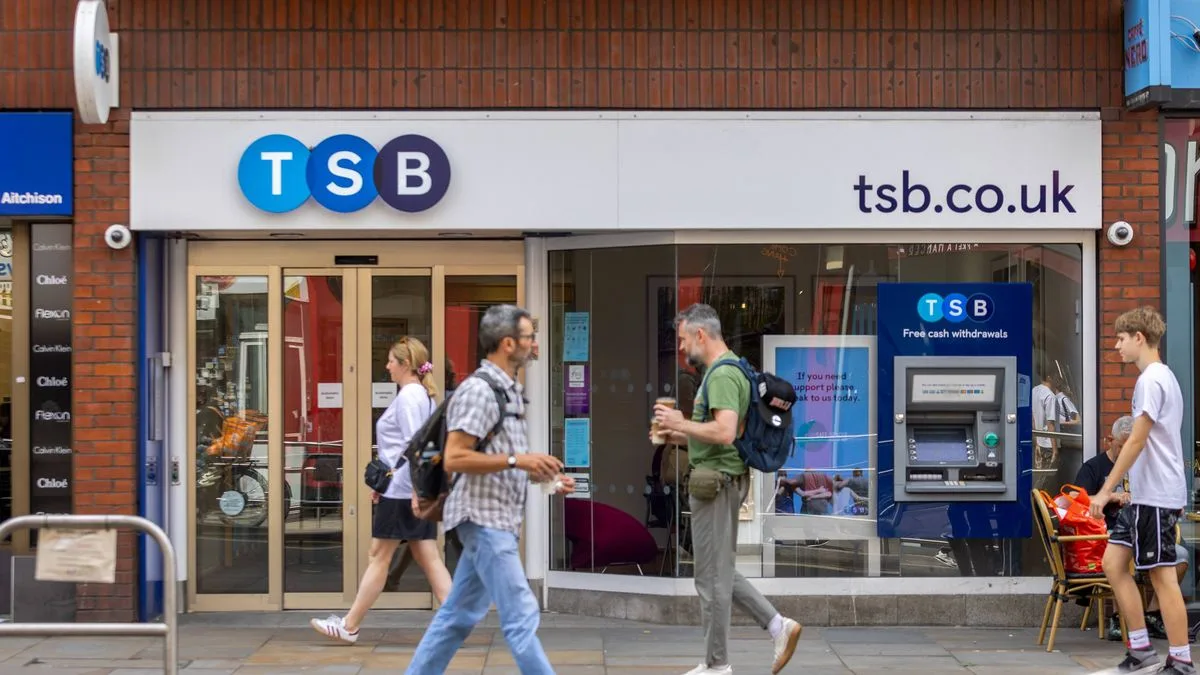
One of Britain's most historic banking names, TSB, is reportedly set to disappear from the high street after more than two centuries. Spanish banking giant Banco Santander is preparing to phase out the TSB brand following its £2.65 billion acquisition of the lender, with plans to eventually operate the merged business under the Santander UK name.
The deal, completed last week after regulatory approval, gives Santander an additional five million customers and over £45 billion in assets. Santander has indicated it intends to strip out at least £400 million in costs, with potential further cuts after 2028. These reductions typically involve branch closures, role eliminations, and IT system consolidation, raising concerns for staff and customers.
TSB currently runs around 175 branches, while Santander has already been scaling back its presence. Approximately 5,000 TSB employees face an uncertain future, and the bank has launched an internal listening exercise to support staff worried about redundancies. Customers will not see immediate changes, as Santander insisted there will be no impact on accounts, cards, or products for at least a year.
The disappearance of TSB would mark the end of a brand dating back to 1810, when the first Trustee Savings Bank was established in Dumfriesshire. Over the decades, the bank evolved through mergers and floated on the stock market in 1986. It became part of Lloyds, was separated after the 2008 financial crisis, and was acquired by Sabadell in 2015 before Santander's purchase.
Santander acknowledged TSB remains a "strong consumer banking brand" and said it will "consider carefully" how to use it going forward, hinting the name may survive on certain products for a limited period. However, the decision heightens fears about the decline of Britain's banking high street presence as lenders shift to digital platforms.