

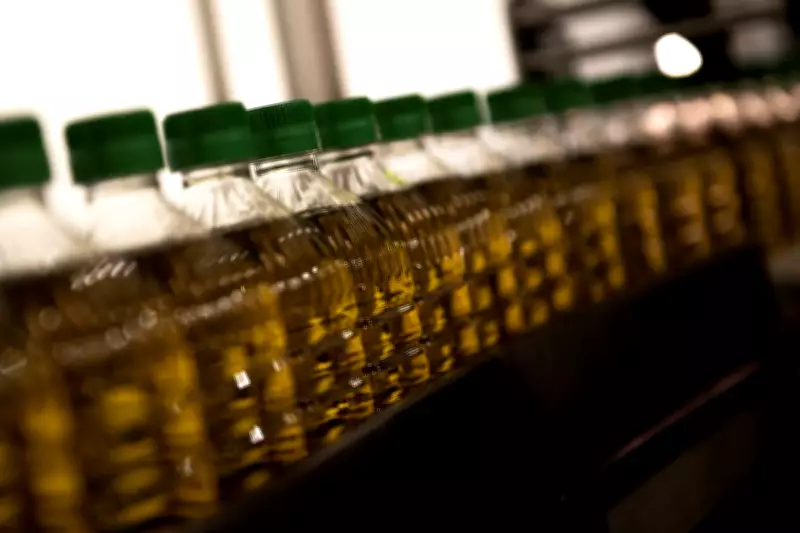
The director of a leading olive oil brand has launched a scathing critique against major supermarkets, accusing them of "taking the mickey" out of consumers by failing to pass on wholesale price reductions. Walter Zanre, the director of Filippo Berio, asserted that retailers are deliberately delaying price cuts to expand their profit margins, despite a notable decline in production costs over recent months.
Persistent High Prices Despite Wholesale Declines
Olive oil prices have experienced significant volatility in recent years, primarily driven by adverse weather conditions and poor harvests in key exporting nations like Spain. This led to a sharp increase in retail costs, with a 500ml bottle of Filippo Berio soaring from £3.75 in 2022 to a peak of £10.50 at the beginning of 2025. Although the price has since decreased to £7.50, it remains substantially higher than pre-crisis levels.
Mr Zanre expressed his frustration in an interview with Sky News, highlighting that Filippo Berio implemented two price reductions last year, but these savings have not been fully transferred to shoppers. "We can't dictate retail prices... For me, it's immensely frustrating that they've taken the opportunity to expand their margins – whereas in reality, we should be offering better value," he stated.

Supermarket Strategy and Consumer Resilience
The industry chief suggested that supermarkets have been surprised by the resilience of UK consumers in the face of elevated prices. Consumption of olive oil has declined by approximately 20 per cent, but Mr Zanre noted that he anticipated a more drastic drop. "It's almost like taking the mickey, and I think what's causing it is that even the supermarket was surprised at how resilient the shopper was at high prices, so the view is they don't need to give it all away for nothing," he explained.
This perception has allegedly encouraged retailers to maintain higher price points to bolster their profitability, even as wholesale expenses ease.
Retail Consortium Defends Supermarket Practices
In response to these allegations, Andrew Opie, director of food and sustainability at the British Retail Consortium, defended the sector's practices. He emphasised that retailers strive to pass on cost savings to customers whenever feasible and operate on very tight margins, as confirmed by the Competition and Markets Authority.
Mr Opie pointed out that olive oil is a product where consumers can easily compare prices across different brands and retailers, enabling them to seek out promotions or switch to more affordable alternatives. "Olive oil, like many everyday products, is something shoppers can compare across brands and retailers to take advantage of promotions or switch to alternatives that suit their budget," he remarked.
Production Challenges and Future Outlook
The pricing controversy unfolds against a backdrop of significant production challenges in Spain, the world's largest olive oil producer. Poor harvests in 2022 and 2023 resulted in a dramatic reduction in exports, with output plummeting from nearly 1.5 million tonnes in 2021-2022 to 666,000 tonnes in 2022-2023, before recovering slightly to 854,000 tonnes in 2023-2024, according to data from the International Olive Council.
However, there is optimism on the horizon, as the council estimates that Spanish production will rebound to 1.37 million tonnes this year. This anticipated increase has sparked hopes that olive oil prices may begin to stabilise at more reasonable levels, potentially alleviating some of the financial pressure on consumers.
Despite this positive forecast, the current dispute underscores ongoing tensions between suppliers and retailers over pricing transparency and value for money. As the market evolves, stakeholders will be closely monitoring whether supermarkets adjust their strategies to reflect the changing cost dynamics more promptly.






