

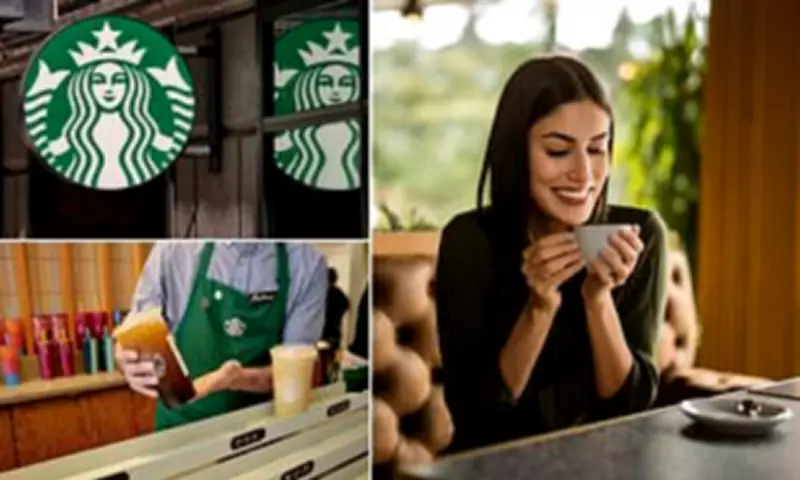
Starbucks has announced a major overhaul of its rewards program, pledging to deliver "more meaningful value" to its 35 million US members. However, the revamp, set to launch on March 10, is already facing sharp criticism from loyal customers who argue it is a clever tactic to drive higher spending rather than offer genuine benefits.
New Three-Tier System Introduced
The coffee giant's updated Starbucks Rewards program introduces three distinct tiers: green, gold, and reserve. Members will earn stars at varying rates depending on their tier level, with higher tiers unlocking faster star accumulation and additional perks. Under the new structure, green-level members earn one star per dollar spent, gold members earn 1.2 stars per dollar, and reserve members earn 1.7 stars per dollar.
This marks a significant shift from the current system, where members earn two stars per dollar when funds are preloaded to their account or one star per dollar for pay-as-you-go transactions. The overhaul also introduces a new redemption option: 60 stars for a $2 discount on any purchase, alongside existing rewards such as drink customizations for 25 stars, a croissant for 100 stars, a latte for 200 stars, or a sandwich for 300 stars.

Customer Skepticism and Backlash
On platforms like Reddit, customers are quickly dissecting the new program and expressing frustration. Many accuse Starbucks of using appealing marketing language to obscure what they see as unfavorable economics. For instance, at the base green earning rate of one star per dollar, unlocking the new $2 discount requires spending $60—and then spending more to actually redeem it.
"The whole 60 stars for $2 off is just a more appealing way of saying spend $60 and then spend more money to get $2 off," one user wrote. "It isn't a good deal." Another commented, "Everything sounds like a good deal for people that can't do math," highlighting concerns that the rewards are modest relative to the spending required.
Tier Requirements and Realistic Climb
To reach gold status, members must earn 500 stars within a 12-month period, equivalent to roughly $500 in spending at the base earning rate. Reserve status, which offers extra perks like double star days, requires 2,500 stars annually. At the standard pace, this translates to about $2,500 in yearly spending—or nearly $50 per week.
Skeptics question the practicality of such a climb. "You'd have to spend nearly $50 a week for a year to even see that extra 0.7 stars," one critic noted. "The stuff you get is essentially cheap prizes from the arcade." This sentiment reflects broader doubts about whether the tiered system genuinely benefits average customers or primarily rewards high spenders.
Strategic Context and Industry Insights
Starbucks describes the overhaul as part of its "Back to Starbucks" strategy, aimed at deepening customer connections and increasing visit frequency. The company first introduced a version of the Starbucks Card reward program in 2008, which evolved into My Starbucks Rewards in 2009, with the spending-based system becoming standard in 2016.
Recent changes, such as removing the perk of earning 25 stars for using personal cups in the US, have left some customers frustrated. "Everyone wants the old Starbucks, but old Starbucks didn't do any rewards programs," a Reddit user argued. "The thought was that if our quality and service was good, we didn't need to bribe customers to keep coming back."
Despite the backlash, industry experts note that changes to loyalty programs are often expected and even encouraged by consumers. Industrial designer Ravi Sawhney explained to Daily Mail that tiered programs tap into fundamental human desires for recognition, progress, and belonging. "When you introduce levels, customers shift from passive buyers to active participants chasing identity," he said. "It stops being about a free drink and starts being about advancement."
Implementation and Future Outlook
App users will discover their assigned tier level on March 10, when the reimagined loyalty program takes effect. As Starbucks rolls out this new system, the company faces the challenge of balancing its growth objectives with maintaining customer trust and satisfaction. The ongoing debate highlights the delicate balance between incentivizing loyalty and perceived value in competitive retail markets.






