

Lindt Gold Bunny's $20 Price Tag Ignites Widespread Shopper Fury in Australia
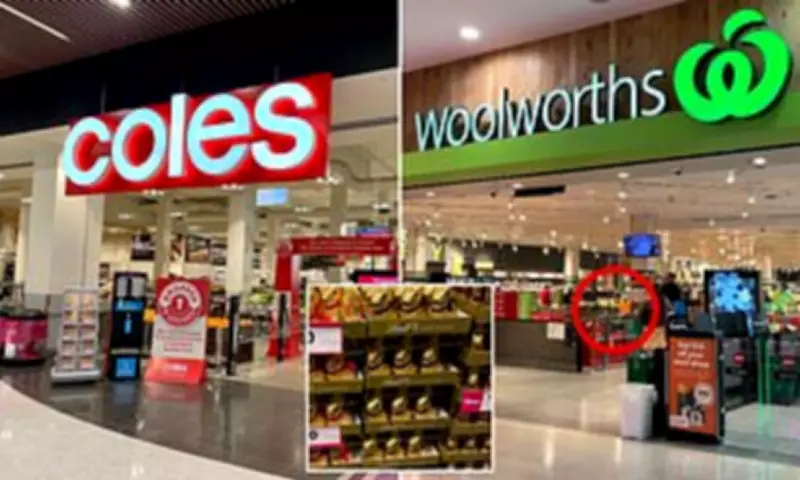
The beloved Easter staple, the Lindt Gold Bunny, has ignited a firestorm of anger among Australian consumers, with many threatening to boycott the prestigious chocolate manufacturer entirely. The iconic 200g milk chocolate bunny, wrapped in its signature gold foil with a red ribbon and bell, has already appeared on shelves at major supermarkets Coles and Woolworths a full two months before the Easter holiday.
Sticker Shock Overwhelms Seasonal Anticipation
However, it is not the premature seasonal display that has captured public attention, but rather what shoppers are describing as an "egregious" price point. At $20 for a single 200g Lindt Gold Bunny Milk Chocolate and a staggering $46 for the Lindt Easter Gala Chocolate Gift Box, numerous Australians have declared the cost simply too difficult to justify during an already punishing cost-of-living crisis.
In a heated Reddit discussion that quickly gained traction, one exasperated shopper passionately urged others to take a collective stand, pleading with fellow chocolate enthusiasts to refuse the premium prices. "If we all hold the line, just on this one little thing, we can hold another new line on something more important next time," the user wrote, adding, "Maybe eventually we can unite and fix our country."

Consumer Backlash and International Price Comparisons
This rallying cry resonated deeply, attracting thousands of comments where users vented their frustration over what many perceived as a dramatic and unjustified price increase. Some speculated about marketing tactics, with one person suggesting, "I assumed it was just a ploy so they could offer 50 per cent off next week." Another countered sharply, "I think the point is that even at 50 per cent off it's still an egregious markup over a few years ago. It's an absolute scam."
The criticism extended to questioning Lindt's market positioning, with one user bluntly stating, "Lindt thinks they are better than they actually are." Others conducted international price comparisons, noting that the same 200g chocolate rabbit retails for approximately 8.99 Euros in Germany, equivalent to about $14.95 AUD, suggesting Australian consumers might be paying a significant premium.
"All bars have been slowly rising, but this price is an extreme, sudden jump in price," one observer noted, while another remarked, "It's an absolutely insane amount, likely to justify the 50-90 per cent off sales coming."
Global Cocoa Market Pressures Behind Price Hikes
This consumer outrage emerges against a backdrop of unprecedented global cocoa price surges in recent years. In 2025, adverse weather conditions and crop disease in West Africa severely impacted cocoa harvests, sending shockwaves throughout the global chocolate supply chain. For much of the early 2020s, wholesale cocoa prices remained relatively stable, hovering just above AU$3,000 per tonne.
However, by April 2024, prices had skyrocketed to approximately AU$19,000 per tonne before moderating to around AU$10,000 by the end of 2024—still more than triple historical levels. Swiss chocolatier Lindt & Sprüngli, the producer of the world-famous Gold Bunny, previously explained to media outlets that these dramatic cocoa price increases were necessitating corresponding retail price adjustments.
A company spokesperson emphasized that price rises were "unavoidable" following a scenario where "the cocoa price has quadrupled in the last two years."
Heritage and Sustainability Versus Affordability Concerns
The Lindt Gold Bunny has served as a worldwide symbol of Easter for over seven decades, passionately crafted by Lindt Swiss Master Chocolatiers. The company highlights its sustainability credentials, noting that 100 per cent of its cocoa beans are traceable to their origin through the Lindt & Sprüngli Farming Program.

Nevertheless, for many Australian shoppers, this message of ethical sourcing and artisanal heritage is being completely overshadowed by immediate sticker shock and affordability concerns. The debate underscores a growing tension between premium brand positioning and consumer sensitivity to price during economically challenging times, transforming a seasonal treat into a flashpoint for broader financial frustrations.





