

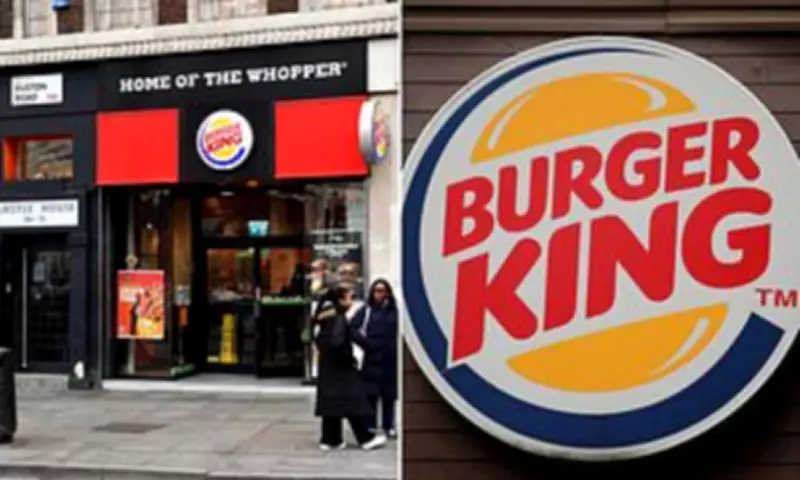
Burger King Announces Major UK Expansion Despite Economic Pressures
In a bold move that defies the challenging economic climate, Burger King has pledged to open 30 new restaurants across the United Kingdom and Ireland this year. This ambitious expansion plan comes as the fast-food giant secures a substantial £60 million financing deal to fuel its growth, demonstrating resilience in the face of rising inflation and increased wage costs.
Substantial Investment for Strategic Growth
The US-based chain, which currently operates 574 restaurants nationwide, revealed that the fresh capital injection will bolster its "next phase of expansion." Of the 30 new outlets planned for 2026, between 18 and 20 will be company-owned, with the remainder operating as franchise sites. Additionally, more than 60 existing restaurants are slated for refurbishment as part of this aggressive push to enhance its UK operations.
This latest initiative follows a successful period in 2025, during which Burger King opened seven new UK locations and redesigned 31 others, supported by a £30 million allocation from long-standing investor Bridgepoint. The recent £60 million funding, secured from lenders Metro Bank and Oak North, positions the company for further sustained growth.

Navigating a Challenging Macroeconomic Environment
Burger King's expansion strategy unfolds against a backdrop of significant cost pressures within the UK's hospitality sector and broader economic uncertainty that strains household budgets. The company acknowledged that "the macroeconomic environment remains challenging," with higher labour costs presenting a notable financial headwind. However, it noted that inflationary pressures have begun to plateau in some key areas, and it anticipates a gradual easing of wage spikes.
Remarkably, the chain reported that it is "largely insulated" from short-term inflationary costs due to effective hedging strategies for volatile energy, food, and foreign exchange expenses. This financial prudence has enabled Burger King to maintain robust performance, with revenue soaring by 10% to £488.7 million in 2025. Like-for-like sales growth reached 6.8%, driven in part by increasing home delivery demand, while underlying earnings improved by 7% to £28 million for the year.
Commitment to High Street Revival
The expansion plan also represents a deliberate effort to counteract the decline of the UK's high streets, which have reached a crisis point with over 13,000 store closures last year and predictions of further permanent shutdowns. This dire situation has prompted business leaders to urge Chancellor Rachel Reeves to adopt a "hybrid" business rates model that would tax online operators to support physical retailers.
Reeves faced significant backlash last year over botched business rates reforms that burdened UK businesses already grappling with inflation-busting minimum wage increases, additional tax hikes, and bureaucratic red tape. Burger King's investment signals a vote of confidence in the future of brick-and-mortar retail, even as the company monitors potential impacts from geopolitical uncertainty on inflationary pressures and consumer confidence.
Leadership Confidence in Future Prospects
Alasdair Murdoch, Chief Executive of Burger King UK, expressed optimism about the company's trajectory. "I am pleased to report another year of solid performance for Burger King UK in 2025," he stated. "Looking ahead, we will continue to monitor the potential impact of geopolitical uncertainty on inflationary pressures and consumer confidence. We continue to generate strong sales growth and, through disciplined cost control, are well positioned to convert these sales profitably. With a clear pipeline of new openings and £60 million of additional funding secured post year-end to support future growth, we enter 2026 with confidence."
This strategic expansion underscores Burger King's commitment to growth despite economic headwinds, leveraging financial stability and operational efficiency to navigate challenges while capitalising on opportunities in the competitive fast-food market.






