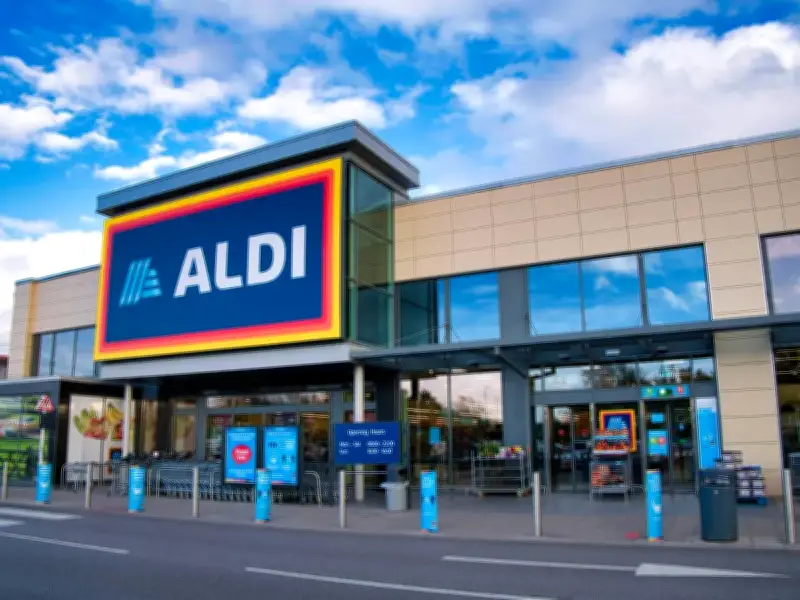
Aldi has confirmed it is trialling a reduction in the number of products stocked across some of its UK outlets, a move intended to maintain efficiency and keep prices competitive. The budget retailer has seen its rate of sales growth dip behind that of rival discounter Lidl over the past three years.
Streamlining the range
According to The Grocer, Aldi has not specified the scale of the reduction, describing it only as "small". The trade publication reported that the move was intended to deliver a sharper and more streamlined range, while stressing it would not result in reduced choice for customers.
The announcement follows a report in the Financial Times that the retailer was implementing a comparable change across several of its European locations, including stores in Germany and Switzerland. An Aldi spokesperson reportedly said: "As a discounter, we've always kept things simple so that we can deliver what matters most to our customers - award-winning quality at everyday low prices."
Regulatory changes
Aldi, together with Lidl, was recently informed that it would lose its longstanding "exemption" from a 16 year old rule that numerous other supermarket chains must follow. The Competition and Markets Authority (CMA), the body responsible for safeguarding consumers and ensuring fair competition between businesses, had been reviewing regulations applicable to all major retailers, reports the Mirror.
In August, it was announced that the two budget supermarkets must adhere to the same regulations regarding the opening of new stores that are already applicable to Asda, Co‐op, M&S, Morrisons, Sainsbury's, Tesco and Waitrose. These rules are designed to prevent large grocery retailers from employing tactics that obstruct rival supermarkets from trading in close proximity.
CMA findings
The CMA stated it had "provisionally found" that Aldi, Lidl GB and Lidl NI were "Large Grocery Retailers" which would bring them under the scope of the regulations. It added that it was seeking views before reaching a final decision.
The rule exempting Aldi and Lidl from the affected chains was originally established in 2010, when both were regarded as "limited assortment discounters" (LADs). This was on the basis that they were considered to sell a "significantly more limited range of groceries than the LGRs at a low price", according to the CMA.
It stated that this had since changed, and a review of their current operations revealed that the retailers no longer meet the criteria to qualify as LADs. This includes the number of product lines, which it said stood at between 4,000 and 5,000 once different varieties of the same item were taken into account. Lidl, meanwhile, claims it sells under 3,000 products. However, the CMA said this was actually an average of 4,000 to 5,000 across most of its stores.
Competitive pressure
Aldi's strategy to cut back on product lines is believed to be a means of maintaining its low prices after Lidl secured £23.6m in net spend from Aldi during a 12-week period ending November 1, 2026. Aldi stated it was still expanding and had attracted an extra 140,000 shoppers over the preceding 12 weeks.