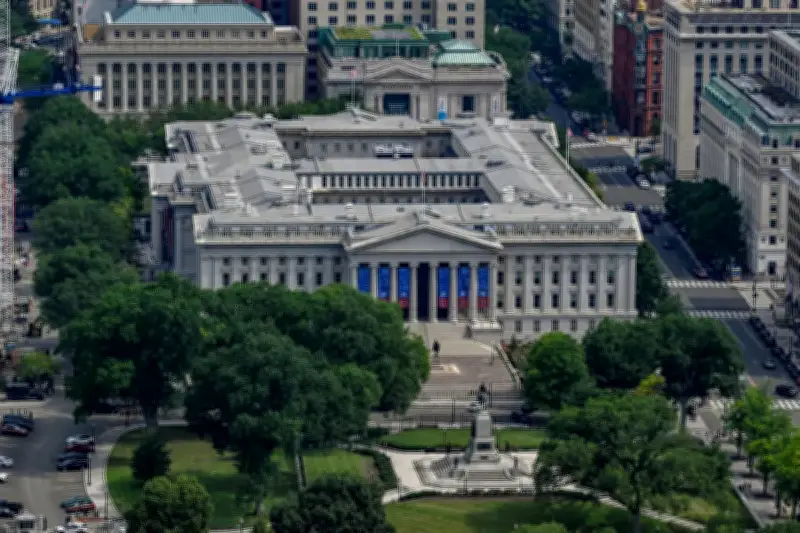
The US Treasury is doubling its buyback of government debt in an effort to balance out the bond market and counterbalance investor concern over high inflation.
The yield rate on 10-year, 20-year and 30-year Treasury notes all hit 20-year highs this week, with the 30-year Treasury yield rising to its highest rate since 2007. The rapid rise was concerning news for borrowers as major loans, including mortgages, are backed by Treasuries.
Yields drop after Treasury announcement
Yields dropped after the Treasury Department's announcement on Wednesday morning. The agency said the policy "reflects Treasury's desire to provide greater liquidity support" to the long-term bond market.
The announcement follows the Trump administration's intervention to prop up the yen in a partnership with the Japanese government, which owns a large holding of US Treasuries.
Investor concerns over Iran conflict
Investors appeared spooked after the two-month ceasefire between the US and Iran expired on Monday, with no resolution in sight. On Tuesday, Donald Trump said that there are currently no scheduled peace talks between the US and Iran. Earlier in the week, he threatened to bomb Oman if it "gets in the way" of the US in the conflict.
Inflation has proved persistent during the volatile war with Iran. Last week, new data showed the annualized US inflation rate was 3.4% in July – down from a three-year high of 4.2% in May, but nearly 1% higher than 2025 rates.
Oil prices and stock market impact
Much of the price increases were reflected in oil prices, which have dipped down from their peak in March but still remain higher than pre-war levels. Earlier this week, AAA said oil prices this month are on track to be the highest ever recorded for August, with gas costing $4.08 a gallon, about $1 more than last year.
Stocks were up slightly on Wednesday after the Treasury's announcement. Despite rising prices, the US stock market has remained steadfast in unfettered growth amid a boom in AI investment. Last week, the S&P 500 closed at yet another record high, though the market remains volatile.
Pressure on Federal Reserve
Rising prices have put pressure on the US Federal Reserve to intervene with higher interest rates, which would help price increases go down to the Fed's 2% target rate. But economists within the central bank appear divided on how to handle overheated prices, especially with pressure from the White House to lower rates.
Kevin Warsh, the Fed chair who came into office in May after a tumultuous nomination process, has remained tight-lipped on his view on which direction the central bank is headed, though he has overall appeared skeptical of Fed intervention.