
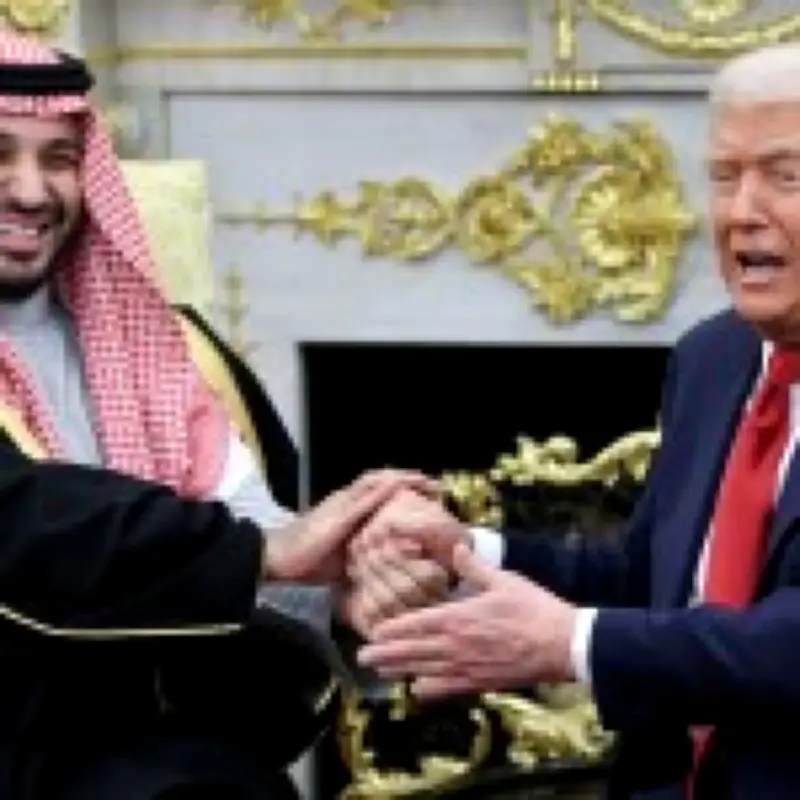
The United States and Saudi Arabia have reached a landmark nuclear deal. The US energy department said Wednesday’s agreement ‘lays the legal foundation for a decades-long, multi-billion-dollar partnership that advances several priority economic and strategic objectives, including nuclear non-proliferation’.
Details of the agreement
A civil nuclear deal with Saudi Arabia has been in the works for years during both President Donald Trump’s first administration and that of former President Joe Biden. No deal has come together before now, however, in part because of warnings from non-proliferation groups who say that it could offer Saudi Arabia a path to develop a nuclear weapon.
Unlike the Biden plan, the current deal does not include a so-called Additional Protocol that allows the UN’s International Atomic Energy Agency to carry out intrusive snap inspections. The deal would also allow Saudi Arabia to enrich uranium and reprocess nuclear waste, both of which are potential pathways to making a nuclear weapon. The UAE agreed to forgo both of those when it signed a similar deal with the US in 2009.
Enrichment facility and criticism
A provision in the deal would potentially see US companies build a uranium enrichment facility in Saudi Arabia, the Wall Street Journal reported. Senator Bernie Sanders, a frequent Trump critic, wrote on X: ‘Trump claims his war on Iran is about stopping an authoritarian country from enriching nuclear fuel. Now he’s letting his best friends in Saudi Arabia – one of the most brutal dictatorships in the world – do exactly that. This is absurd.’
US Secretary of Energy Chris Wright and his counterpart Prince Abdulaziz bin Salman signed the pact, known as a 123 Agreement, alongside a bilateral safeguards agreement. The administration said the deal also abides by non-proliferation agreements in the US Atomic Energy Act, which are among the world’s strongest.
Congressional review and expert warnings
Saudi Arabia has long said if it does not partner with the US, it could partner with China or Russia which have different proliferation standards. The energy department said the deal now goes to Congress. Unless Congress raises votes to object to the deal within 90 session days, the deal will go into force. But it would need to have a two-thirds majority to override a presidential veto.
Some nuclear experts called on lawmakers to vote down the deal. ‘We urge all members of Congress on both sides of the aisle to recognise the risks and to exercise their power to reject or modify Trump’s proposed nuclear deal with Saudi Arabia so as not to open the door for nuclear proliferation in the Middle East even wider,’ Kelsey Davenport, director for non-proliferation policy at the Arms Control Association said.
Speaking before the deal was formally announced, Matthew Kroenig of the Atlantic Council said: ‘It would be a mistake to allow Saudi Arabia the capability for enrichment. Washington is right to strengthen its relationship with Riyadh, but it should not do so at the expense of its effective nuclear weapons non-proliferation standards.’
Implementation timeline and political reactions
An industry source said the deal requires a feasibility study on using US technology in Saudi Arabia. The study and the slow pace of building nuclear power plants and uranium enrichment means it could take many years to build the infrastructure. Saudi Crown Prince Mohammed bin Salman has repeatedly said he does not want the kingdom to build a nuclear weapon but it would if Iran did, raising concerns about potential proliferation.
Several Democratic lawmakers have warned that the deal could start an arms race in the Middle East as the US-Israeli war on Iran grinds on. ‘They are allowing Saudi Arabia, a belligerent and authoritarian nation, to develop nuclear weapons technologies while starting a war with Iran under the guise of preventing an Iranian nuclear bomb,’ said Senator Edward Markey, a Democrat. ‘This deal would make us all less safe.’ Senator Jim Risch, a Republican, said he agrees with the kingdom’s crown prince that the deal stands to benefit both countries.




