
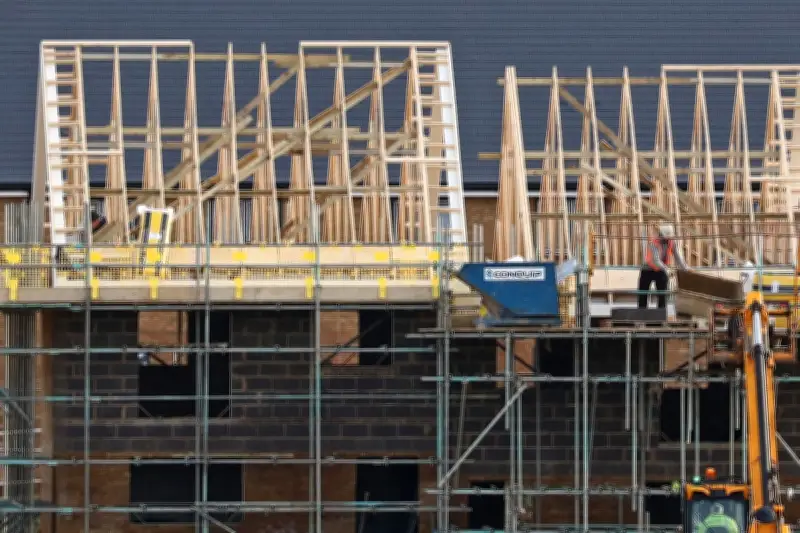
The London Assembly has been told that complex planning regulations are preventing the creation of up to 320,000 new homes across the capital through upward extensions of existing properties. Despite recent changes to national planning policies that encourage such developments, uptake remains minimal, with only a few hundred applications per year for half a million eligible properties.
Barriers to Upward Extension
Nicholas Boys-Smith, Founder and Chairman of Create Streets, told the London Assembly Planning and Regeneration Committee that the current planning and regulatory regime makes upward extensions “uncomfortably modest.” He noted that there are only about 500 applications per year in London, which is far too low. The process involves significant time and expense, including costs for planning consultants, architects, and the risk of not obtaining permission, creating a barrier to entry.
“Under the current situation, unless there’s some combination of national, GLA, and local borough change, which is doable, the potential is low,” Boys-Smith said. He emphasized that the spatial opportunity is immense if simple fixes are implemented in the planning system.
Potential for Thousands of New Homes and Bedrooms
Boys-Smith estimated that the number of homes that could be created through upward extensions ranges from 140,000 (low-end) to 320,000 (upper-end). He stressed that the number of additional bedrooms could be between 300,000 and 680,000, which is critical for reducing homelessness, even though bedrooms are not included in national housing targets.
“Spatially, the opportunity is there, but it does require planning and policy change. Change is needed to reach that opportunity,” he added.
Permitted Development Rights Not Working
Boys-Smith explained that permitted development rights (PDRs) have not worked as intended. These rights allow residents to add up to two storeys to a detached house or one storey to a bungalow or terraced house without a full planning application. However, a lack of understanding among local authority officials has led to low uptake. He noted a sharp distinction between uptake for PDR that required prior approval and those that did not.
To address this, he recommended the mass rollout of Local Development Orders (LDOs) and locally developed design codes. A recent Create Streets report found that densification in areas like South Tottenham, Chelsea, and Tower Hamlets was primarily due to clear design codes and local orders.
“The real opportunity here, if we as a polity and as a country wish to take it, is to allow streets organically to grow again in a way that are acceptable to the local population,” Boys-Smith said. “You only see the exponential increase of additional bedrooms and homes when you have a local council coming in and turbo-charging it through an SPD or LDO.”
Need for Clearer City-Wide Guidance
Dr. Charles Gillot, Senior Sustainability Engineer at WSP UK & Ireland, suggested that changes to the National Policy Planning Framework (NPPF) have not been a fantastic success, with most upward extensions delivered on a larger scale rather than by individual homeowners. Experts also noted that the next London Plan, due for consultation later this week, should include clearer, city-wide guidance on upward extensions.




